
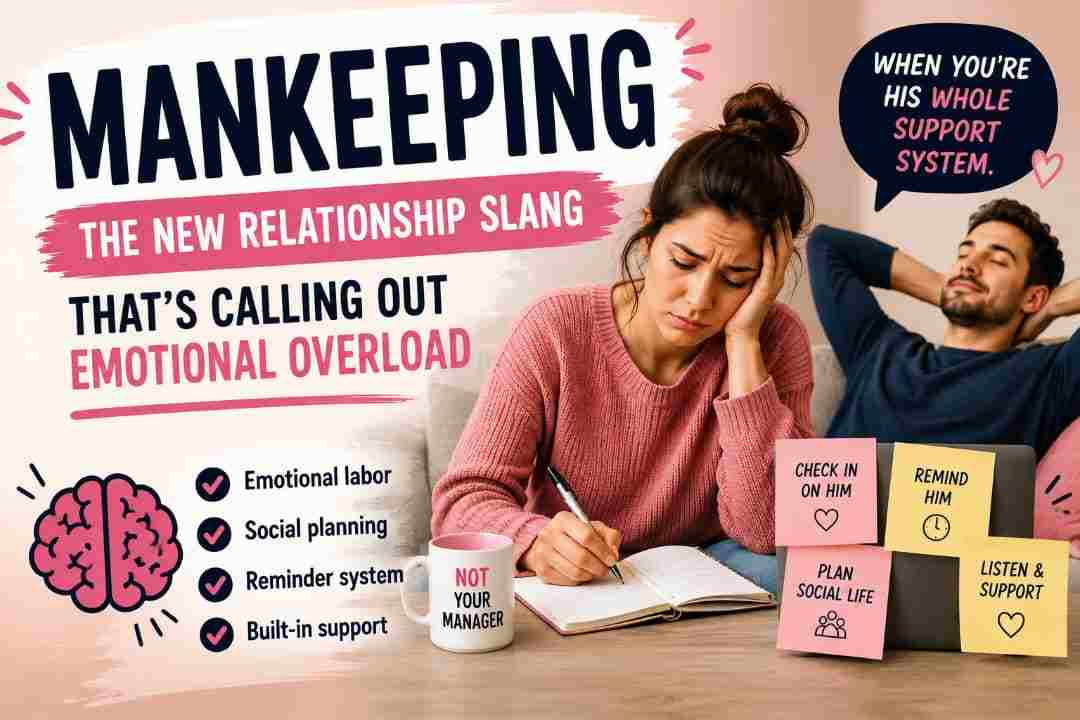
- Mankeeping is used to describe the unpaid emotional and social work some women do for the men in their lives.
- It usually shows up in conversations about relationships, friendship gaps, and emotional labor.
- The term became popular after a 2024 academic paper and spread widely online in 2025.
- People use it to describe anything from reminding a partner to call friends to being the default emotional support person.
- It is often discussed as a sign that some men rely too heavily on romantic partners because their social networks have gotten smaller.
Table of Contents
What does mankeeping mean?
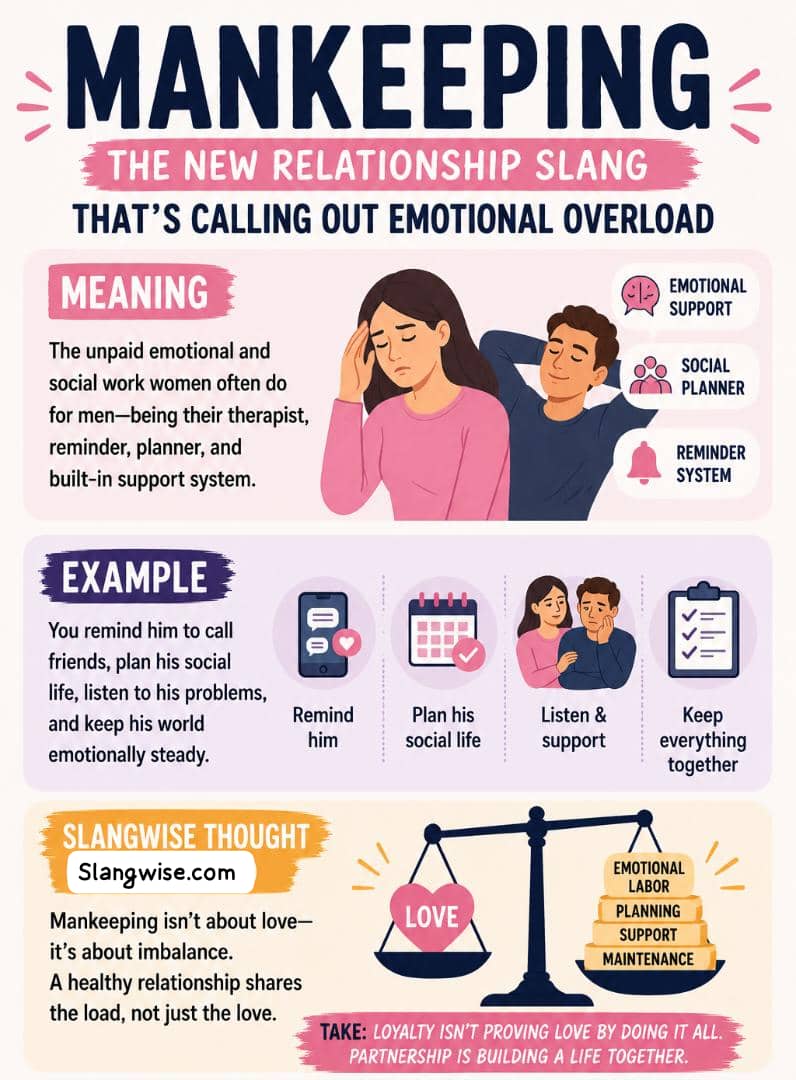
Simply, mankeeping means the emotional and social “maintenance” work a woman often ends up doing for a man who should be sharing that responsibility himself. That can look like being his therapist, his reminder system, his social planner, and his built-in support group all at once.
The core idea is not just that she cares about him, but that she is doing a lot of unpaid, unreciprocated labor to keep his life emotionally steady and socially connected.
What makes the term hit so hard is that it names something many people already felt but never had a neat word for.
It is less about one dramatic moment and more about the steady little jobs that pile up: checking in on his feelings, nudging him to talk to friends, helping him process conflict, remembering birthdays, and keeping the relationship socially alive.
READ ALSO: What Does Blue Dot Fever Mean in Slang? The Concert Word Everyone Is Suddenly Obsessed With
Slangwise Take on Mankeeping
Mankeeping is one of those modern relationship words that sounds funny at first, but the meaning is actually pretty serious. It points to a pattern where one person ends up carrying the emotional weight for two.
Where did mankeeping come from?
Mankeeping is not just random internet slang that appeared overnight. The term grew out of academic work in late 2024 and was tied to research on men’s shrinking friendship networks and the extra labor women absorb because of that change.
The idea builds on the older sociological concept of kinkeeping, which refers to the work of maintaining family ties; mankeeping applies that same logic to men’s emotional and social upkeep.
By 2025, the term was showing up far beyond academic circles. It spread through social media, advice columns, and relationship commentary, where it was often used to describe a broader “friendship recession” among men and the pressure that can place on women in heterosexual relationships.
That is why the word feels so current. It does not just describe a habit; it describes a social pattern. Men with fewer close friendships may lean harder on their partners for emotional regulation, while women are often expected to hold everything together quietly.
How people actually use the word
People usually use mankeeping when they want to point out that a woman is doing more than her fair share of emotional labor.
For example, it might be used when a girlfriend keeps track of her boyfriend’s moods, encourages him to reconnect with friends, helps him manage social plans, or becomes the default person he vents to every time life gets hard.
You will also see it used in a more critical, almost eye-roll way online, especially when people feel the relationship is becoming one-sided.
In that sense, mankeeping is not just about kindness or support. It is about imbalance. The word is basically saying, “This is not partnership anymore; this is emotional babysitting.”
At the same time, the most thoughtful discussions of the term do not treat it like a cheap insult. They frame it as a structural issue: many men are socialized away from deep friendship, emotional openness, and mutual support, so the burden ends up shifting onto romantic partners.
That is why the term has sparked so much debate. Some people see it as a useful label for a real problem, while others worry it oversimplifies healthy relationship support.
READ MORE: What Does Microshifting Mean in Slang? The Work Trend Everyone Is Suddenly Talking About
Why the term resonates so much
The reason mankeeping caught on is simple: people recognized themselves in it. A lot of women have had the experience of feeling less like a partner and more like a full-time emotional manager.
And a lot of men, on the other side, are realizing that they may have been leaning on one person for needs that should have been shared across a wider circle.
That does not mean every caring act in a relationship is mankeeping. Healthy relationships absolutely involve support, patience, and reassurance. The difference is whether the effort is mutual.
When one person is always doing the remembering, the fixing, the encouraging, and the social organizing, the relationship starts to feel uneven. That is where the word really lands.
And honestly, that is why the slang works so well. It is short, memorable, and a little playful, but the issue it points to is very real. It captures the awkward truth that emotional labor can become invisible when one person is expected to handle too much for too long.
Conclusion
Mankeeping is one of those modern slang terms that started as a niche idea and quickly became a cultural conversation.
At its heart, it describes the unpaid emotional and social work some women end up doing for men, especially in relationships where the man’s support system is too thin.
The word became popular because it names a feeling many people already knew: sometimes the burden is not just love, but maintenance.
Hence, when someone says “that sounds like mankeeping,” they usually mean more than just being supportive. They are pointing to a pattern of one-sided emotional labor that feels heavy, constant, and unfair.
And that is exactly why the term keeps spreading. It is not just slang. It is a label for a relationship dynamic a lot of people have been struggling to explain for years.
READ MORE: Snack Meaning in Gen Z Slang: Why Calling Someone a “Snack” Is Such a Big Compliment
Frequently Asked Questions
Not always. Support in a relationship is normal, but the term is usually used when the support becomes one-sided, exhausting, or unreciprocated.
No. It can also describe emotional and social labor around fathers, brothers, coworkers, or male friends, although the term is most commonly discussed in dating and marriage conversations.
It is related, but more specific. Emotional labor is the broader idea; mankeeping focuses on the extra emotional and social upkeep women do for men, especially when it is not equally returned.
Because it gave people a simple, punchy way to describe a very common relationship frustration, and it connected to bigger discussions about male loneliness, friendship gaps, and unequal caregiving in relationships.