
- Microshifting means breaking the workday into short, intentional blocks instead of one long 9-to-5 stretch.
- It is more of a workplace trend word than a classic slang term, but people use it like internet slang because it sounds catchy and modern.
- The idea is linked to flexible work, personal responsibilities, and productivity rhythms, especially in remote and hybrid work culture.
- The term got major attention in 2025 and 2026 as more writers connected it to Gen Z, millennials, and the future of work.
Table of Contents
What Does “Microshifting” Mean in Slang?
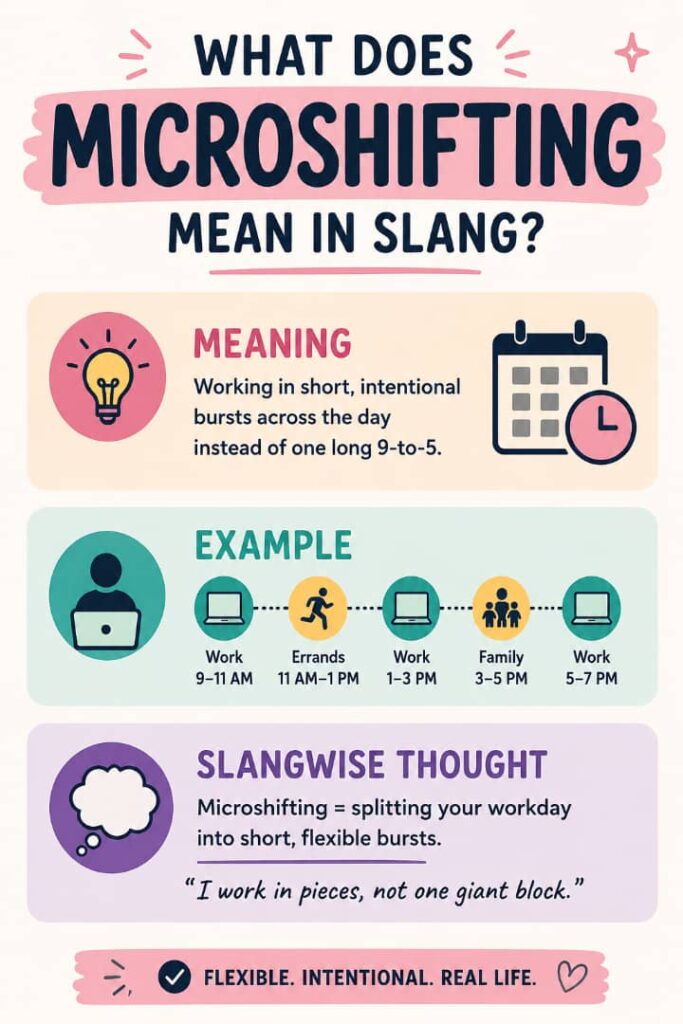
Microshifting is one of those words that sounds a little too fresh to be ordinary, and that is exactly why people keep repeating it. In plain English, it means working in shorter, planned bursts across the day instead of sitting through one rigid block of work time.
The idea is that you stop pretending every job has to happen inside a classic uninterrupted 9-to-5 lane.
So, if somebody says they are microshifting, they usually mean they are reshaping their day around focus, energy, errands, family duties, or other responsibilities. The point is not laziness. The point is timing work more intelligently so it fits real life better.
READ ALSO: Recession Brunette Meaning in Slang: The Hair Trend Everyone Is Talking About Right Now
Where Did Microshifting Come From?
Microshifting did not appear out of nowhere. It grew out of the larger flexible-work conversation that exploded after remote and hybrid work became more normal.
By 2025 and 2026, workplace writers were using the word to describe a non-linear workday built around small, intentional blocks rather than one continuous stretch.
A lot of the attention around it comes from the fact that the idea matches how many people already work in real life.
Some people start early, pause for school runs or appointments, then return later. Others split work around energy levels, caregiving, or commuting needs. That pattern is exactly what microshifting tries to name.
Why Is Everyone Talking About It?
Because it gives a name to something people have been doing quietly for a while. The word has become popular in work-trend articles and reports because it sounds modern, practical, and very relatable to younger workers.
In one 2025 workplace report, 65% of employees said they were interested in this style of working, which helps explain why the term keeps showing up.
It also feels very current because it speaks to a bigger cultural shift: people care less about looking busy for eight straight hours and more about getting good work done in a way that fits their actual lives. That is why microshifting has become such a useful buzzword.
READ MORE: Snack Meaning in Gen Z Slang: Why Calling Someone a “Snack” Is Such a Big Compliment
How People Use Microshifting
In conversations, microshifting usually shows up when someone is explaining a flexible schedule. They might be talking about working for a couple of hours, taking care of personal business, then returning later for another focused block.
Some descriptions even frame it as several short planned shifts across the day, sometimes lasting only a few hours at a time.
So if you hear someone say, “I’ve been microshifting lately,” they are probably saying their day is no longer one long work marathon. It is broken into smaller pieces that match their energy, responsibilities, and productivity windows. That is the heart of the term.
Slangwise Take on Microshifting
Microshifting means splitting your workday into short, flexible bursts instead of forcing everything into one long continuous shift. It is the cleanest way to say, “I work in pieces, not one giant block.”
My honest understanding is that microshifting is less about slang in the classic sense and more about a trendy name for a real lifestyle shift. It is one of those internet-friendly words that works because it is useful, easy to picture, and instantly tied to a feeling people recognize: “I do not work in one neat block anymore.”
That is why the word sticks. It is not flashy for no reason. It describes a modern way of working that many people already understand instinctively, especially in remote and hybrid settings. In that sense, microshifting is a very 2025-style word: practical, flexible, and a little buzzworthy.
DISCOVER: The Ultimate List of 250 Most Popular Internet Slang Words of 2026
Why It Resonates
People like microshifting because it sounds realistic. Life is rarely perfectly linear, and work is starting to reflect that.
The term fits parents, caregivers, remote workers, students, and anyone whose best focus does not happen inside a traditional office clock. Some coverage even frames it as a response to burnout and a desire for more autonomy.
That makes the word feel bigger than just a trend. It is also a signal. When someone uses it, they are often signaling that productivity does not have to look old-fashioned to be legitimate.
Conclusion
Microshifting is basically the shorthand for a newer, more flexible way of working. Instead of one solid block of hours, the day gets broken into smaller, more intentional pieces that fit real life better.
That is why the word has caught on so fast in workplace talk and online conversations. It is simple, current, and very easy to understand once you hear it in context.
If you are seeing it everywhere, that is because it captures a bigger shift in how people think about work: less rigid clock-watching, more outcome-focused planning. That is the real energy behind microshifting.
Frequently Asked Questions
It is more of a workplace trend word than classic slang, but people use it in a slang-like way because it is catchy and current.
It means splitting work into short, planned bursts instead of one long continuous workday.
No. It is especially common in flexible and hybrid work discussions, but the idea can apply anywhere a person has control over schedule blocks.
Because more people want work that fits around real life, and recent workplace reports have shown strong interest in flexible, non-linear schedules.