
- Blue dot fever means a ticket map filled with unsold seats marked as blue dots. It usually points to weak sales for a live event.
- It is used most often in the music world, but people also apply it to sports and other events.
- The phrase grew out of online fan talk and industry chatter in 2026.
- The bigger story behind it is simple: higher prices, more competition, and fans being pickier about what is worth paying for.
Table of Contents
What Does Blue Dot Fever Mean in Slang?
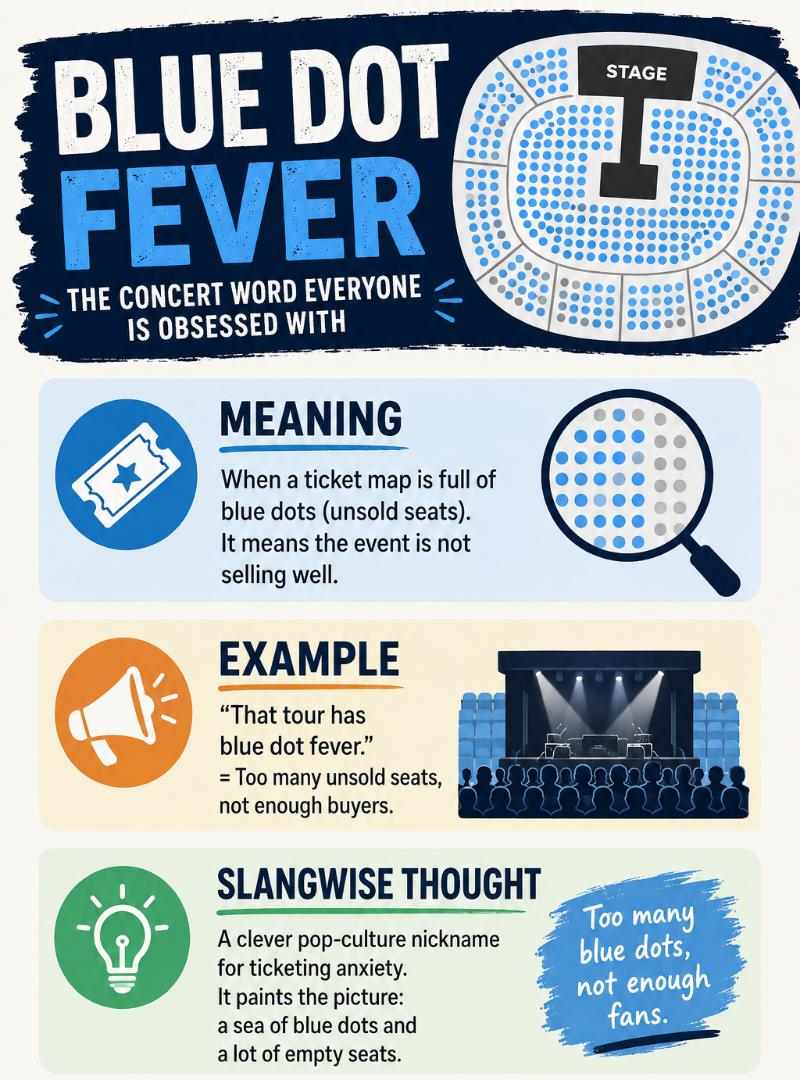
Blue dot fever is a flashy way of describing a not-so-flashy problem: a live event that is not selling enough tickets. On ticketing websites, open seats often show up as blue dots, so when a seating chart is packed with them, people start saying the event has “blue dot fever.”
Plainly, it means the venue is looking emptier than expected.
That is why the catchphrase has taken off online. It is short, visual, and a little savage. Instead of saying, “This show is underselling,” people say “blue dot fever,” which sounds more dramatic and memorable. That’s very internet.
BOOKMARK: What Does Microshifting Mean in Slang? The Work Trend Everyone Is Suddenly Talking About
Where Did It Come From?
Blue dot fever appears to have grown out of social media chatter among music fans and industry watchers. It started catching attention as people noticed major tours with lots of unsold seats on the map and began joking that the event had caught “blue dot fever.”
The term became especially visible in 2026 as writers, fans, and insiders started using it to talk about concerts that were struggling to fill arenas. It is not a classic old-school slang word with a deep history; it is a very current phrase built around a very current habit: checking ticket maps before a show.
Why Are People Talking About It So Much?
Because it connects to something a lot of fans already feel: concerts are expensive now. Ticket prices have gone up, and once you add travel, food, drinks, and maybe merch, a night out can get pricey fast. That makes people more selective about which shows they actually buy.
There is also more competition than ever. Big tours, reunion shows, festivals, and sports events are all fighting for attention at the same time. And online popularity does not always turn into real-world ticket sales.
Someone can have huge streaming numbers or giant social media reach and still leave a lot of blue dots behind on the seating chart.
READ ALSO: Recession Brunette Meaning in Slang: The Hair Trend Everyone Is Talking About Right Now
How People Use It
If someone says, “That tour has blue dot fever,” they usually mean the tickets are not moving the way people expected. It can sound like a joke, but the message is pretty direct: too many unsold seats, not enough buyers.
That usage has shown up in fan posts, comment sections, and articles discussing cancellations or delays.
You might also hear it used more broadly, like when a sports event or other live show has a lot of open seats. The music industry is where the phrase is most common, but the visual idea works anywhere a seating chart is involved.
Slangwise Take on Blue Dot Fever
Blue dot fever means too many unsold seats on a ticket map. If the chart looks like a sea of blue dots, the event is probably struggling to sell out.
My honest read is that blue dot fever is less about “slang” in the traditional sense and more about a clever pop-culture nickname for ticketing anxiety. It gives people a funny way to describe a serious business problem.
Instead of saying a show is underperforming, the phrase paints a picture instantly: a screen full of blue dots and a lot of awkward empty seats.
That is why it works so well online. It is visual, it is easy to repeat, and it has just enough attitude to spread. People love terms that feel like an insider joke but still tell the whole story in one glance. Blue dot fever does exactly that.
DISCOVER: 80 Most Popular Gen Alpha Slang Words You’ll Hear In 2026 (updated)
What Blue Dot Fever Really Says About Live Events
Blue dot fever is not really about one artist or one tour. It is a snapshot of a bigger shift in live entertainment. Fans still love concerts and big events, but they are being more careful with money, and promoters have to work harder to match venue size, pricing, and audience demand.
That is also why the phrase keeps popping up in discussion about cancellations and venue changes. When a tour gets scaled back or dates are adjusted, people start looking at the seating map and asking whether blue dot fever played a role.
Sometimes that is speculation, but it shows how strongly the term has entered the conversation.
Conclusion
Blue dot fever is the internet’s colorful way of saying, “There are way too many empty seats.” It started as a live-events phrase, became especially common in music talk, and now gets used whenever people want to describe weak ticket sales in a quick, visual way.
The reason it spreads so fast is simple: everyone can picture it. Blue dots on a ticket map are easy to understand, and the phrase turns that image into a neat little label.
Hence, when next you see it online, you will know it is not about a literal illness. It is about a show that is having trouble filling the room.
EXPLORE: Gen Z vs Gen Alpha Slang in 2026: What the Newest Internet Words Really Mean
Frequently Asked Questions
Yes, but it is a very new one. It is mostly used online to describe unsold seats on ticket maps.
Because ticketing websites often show available seats as blue dots, and a lot of them can signal weak sales.
No. It is most common in music, but people also use it for sports and other live events.
The big factors are higher prices, cost-of-living pressure, and more competition among live events.