
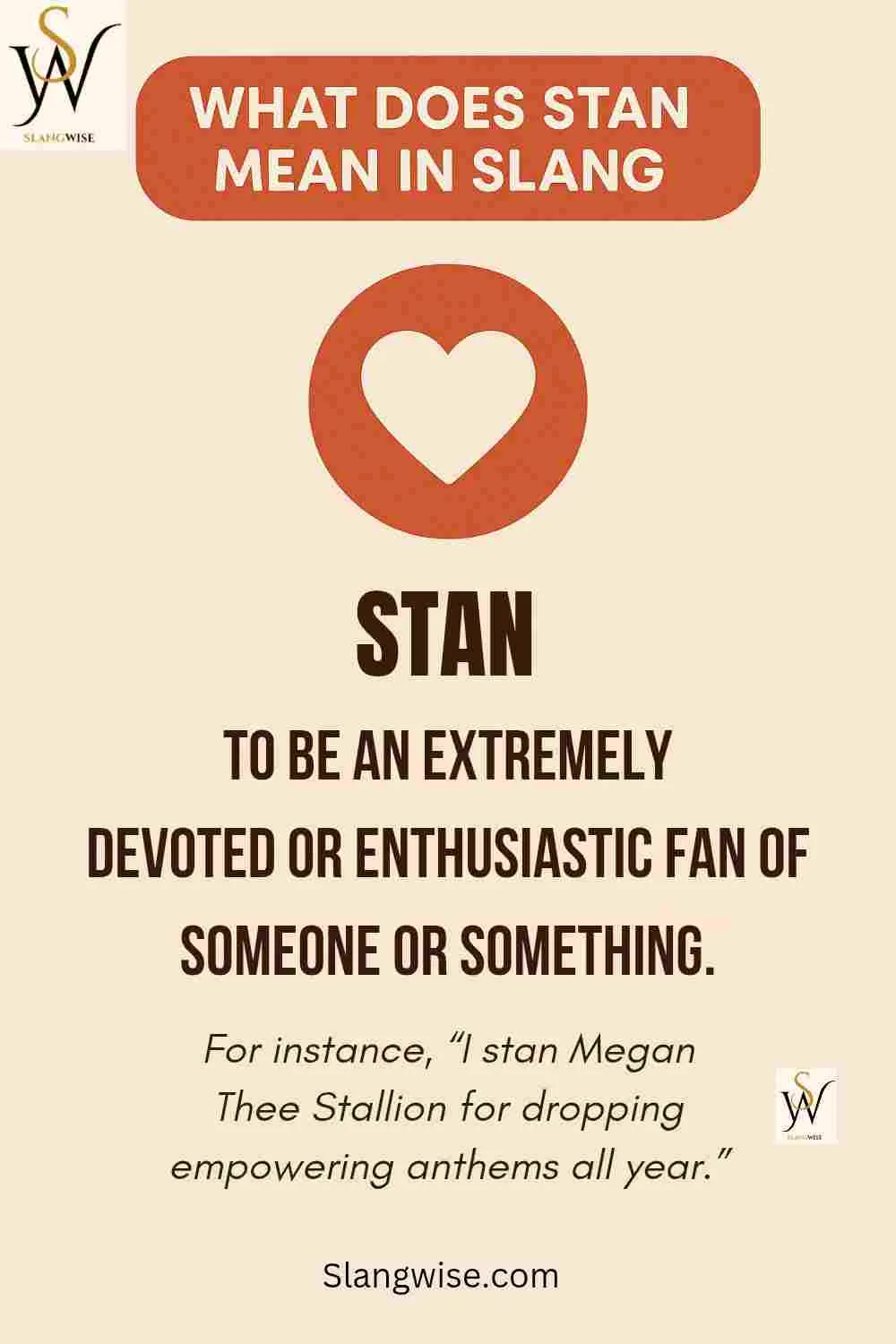
Ever heard someone say, “I stan her” or “We stan a legend” and wondered what that really means? You are not alone. In internet slang, stan is one of those words that sounds short and simple, but carries a lot of energy.
Stan means more than just liking someone or something. It is the kind of word people use when they feel very strongly about a celebrity, a creator, a sports team, a character, or even a cause. In other words, if you stan something, you are not just a casual admirer. You are fully in your feelings about it.
In this post, we will break down what stan means, where it came from, how people use it today, and how to use it without sounding over the top. We will also look at a few related meanings, common variants, and examples that make the word easy to understand in real life.
Slangwise Tip: Stan with joy, not chaos. It is fun to be passionate, but the healthiest fandoms are the ones that still leave room for respect, balance, and real life.
Table of Contents
In a Nutshell
- Stan means to be a very devoted fan of a person, group, idea, or thing.
- It comes from Eminem’s 2000 song “Stan,” which told the story of an obsessed fan.
- Online communities helped turn it into everyday slang, especially on Twitter, Tumblr, and later TikTok.
- You can use it as a noun or a verb, like “I am a stan” or “I stan her music.”
What Does Stan Mean in Slang?
Stan usually means a very enthusiastic supporter or fan. It is stronger than simply saying you like something. When people say they stan a singer, a movie, a show, or even a cause, they are saying that they support it with real excitement and loyalty.
You might hear it used like this:
- As a noun: “She is a total stan of that artist.”
- As a verb: “I stan that new movie.”
- As an expression of support: “We stan hardworking teachers.”
In everyday speech, the word often sounds playful, warm, and dramatic in a fun way. It can mean genuine admiration, strong loyalty, or just a very enthusiastic form of support.
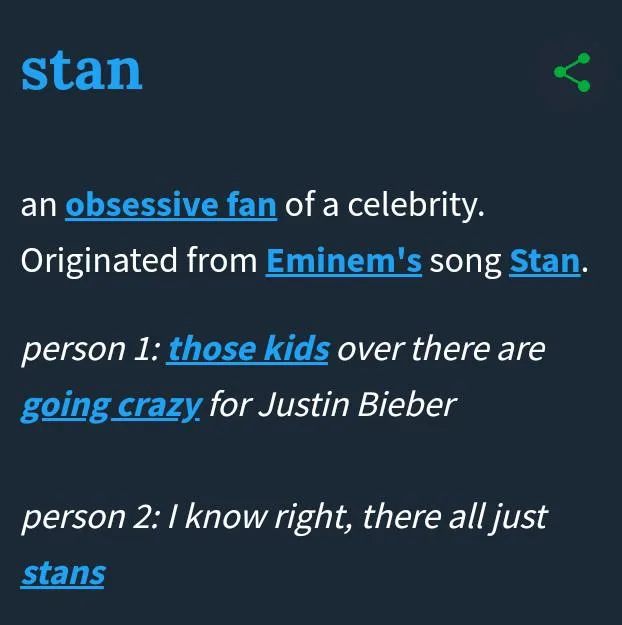
Some people also use stan to describe a whole fan identity. For example, a person might say they are part of a stan account, meaning a social media account dedicated to celebrating someone or something they love. You will also see forms like stanning for the act of supporting, and stanned for the past tense.
Where Stan Came From
The word did not begin as a cheerful compliment. Its origin is tied to Eminem’s 2000 song Stan, which tells the story of a fan whose obsession becomes unhealthy and tragic. The song was powerful, memorable, and unsettling, and it left a lasting mark on pop culture.
Here is how the word made its journey into slang:
- Eminem released “Stan” in 2000. The song introduced the character Stan, whose extreme admiration turns dark.
- Internet users began reusing the word. At first, it was often used jokingly or ironically in fan spaces.
- Fan communities embraced it. By the early 2010s, especially on Tumblr and Twitter, people started using stan as a badge of serious fandom.
- It became mainstream slang. Once social media amplified it, stan moved from niche internet talk into everyday speech.
That history is part of what makes the word so interesting. It started with a cautionary story about obsession, but online culture transformed it into a fun, expressive way to talk about admiration and support.
Reference: Oxford Dictionaries added stan in 2017 and defined it as an overzealous or obsessed fan, linking it back to Eminem’s song.
Read More: Stan is on our list of the 65 top trending TikTok Slangs of 2025. Check out the other slangs on the list.
Other Meanings and Variants of Stan
Most of the time, stan means a superfan. Still, there are a few related forms and uses worth knowing so you can spot them easily online.
- Stan: A highly devoted fan.
- To stan: To strongly support or admire something.
- Stanning: The act of supporting or obsessing over something in a fan friendly way.
- Stan account: A social media account focused on one celebrity, group, or interest.
In some spaces, people also use stan in a joking way. For example, someone might say, “I stan coffee” or “We stan a clean room”. In those cases, the word is being used for playful emphasis, not literal fandom.
How Stan Showed Up in Pop Culture
Stan became popular because it fit perfectly into online fan culture. Social media gave people a fast way to show enthusiasm, and stan became the perfect word for that energy.
- K pop fandoms: Fans often use stan to describe their deep support for artists and groups, along with streaming, posting, and sharing fan content.
- Sports fans: Someone might say, “I stan that team,” to show full loyalty and pride.
- Creators and influencers: People use it to express support for YouTubers, TikTokers, artists, and public figures.
- Causes and movements: It can also show support for values, communities, and social causes.
- Everyday people: You can even stan your favorite teacher, coach, parent, or local hero.
That flexibility is part of the reason the word stayed popular. It works in both serious and playful contexts, which makes it useful across many kinds of conversations.
READ ALSO: The Gen Zs’ Honesty Code Cracked – What Keep It 100 Mean in Slang
When Stanning Goes Too Far
Being a fan is normal. Being excited is normal too. The problem starts when admiration turns into harmful behavior. That is when stan culture can stop being fun and start becoming stressful or toxic.
Here are a few signs that stanning may be going too far:
- Attacking critics: Jumping on anyone who has a different opinion.
- Refusing any disagreement: Treating every comment as a personal insult.
- Losing balance: Letting fandom take over your time, energy, or emotional well being.
Healthy fandom should feel fun, not overwhelming. It is great to celebrate what you love, but it should never come at the cost of kindness, perspective, or your own peace of mind.
Slangwise Tip: Keep your stan energy joyful. Support what you love, but leave room for healthy boundaries and respectful conversation.
How to Use Stan the Right Way
If you want to use stan naturally, the easiest approach is to keep it simple, positive, and context aware. The word works best when it sounds enthusiastic, not forced.
- Use it for genuine admiration: “I stan her style” sounds natural if you really mean it.
- Use it playfully: “I stan a quiet weekend” can be a light, funny way to show strong approval.
- Use it with people you respect: It can celebrate public figures, creators, teammates, and everyday role models.
- Keep it respectful: The word should add energy, not create drama.
One easy way to think about it is this: if fan means you like it, stan means you really, really like it.
Examples of Stan in Action
Examples make slang much easier to learn, so here are a few ways stan shows up online and in conversation:
Example 1: “I stan Beyoncé because she always delivers amazing performances.”
Example 2: “We stan this coach for always believing in the team.”
Example 3: “That show? I absolutely stan it.”
Example 4: “Stan Olivia Rodrigo if you love honest lyrics and catchy music.”
Notice how the word adds energy and personality. It is short, expressive, and very internet friendly.
Discover the 72 most popular Gen Z slang words of 2026, from Rizz, Delulu, and Skibidi to the latest viral terms. Clear meanings, real examples, and what they secretly mean online.
Why People Still Love the Word Stan
Some slang words fade quickly, but stan has stayed around because it captures a feeling people recognize instantly. It is expressive, flexible, and a little dramatic in the best way.
People love it because it lets them say a lot with very few words. It can show admiration, loyalty, humor, and even community identity. In today’s online world, that kind of shorthand is powerful.
Conclusion
The slang stan has come a long way. What started as a story about unhealthy obsession became a word that millions of people now use to express strong support, admiration, and fandom.
Now that you know what stan means, where it came from, and how to use it properly, you can spot it in captions, comments, and conversations with much more confidence. Just remember to keep it fun, respectful, and balanced.
FAQs
Not always. It depends on the tone. Sometimes it is a compliment that means someone is a big fan. In other situations, it can suggest obsession, so context matters.
A fan likes something. A stan likes it with much more intensity and enthusiasm, often with active support online or in fan communities.
Yes. People stan music, movies, sports teams, causes, fictional characters, teachers, coaches, and even everyday habits they really love.
No. Sometimes people use it seriously, and other times they use it jokingly or playfully to show excitement.