

Teaching today is not just about books, lessons, and class rules. It also means understanding the language students use every day. If you have ever heard a student talk about clout or accuse someone of clout chasing, you already know how quickly slang can shape the room.
At first, the word may sound like just another internet trend. But it carries a lot more meaning than many people realize.
To some people, clout sounds like a word about fame, likes, and social media attention. That is partly true, but it is not the whole story. Clout has deeper roots in culture, influence, identity, and status.
When teachers understand that deeper meaning, they are in a much better position to connect with students instead of dismissing the word too quickly.
In this post, I will break down what clout chasing means, where the word came from, why students use it, and how teachers can turn it into a useful classroom conversation.
Table of Contents
Clout chasing in a nutshell
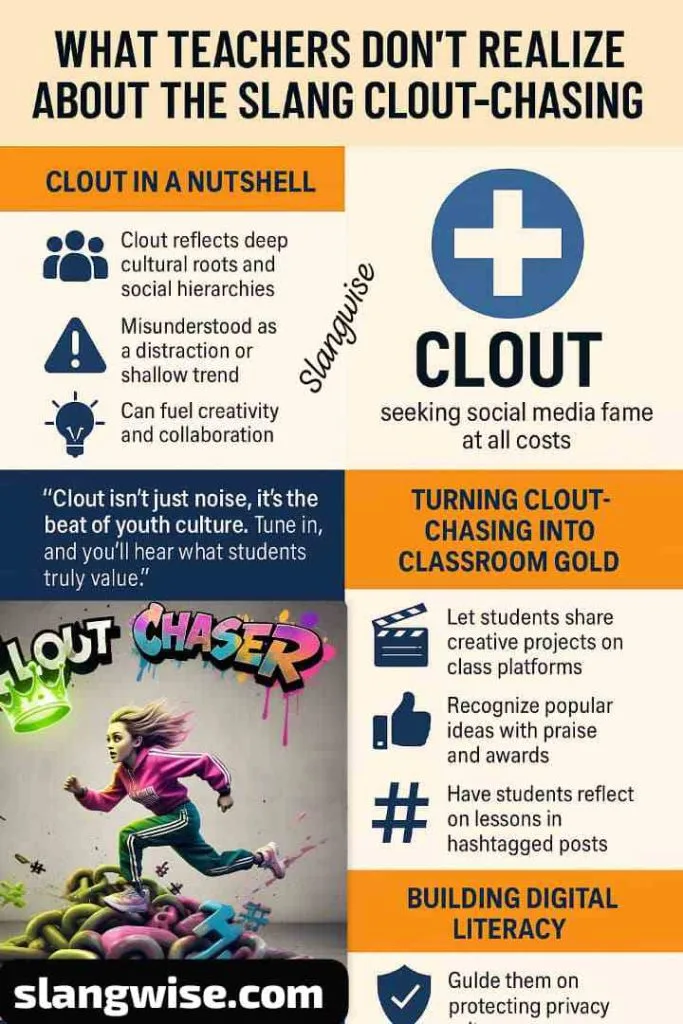
Before we go deeper, here is the simple version. Clout means influence, social power, or attention. In slang, it often refers to the kind of status people gain when others notice, admire, or follow them. Clout chasing is the act of trying very hard to get that attention, usually through posts, behavior, trends, or public actions.
That makes clout more than just a buzzword. It becomes a kind of social currency. Students use it to talk about popularity, identity, and the way people move through online spaces. Sometimes the word is used jokingly. Sometimes it is critical. Either way, it tells you a lot about what people value.
- Clout: influence, status, or social power
- Clout chasing: trying hard to gain attention or approval
- Origin: rooted in older English, hip hop culture, and Black vernacular
- Modern use: common in social media, especially among younger people
- Why it matters: it shows how students think about identity, approval, and belonging
SlangWise Quote: Clout is not just noise. It is the beat of youth culture. If you listen closely, you can hear what students care about most.
What clout really mean in slang
In standard English, clout can mean influence or power. The word has also had older meanings over time, including the idea of a heavy blow. But in modern speech, especially online, the word usually points to social influence, visibility, or the kind of attention people want from others.
That is why people say someone has clout when they seem important, respected, followed, or socially powerful. It does not always mean they are famous in the traditional sense. Sometimes it just means others pay attention to them. In a digital world, that kind of attention can feel like power.
Clout chasing takes that idea one step further. It describes someone who seems to be reaching for attention at all costs. That might mean posting for likes, doing something dramatic for views, name dropping people, or trying to look more important than they really are. In slang, the phrase often carries a critical tone.
Here is a simple way to think about it: clout is the thing people want, and clout chasing is the behavior they use to try to get it.
For a standard dictionary definition, Merriam Webster describes clout as influence or power, especially in politics or business. That definition helps show how the word moved from general English into slang and online culture.
Why teachers often misunderstand clout chasing
Many teachers see clout chasing and immediately think of distraction, vanity, or bad behavior. And to be fair, some clout chasing does look like attention seeking. A student might make a video instead of focusing on the assignment. Another might post something dramatic just to get reactions. In the classroom, that can feel annoying very quickly.
But that is only one layer of the story. What teachers sometimes miss is that clout is tied to belonging. For many students, especially teens, being noticed matters. Being liked matters. Being seen matters. Online approval can feel very real, even if adults do not always take it seriously.
That is the part worth understanding. When students chase clout, they are not always just being dramatic. Sometimes they are trying to build identity, connect with peers, or prove they have something valuable to offer. In other words, clout is often about social survival as much as it is about ego.
A Pew Research Center study on teens shows how online status can shape self esteem and peer relationships. That matters because it means the push for attention is not random. It is part of how many young people experience social life today.
Where clout came from
The word clout has older roots, but its modern social meaning grew through culture, especially hip hop and Black vernacular. Over time, it came to stand for influence, respect, and social weight. That is why the word feels bigger than just internet slang. It has a cultural background behind it.
As social media grew, clout took on a new life. It began showing up in posts, captions, comments, and conversations about fame or popularity. The internet made it easier to measure attention through likes, shares, views, and followers. That is when clout started to feel like a kind of online scoreboard.
Today, when students say someone is chasing clout, they usually mean that person is trying too hard to go viral, gain followers, or look important online. The behavior may be sincere, funny, awkward, or calculated, but the label usually points to a hunger for attention.
Read also: Clout is one of many phrases shaping online speech. You can also explore more viral TikTok slang words of 2025.
How teachers can turn clout chasing into a classroom win
Now here is the good part. Teachers do not have to fight clout chasing only as a problem. They can also use it as a bridge. If students want attention, recognition, and approval, why not guide that energy into something useful?
One smart approach is to give students structured ways to shine. For example, a teacher might ask students to create short videos explaining a science idea, a math trick, or a history scene. Students still get the chance to be creative and visible, but the attention is tied to learning. That means the desire for clout gets redirected into something positive.
Teachers can also use class voting, digital badges, or creative showcases. A student who feels seen for doing good work is more likely to stay engaged. In many cases, the same urge that pushes someone to chase attention online can also push them to do their best work when the recognition is real and meaningful.
- Let students make short lesson videos or visual explainers
- Use class votes for creativity, clarity, or effort
- Give public praise for thoughtful work, not just loud participation
- Use class hashtags or project showcases to build healthy recognition
These ideas do not reward emptiness. They reward effort. That is the key difference. Instead of chasing empty attention, students learn how to earn respect through skill, creativity, and consistency.
If your children are using these slangs, you need to warn them.14 Bad Internet Slangs Parents Should Caution Their Children About.
Building digital literacy
Clout chasing also gives teachers a great chance to teach digital literacy. Students are already spending time online, so they should know how attention works there. They should understand what they are seeing, why it spreads, and what the risks are.
Some online trends are harmless. Others are not. Some are funny at first but encourage risky behavior later. Some push people to overshare private details just to get reactions. When teachers understand clout, they can talk to students about these issues in a way that feels relevant instead of preachy.
- Privacy settings: teach students how to share safely while protecting personal details
- Trend evaluation: help them ask who created a trend, why it spreads, and who benefits
- Responsible influence: show examples of people using attention for good causes like fundraising or awareness
That kind of guidance helps students build better judgment online. It also shows them that not all attention is equal. Some attention is shallow. Some attention is earned. Some attention is useful. Learning the difference matters.
Other meanings and variants of clout
Clout is an interesting word because it has a few layers. In older English, it could refer to a blow or hit. In standard modern English, it means power or influence. In slang, it often means social status or online visibility. That is a lot for one word, but language does that sometimes.
You may also hear related phrases like clout chaser, which describes a person who seems desperate for attention, or clout culture, which describes the wider environment where people compete for visibility.
Those variations all circle the same idea. They describe how people chase influence and recognition in public spaces.
This is why the word feels so modern even though it has older roots. It adapts. It travels. It keeps showing up in new forms as the internet changes how people measure value and status.
READ ALSO: Friyay Meaning Explained: Why This Funny Friday Word Still Feels So Good
SlangWise thought
The biggest mistake adults make with words like clout is assuming they are only about vanity. In reality, slang often reveals what a generation values. In this case, clout points to visibility, belonging, influence, and the need to be noticed. That is not random. It is social language doing real social work.
From my perspective, teachers who take the time to understand clout are not being extra. They are being smart. Once you know what students mean when they talk about clout, you can respond in a way that is clearer, calmer, and more effective. You can also turn that energy into something constructive instead of treating it like noise.
The real takeaway is simple. Clout is not just about likes or fame. It is about the human desire to matter in a crowd. When teachers understand that, they are better equipped to reach students where they actually are.
Conclusion
Clout is more than a trendy TikTok word. It is a lens into student identity, motivation, and social life. Clout chasing may look like attention seeking on the surface, but underneath it often reflects a deeper desire for recognition and belonging.
When teachers understand that deeper meaning, they can do more than react. They can connect, guide, and teach students how to turn social energy into something useful.
That might mean better classroom participation, stronger digital judgment, or simply a more honest conversation about why attention matters so much online.
In the end, clout is not just a buzzword. It is a social signal. And for teachers who want to stay connected to the world their students live in, it is a word worth understanding.
Frequently Asked Questions
In slang, clout means influence, status, or attention. It is often used to describe the kind of social power people gain when others notice or admire them.
Clout chasing means trying hard to get attention, approval, or social status, especially online. It often refers to behavior that looks desperate for likes, views, or popularity.
No, clout is not always bad. It can simply mean influence or recognition. The negative side comes from clout chasing when someone goes too far trying to get attention.
Teachers can talk about clout by connecting it to identity, media literacy, and online behavior. The goal is not to shame students, but to help them understand how attention works and how to use it wisely.