
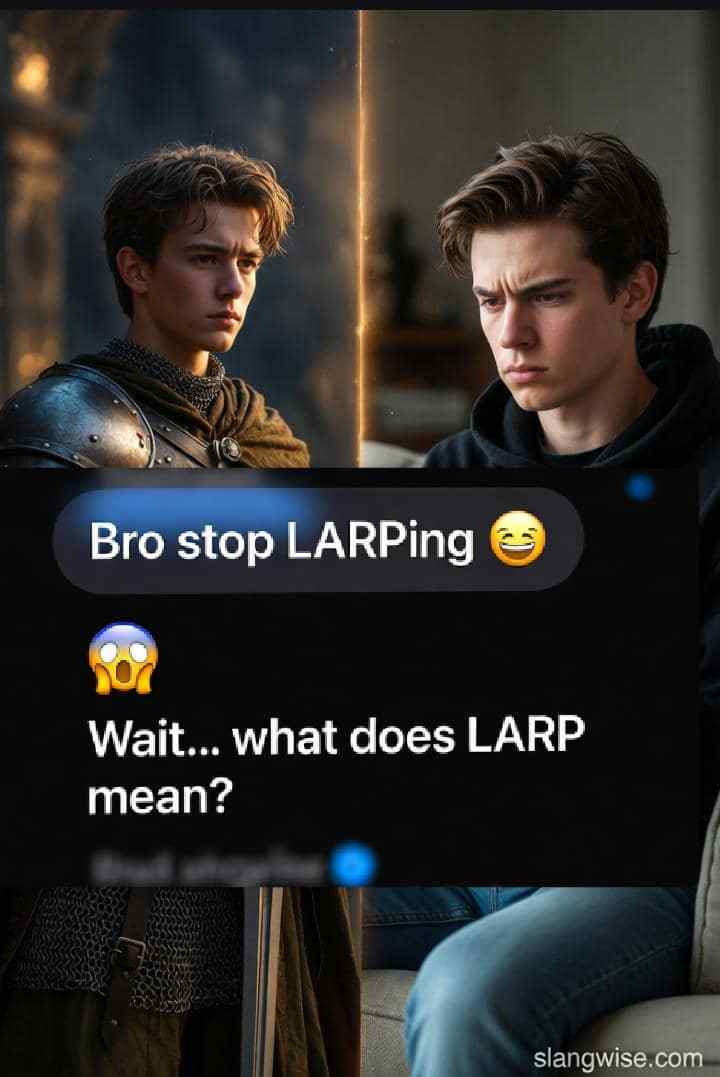
“You’re not really a millionaire. You’re just LARPing.”
Comments like this are becoming a familiar sight in online conversations. Someone shares a particular lifestyle, claims to have impressive knowledge, or acts like an important person, and another user responds by calling them a LARP.
But what exactly does that mean? Is it another way of calling someone fake, or is there a deeper meaning behind the expression?
In internet slang, LARP means pretending to be someone or something you are not. It is often used when people believe someone is performing a particular identity, lifestyle, level of expertise or social status rather than genuinely living it.
The interesting part is that LARP did not originally mean being fake. It comes from a real hobby involving costumes, characters and live storytelling. Its internet meaning developed from that idea of playing a role.
When I explain internet slang, I like to look beyond the quick definition. I want to understand why people use a word, what they are communicating, and how its meaning changes in different communities. LARP is a particularly interesting example because it can be playful in one conversation and quite insulting in another.
By the end of this guide, you will understand what LARP means, why people use it to call others fake, and how to recognise the difference between its original meaning and its modern internet usage.
What Does LARP Mean in Slang?
In modern internet slang, LARP refers to pretending to have an identity, lifestyle, experience or level of knowledge that you do not genuinely possess.
It is commonly used to describe people who appear to be putting on an act to impress others, gain attention, look important or create a particular image of themselves.
For example, imagine someone who constantly posts online as though they are a highly successful business owner. They give business advice, talk about their luxurious lifestyle and present themselves as an experienced entrepreneur.
However, other users begin questioning whether the lifestyle and experience they display are genuine.
Someone might comment:
“This whole millionaire entrepreneur thing is just a LARP.”
What they are suggesting is that the person is playing the part of a successful entrepreneur rather than genuinely being one.
One important thing I always point out is that calling someone a LARP does not automatically prove that they are lying. It communicates the speaker’s suspicion that the person’s public image is exaggerated or inauthentic.
READ ALSO: Friyay Meaning Explained: Why This Funny Friday Word Still Feels So Good
What Is the Original Meaning of LARP?
Before becoming a popular internet expression, LARP was already an established term in gaming and entertainment communities.
LARP stands for Live Action Role Play. It describes a recreational activity in which participants act out fictional characters in real world settings.
Unlike traditional tabletop role playing games, where players mainly describe what their characters do, LARP participants physically take on their characters and interact with others within a shared fictional setting.
For example, participants might attend a fantasy themed gathering dressed as royalty, villagers, magical characters or historical figures. They can develop stories, interact with other characters and take part in activities within the fictional world.

In this original sense, LARP is not an insult. It is simply a hobby that allows people to enjoy storytelling, creativity and imaginative experiences.
That original idea of taking on a character is what makes the modern slang meaning so interesting.
How Did LARP Become Internet Slang?
The modern slang meaning developed as internet users started borrowing the idea of role playing to describe people who appeared to be performing identities outside a fictional game.
Think about it this way: a person participating in a role playing event deliberately takes on a character. Online, people began using that same idea to describe someone who seems to be acting out a version of themselves that does not match reality.
During the 2020s, the expression became increasingly common in online conversations, especially when people wanted to question someone’s claimed experience, knowledge, lifestyle or social identity.
In 2026, LARP and LARPing also received renewed attention across internet culture, including TikTok, Reddit and X discussions. The expression has become particularly useful for calling out behaviour that seems performative rather than genuine.
Interestingly, not every modern use is a serious accusation. Some people use LARP jokingly to describe themselves or admit that they are playing along with a particular image.

This is why I would not interpret every use of the word as a direct accusation of dishonesty. The surrounding conversation matters.
How People Use LARP on Social Media
On social media, LARP is usually used when someone thinks another person is pretending to have something they do not really have.
It can refer to fake expertise, exaggerated lifestyles, questionable personal stories or an online personality that seems carefully performed.
Here are some situations where you might encounter it:
1. Pretending to Be Wealthy
Someone constantly posts pictures of expensive surroundings and talks as if they live a millionaire lifestyle, but other users suspect the image is not genuine.
“That luxury lifestyle is a complete LARP.”
In this situation, LARP suggests that the person is performing a wealthy identity rather than showing their actual lifestyle.
2. Pretending to Be an Expert
Imagine someone who constantly gives professional advice about a subject but cannot demonstrate the experience or understanding they claim to have.
“Bro is larping as a cybersecurity expert.”
The comment questions whether the person genuinely has the knowledge they are presenting online.
3. Pretending to Have a Particular Lifestyle
Someone might constantly present themselves as an experienced traveller, successful entrepreneur or fitness professional despite having very little connection to that lifestyle.
“This travel blogger is larping as a seasoned explorer.”
The speaker believes the person’s online identity is more of a performance than a reflection of their actual experience.
4. Acting Tough for Attention
Sometimes, the expression is used when someone creates an exaggerated tough personality online to attract attention or appear intimidating.
“The whole tough guy act is a LARP.”
Here, the word questions the authenticity of the person’s public image.
What Does LARPing Mean?
You may also see people using the word LARPing instead of LARP.
LARPing is the verb form commonly used to describe the act of pretending or performing an identity that someone does not genuinely have.
For example:
- “He is LARPing as a successful investor.”
- “Stop LARPing like you know everything.”
- “That influencer has been LARPing as a professional photographer.”
There is also the expression larper, which refers to someone who is participating in LARP or, in slang, someone accused of pretending to be something they are not.
So you might see all three forms online:
- LARP: The act or performance being criticised.
- LARPing: Pretending to be something you are not.
- Larper: A person participating in role play or someone accused of putting on a fake persona.
Is LARP an Insult?
Yes, it can be an insult, especially when someone uses it during an online disagreement.
Calling someone a LARP can suggest that the person is dishonest, pretending for attention, exaggerating their achievements or trying to create an image that does not match reality.
However, context makes a big difference.
For example, imagine a friend jokingly says:
“I’m larping as a morning person today.”
That is a playful way of saying they are acting like someone who enjoys waking up early, even though that is not their usual personality.
Now compare that with someone commenting:
“You’re just larping as a business expert.”
That sounds much more critical because the speaker is questioning the person’s knowledge and credibility.
My advice is to pay attention to the relationship between the people speaking and the mood of the conversation before deciding what the word means.
Why Do People Say LARP Instead of Fake?
You might wonder why internet users would say LARP when words like fake, pretender or poser already exist.
The difference is that LARP communicates something more specific. It suggests that someone is not simply being dishonest but is performing an entire role or identity.
Calling someone fake can mean they are dishonest in general. Calling them a LARP suggests they are acting out a version of themselves that other people do not believe is genuine.
It also has a connection to internet culture, where shorter, memorable expressions often become popular ways of reacting to questionable posts.
For readers interested in similar expressions, you can also explore Clout Chasing Meaning Explained, another internet slang expression connected to seeking attention and online recognition.
LARP vs Cosplay: Are They the Same?
No. Although the two activities can overlap, they are not exactly the same.
Cosplay involves dressing up and presenting yourself as a character from a film, game, anime, comic or another fictional work.
LARP involves taking on a character and participating in an interactive fictional experience. The activity is about more than simply wearing a costume.
For example, someone wearing a costume inspired by a popular fantasy character at a convention is cosplaying. Someone who attends an organised fantasy role playing event and interacts with other participants as their chosen character is taking part in LARP.
In internet slang, however, LARP has a broader figurative meaning that does not require costumes, fictional characters or organised events.

How to Tell What Someone Means by LARP
The easiest way to understand LARP is to look at the subject being discussed.
If someone is discussing a fantasy event, costumes, characters or interactive storytelling, they are probably referring to the original meaning of live action role play.
However, if the conversation involves a person’s lifestyle, achievements, online identity or claimed expertise, the word is more likely being used as slang.
Here is a simple question I use when interpreting this expression: Is the person talking about someone playing a fictional character, or someone pretending to have a particular real life identity?
That distinction usually makes the meaning clear.
Should You Use LARP in Everyday Conversations?
You can, but it helps to understand the tone before using it.
When discussing the original hobby, LARP is a perfectly normal term. When using its slang meaning, however, remember that it can sound dismissive or insulting.
For a casual conversation with friends, you might say something like:
“I’m not buying that story. It sounds like a LARP.”
If you want to communicate more politely, you can use expressions such as pretending, putting on a front or being performative.
And remember, just because somebody appears confident or ambitious does not automatically mean they are LARPing. People can genuinely be learning, developing a new interest or working towards a lifestyle they have not achieved yet.
Want to understand more internet expressions? Explore our guide to 250 of the most popular internet slang words and discover what people really mean when they use them online.
LARP Meaning: In a Nutshell
Here are five things to remember about LARP:
- LARP originally stands for Live Action Role Play, a recreational activity where people act out fictional characters in real world settings.
- In modern internet slang, LARP means pretending to be someone or something you are not.
- LARPing is the action of playing a role or presenting an identity that others consider inauthentic.
- Calling someone a LARP can be insulting, particularly when questioning their claimed lifestyle, experience or expertise.
- Context matters. The expression can be serious, sarcastic or playful depending on the conversation.
Conclusion
LARP is a good example of how internet culture can give an old expression a completely different meaning.
Although it originally referred to live action role play, people now commonly use it to describe someone who appears to be pretending to have a particular identity, lifestyle, experience or level of expertise.
What makes the expression interesting is that it is not always a straightforward accusation of lying. Sometimes it is a playful way of describing someone’s exaggerated behaviour. Other times, it is a sharp criticism of someone who appears to be putting on a fake image.
So, the next time somebody comments, “You’re LARPing,” you will understand what they are getting at. They are probably suggesting that the person is playing a role instead of being genuine.
And that is the real meaning behind this increasingly familiar internet slang.
Frequently Asked Questions About LARP
On TikTok, LARP usually means pretending to be someone you are not. People use it to question whether someone’s claimed lifestyle, personality, experience or expertise is genuine.
Calling someone a larper means accusing them of pretending to have a particular identity, lifestyle, experience or level of knowledge that they do not genuinely possess. It can be playful or insulting depending on the context.
No. LARP originally means live action role play, a real recreational activity. Its slang meaning often suggests that someone is pretending, but the term can also be used jokingly or sarcastically.
Cosplay focuses on dressing up and representing a particular character. LARP involves actively taking on a character within an interactive fictional experience. Their activities can overlap, but they are not identical.
In an online argument, LARPing usually means that someone is allegedly acting out a false or exaggerated identity. For example, a person might be accused of LARPing as an expert if others doubt their claimed experience or knowledge.
Further Reading and Slang Reference
For a deeper look at the development of LARP and LARPing in internet culture, memes and online communities, check out Know Your Meme’s LARP and LARPing explanation. It explores the original role playing meaning and how the expression developed into modern internet slang.
About the Author
Agboola John writes about internet slang, Gen Z expressions, Gen Alpha vocabulary and evolving digital communication. Through Slangwise, he helps readers understand the meanings, origins and everyday uses of popular slang terms so they can follow online conversations with greater confidence.
Table of Contents