
- SDIYBT stands for “Start Digging In Your Butt Twin.” It is a bizarre, meme heavy slang phrase that spread through TikTok and related meme culture.
- It is usually meant as a joke, not a literal instruction. People use it to be silly, dramatic, or playfully call out a friend who is acting out of pocket or needs to “get it together.”
- The phrase grew from a SpongeBob edit and viral audio. A clipped scene from SpongeBob SquarePants helped push it into wider circulation online.
- It is part of the larger “brainrot” meme style of internet humor. The phrase lives in that chaotic, absurd, deeply online space where nonsense becomes a shared joke.
What Does SDIYBT Mean?
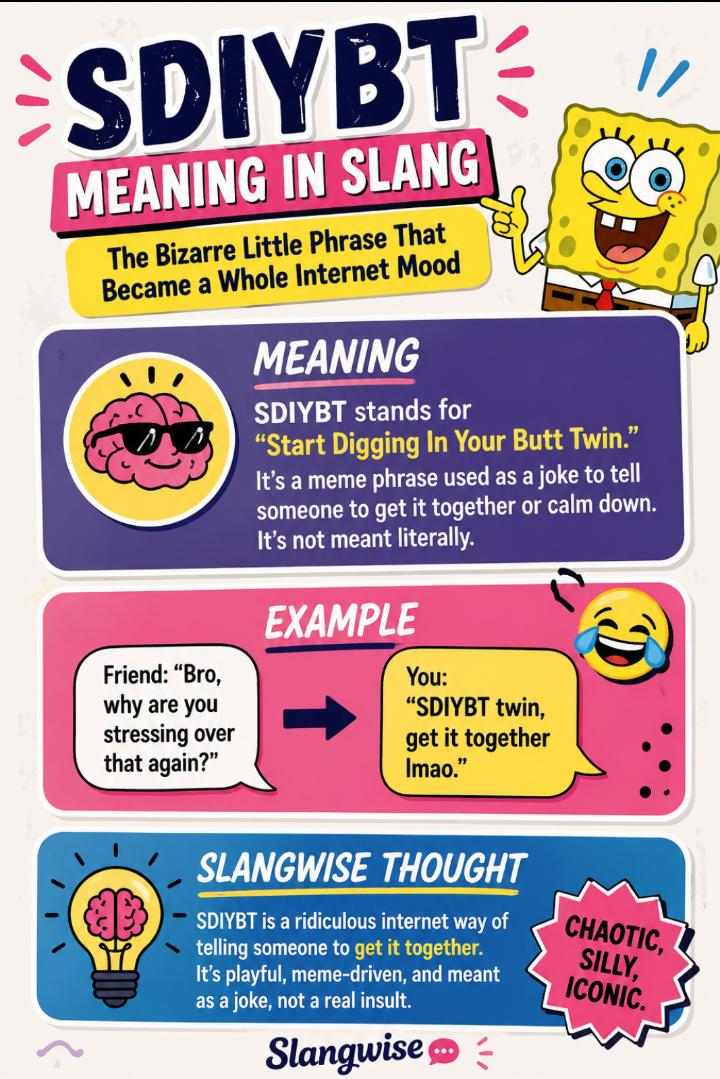
SDIYBT is a slang acronym for “Start Digging In Your Butt Twin.” It is one of those internet phrases that sounds completely unhinged when you first hear it, and that is exactly why it spread so fast. The phrase is mostly used as a meme or joke line, not as something meant to be taken literally.
The word “twin” matters too. In internet slang, it is often a friendly way to address someone, a bit like saying “bro” or “bestie.” That is why the phrase can sound strangely affectionate even while it is also ridiculous. It is not really about anatomy or a serious command. It is about the vibe, the joke, and the shared absurdity.
In plain English, the phrase is usually used to mean something like: “You are acting wild, so calm down and straighten yourself out.” One definition frames it as a playful way of telling a friend to get it together, or to stop acting irrationally.
Another common explanation says it works as a joking nudge for someone to start doing something or get moving.
READ ALSO: You Stole My Brainrot Meaning: The Viral Slang Line Kids Keep Saying on Repeat
Where Did SDIYBT Come From?
The phrase rose from a viral TikTok edit tied to a SpongeBob SquarePants episode. In one version of the clip, a robot responds with the line that later became the SDIYBT phrase, and the edit spread fast enough for teens and tweens to start repeating it in their own videos.
One write up notes that the clip gained hundreds of thousands of views in a short time, which helped launch the phrase into wider meme culture.
That origin matters because a lot of internet slang does not come from formal language at all. It comes from remix culture. People take a cartoon clip, a funny audio moment, or a random line that sounds off the wall, then turn it into a repeatable joke.
SDIYBT is a perfect example of that process. It is not polished, and that is part of the charm.
The phrase also sits inside the much larger “brainrot” world of online humor, where nonsense, repetition, and exaggerated weirdness become the point.
The “brainrot” label refers to being deeply immersed in internet content or obsessively fixated on meme culture, and SDIYBT fits right into that universe.
How People Use SDIYBT
The main way people use SDIYBT is as a playful joke with friends. It is the kind of phrase that shows up in comments, reaction videos, and group chats when someone wants to sound dramatic for comedic effect.
In some cases, it is used to poke fun at someone who is being extra, acting confused, or going way too hard over something small.
It also appears in music edits and lip sync videos. One report describes kids singing the phrase over popular songs, which is a classic internet move: take something absurd, then remix it into a totally different setting just to make people laugh.
Once a phrase reaches that stage, it has clearly crossed from a one off joke into a broader meme.
A lot of the appeal comes from timing. SDIYBT is funny because it sounds overly serious while actually meaning something silly. That contrast makes people laugh.
It is the same reason exaggerated meme language works so well in the first place: the more dramatic the wording, the funnier the payoff when everyone knows it is just a joke.
READ MORE: Clock That Meaning in Slang: The Fast, Funny Phrase Everyone Is Quietly Using
Why It Spread So Fast
There are a few reasons SDIYBT caught on. First, it is easy to repeat. Even though it looks strange, the rhythm makes it memorable. Second, it is visually and verbally absurd, which is exactly the kind of thing that performs well in short form video. Third, it feels like an inside joke, and internet users love feeling like they are in on something that outsiders do not fully get.
Another reason is that the phrase is flexible. People can use it as a reaction, a punchline, a teasing remark, or a nonsense reply. That flexibility helps a meme survive because it can be dropped into different kinds of posts without needing a full explanation.
Once people started pairing it with reaction clips and meme audio, the phrase had enough momentum to keep traveling on its own.
The phrase also feels very specific to a certain online age group. Coverage about Gen Alpha slang shows that terms like this spread quickly among younger users and then puzzle older people who are not immersed in the same meme ecosystem. That generation gap helps the phrase feel even more like an internet badge of belonging.
Is SDIYBT Offensive?
It can be, depending on context. Most young people seem to treat SDIYBT as a silly joke, but because the wording is strange and intentionally rude sounding, some people could find it awkward or offensive if it is said directly to them.
One article notes that some online content using the phrase veers into more mature territory, so the tone and audience matter.
That is a good reminder with all slang: just because a phrase is funny in a meme does not mean it lands the same way everywhere. A phrase that gets laughs in a group chat might feel weird in class, at home, or with someone who does not know the reference. Context does all the heavy lifting here.
DISCOVER: 35 New Slang Words Taking Over the Internet Right Now (2026 Watchlist)
A Simple Way to Remember It
Think of SDIYBT as a chaotic meme version of “calm down and get yourself together, twin.” The exact words are intentionally ridiculous, but the social function is usually teasing, joking, or calling out silly behavior in a playful way. That is the core of it.
Or even simpler: it is a nonsense internet phrase that became funny because it sounds like it should mean something important, even though everyone is mostly using it for the joke. That mix of drama and absurdity is what makes it stick.
Slangwise Thought
If I had to sum it up in one clean line, I would say SDIYBT means a ridiculous internet way of telling someone to get it together. Most of the time it is playful, meme driven, and meant as a joke rather than a real insult.
That is why it has such a funny, exaggerated feel. It sounds like someone trying to turn a tiny moment into a loud one.
The best way to understand it is to hear the energy, not just the words. It is a phrase built for momentum. It wants humor, recognition, and a little bit of chaos, but usually in a joking, internet coded way.
READ MORE: Gen Z vs Gen Alpha Slang in 2026: What the Newest Internet Words Really Mean
Final Thought
SDIYBT is a perfect example of how internet slang is built now. A weird audio moment gets clipped, a cartoon scene gets remixed, a phrase sounds too ridiculous to ignore, and suddenly it becomes part of the online language people use with their friends.
It is messy, funny, and very much a product of meme culture. The bigger takeaway is that slang like this is less about literal meaning and more about belonging.
If you understand the phrase, you are inside the joke. If you do not, it sounds like absolute nonsense. That is exactly why phrases like SDIYBT can explode online so quickly.
Frequently Asked Questions
SDIYBT stands for “Start Digging In Your Butt Twin.” It is a viral meme phrase used mostly as a joke or playful reaction online.
No. It is not usually meant as a literal instruction. The phrase is used humorously, often to tease a friend or react to someone acting wild or out of pocket.
It spread from a viral TikTok edit of a SpongeBob SquarePants scene, where a robot’s dialogue was replaced with the phrase. That clip helped turn it into a meme.
“Twin” is internet slang for a close friend or peer. It gives the phrase a playful, familiar tone, even though the wording itself is absurd.
Table of Contents