
- Clock that usually means notice that, call that out, or acknowledge a truth.
- It is closely connected to clock it and clock that tea, which also lean toward noticing, exposing, or affirming something real.
- The phrase has roots in drag and ballroom culture, and it later spread through TikTok and other social platforms.
- It usually sounds playful, witty, and a little dramatic, so context matters.
What does clock that mean in slang?
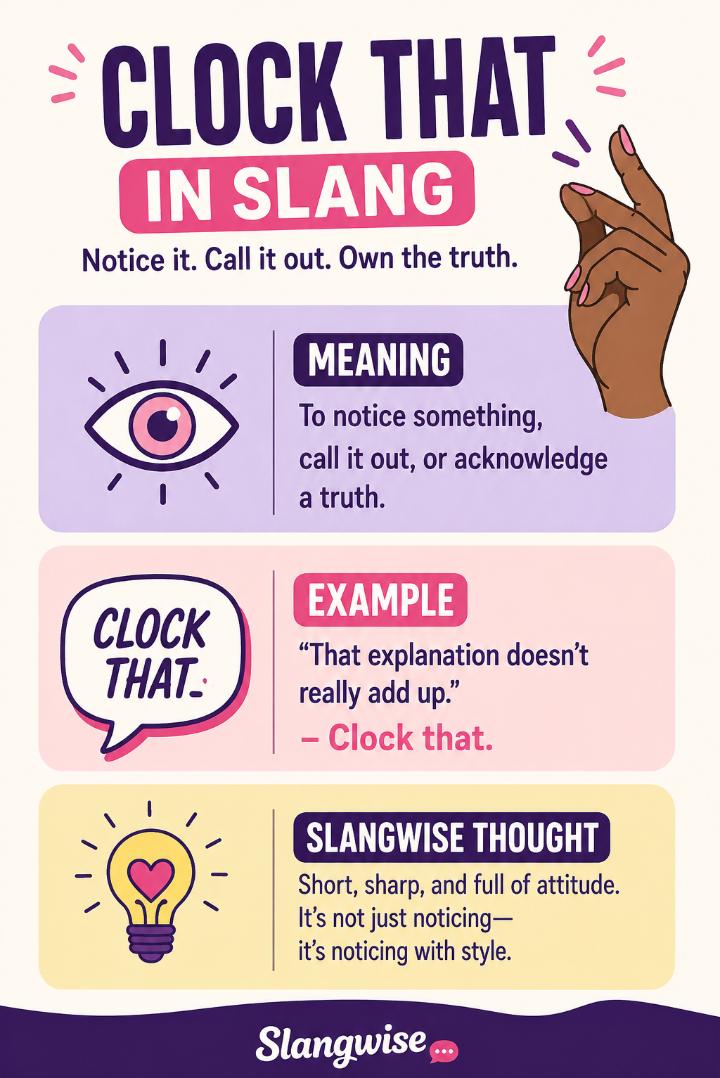
At its core, clock that is a slang phrase people use when they want to say, “notice that,” “catch that,” or “call that out.” In online conversation, it often shows that someone has picked up on a hidden detail, an awkward truth, a shady comment, or a moment that other people might miss.
It can also work like an instant reaction of agreement, as if you are saying, “Yes, exactly, that is the point.”
The phrase feels small, but it carries a lot of attitude. That is part of why people like it. It does not just point to something, it points to it with style. When someone says clock that, they are usually not speaking formally.
They are doing social shorthand, the kind that makes a conversation feel current, sharp, and in the know.
DISCOVER: The Ultimate List of 250 Most Popular Internet Slang Words of 2026
Where does clock that come from?
The slang family around clock is not brand new. In general English slang, clock can mean to see or notice something, which helps explain why this newer phrase makes sense even before you know its cultural background.
The more specific modern usage is tied to drag and ballroom culture, where clock it meant noticing or figuring something out, often in the sense of spotting a hidden truth. Over time, that expression moved into mainstream internet language, where it got shortened, remixed, and used more casually.
That is why clock that can feel familiar even if you have never studied slang. It sounds like a command to pay attention, but in practice it is often a reaction phrase, a quick verbal wink that says, “You see it too, right?”
How people actually use it
In real conversation, clock that often appears after someone says something bold, obvious, or suspiciously true. It can be a way of agreeing with a hot take, highlighting drama, or pointing to behavior that suddenly makes sense.
In some posts and clips, people also pair it with the little finger tap gesture that has become linked with clock it online.
Here is the vibe it usually gives off:
“Did you notice how quiet they got after that comment?”
“Clock that.”
Or:
“That explanation does not really add up.”
“Clock that, because something is off.”
Or even:
“She walked in and owned the whole room.”
“Clock that.”
Those examples are just everyday-style illustrations, but they match the way the phrase is used online, where people use it to recognize a truth, call attention to a detail, or affirm a reading of the moment.
READ ALSO: Ghost Kitchen Meaning in Slang: The Weird Food Term That Sounds Spooky but Is Everywhere Online
Why it sounds so catchy
Part of the appeal is rhythm. Clock that is short, punchy, and easy to say in a reaction moment. It does not need a long explanation. It works like a quick stamp of approval or recognition.
That is exactly the kind of language that thrives in meme culture, where a phrase has to be repeatable, fast, and funny enough to spread.
Another reason it sticks is that it feels a little smarter than basic agreement. Saying “I see that” is normal. Saying “clock that” feels more stylized. It sounds like you are not just watching, you are reading the room.
That is a big part of slang culture, turning ordinary observation into something with personality.
Is clock that the same as clock it or clock that tea?
They are related, but not always identical. Clock it is the broader and more established form in mainstream write ups, and it usually means noticing or recognizing something. Clock that tea adds the idea of spotting truth or gossip and calling it out directly.
Clock that often sits between the two, working as a shortened, flexible version that still carries the same “notice this” energy.
In plain language, you can think of it like this:
Clock it = I noticed it.
Clock that tea = I noticed the truth or the drama.
Clock that = Catch that, notice that, or call it out.
That flexibility is probably why the phrase keeps showing up in so many different places. It can work in a joking chat, a reaction caption, a comment under a video, or a playful back and forth between friends.
READ MORE: Suited Up Meaning in Slang: What It Really Says About Your Look and Your Energy
The tone matters
This is one of those slang phrases where tone changes everything. Used among friends, clock that can sound clever and light. Used in the wrong setting, it can sound confusing or overly performative.
Since the phrase grew out of queer and ballroom culture, it also carries a cultural history that people should understand instead of flattening into a random internet trend.
That is the real beauty of slang, honestly. The words are short, but the story behind them is rich. A phrase like clock that is not just about grammar or dictionary meaning. It is about social context, community creativity, and the way language keeps evolving in public.
Final thought
If you hear clock that online, think notice that, call that out, or yes, that is exactly what I saw too. It is a compact, stylish reaction phrase with roots in ballroom culture and a modern life on social media.
What makes it interesting is not just the meaning, but the energy behind it. It is fast, clever, and a little dramatic, which is exactly why people keep using it.
EXPLORE: 15 Slang Words for Flex Culture and Status: The Language of Drip, Luxury, and Soft Life
Frequently Asked Questions
It usually means to notice something, call something out, or acknowledge a truth in a quick, stylish way.
They are very close. Clock it is the more widely discussed form, while clock that is a shortened version that keeps the same noticing energy.
It comes from slang tied to drag and ballroom culture, where clock meant to notice or recognize something not immediately obvious.
It can be either, depending on the moment. It is often playful and affirming, but it can also be used when someone is calling out a truth or a shady detail.
Table of Contents