
If you have seen the word destim online and wondered, “Wait, what does that even mean?”, you are not alone. It is one of those newer slang words that feels instantly understandable once someone explains it, but oddly confusing the first time you see it written down.
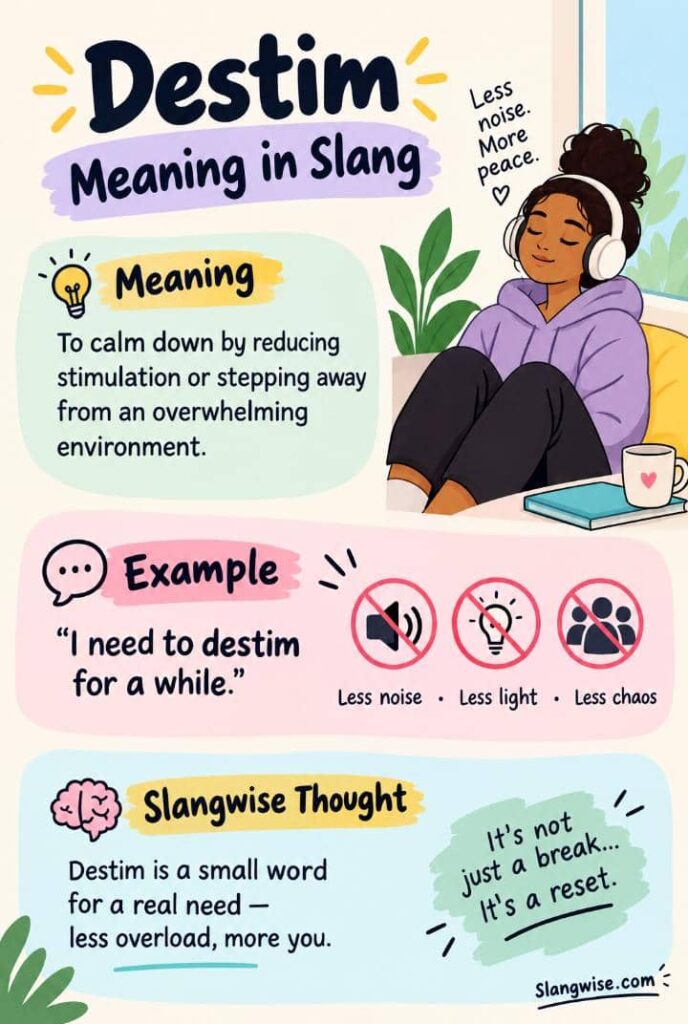
In plain English, destim means to calm down by getting away from overwhelming stimulation, like loud sounds, bright lights, busy spaces, or emotional overload.
It is used as a short, casual way of saying someone needs to decompress or reduce sensory input.
From the way I read this word in real conversation, destim is less about drama and more about recovery. It is the kind of word people reach for when they do not want a long explanation.
Instead of saying, “I am overstimulated and need a quiet place for a minute,” they just say, “I need to destim.” That is why the word works so well online. It is short, expressive, and it gets the point across fast.
Table of Contents
What Destim Means in Slang
At its core, destim comes from the idea of reducing stimulation. The “de” part suggests lowering or removing something, while “stim” points to stimulation.
That is why the word usually means stepping back from too much input so your mind or body can settle. It is commonly described as a verb and is often connected to conversations about sensory overload and decompressing.
In slang use, the word is not trying to sound technical. It feels more like an everyday label for a very real human need: a pause. A break. A quiet moment. A reset.
That is what gives it power. It takes a complicated feeling and turns it into something simple enough to say in one breath.
READ ALSO: Quiet Hiring Meaning: Are You Getting Promoted or Just Doing Two Jobs?
How People Use Destim
You will usually see destim in sentences where someone is describing a need to leave a stressful setting or reduce the intensity around them.
It is especially common in contexts that talk about anxiety, busy environments, neurodiversity, or general overstimulation.
Here are a few natural examples:
“Give me five minutes, I need to destim after that crowd.”
“I stepped outside to destim because the room was way too loud.”
“She does better when she has quiet time to destim after school.”
“He is not mad, he is just destimming for a bit.”
That last one is especially useful because it shows something important: destim is not always about anger or being rude. Sometimes it simply means someone is protecting their peace. They are not rejecting people; they are regulating themselves.
The Tone Behind the Word
One reason destim stands out is that it carries a very specific emotional tone. It sounds gentle, self-aware, and practical. It is not as heavy as “I am overwhelmed,” and not as vague as “I need space.” It sits in the middle, which is why many people like it.
In my understanding, the word also has a modern internet flavor. It belongs to a style of slang where people name feelings with neat little labels.
Think of it like emotional shorthand. Instead of explaining the whole backstory, you give the feeling a name and move on. That is very much how current online language works: quick, expressive, and efficient.
When Destim Makes the Most Sense
The word makes the most sense when someone is dealing with too much going on at once. That could be loud music, a packed room, too many conversations, stressful tasks, or even a screen-filled day that leaves the brain feeling tired.
In those moments, destim becomes a useful word because it points to a real action: reducing the noise, slowing down, and resetting.
That is also why it often feels more specific than words like “relax” or “chill.” Those words are broad. Destim is narrower and more vivid. It suggests that the problem is not just stress in general, but too much stimulation specifically.
DISCOVER: 60 WhatsApp Chat Slang Words You Need to Know Before Your Next Group Chat Gets Confusing
Slangwise Thought
Here is the part that matters most: destim is one of those slang words that shows how language evolves around real life. People do not always want fancy vocabulary.
Sometimes they just want a fast, honest word for what they are feeling. And that is exactly what this one does. It names the need to step back before your brain gets overloaded. That makes it practical, relatable, and very modern.
A Few More Natural Examples
Here are more examples so you can really feel the word in context:
“After the concert, I had to destim in silence for a while.”
“Too many notifications right now. I need to destim.”
“Let them destim first, then talk to them later.”
“Busy day, bright lights, loud voices. Definitely time to destim.”
These examples show that the word is flexible, but it always keeps the same core idea: stepping away from overload and giving yourself breathing room.
Why People Like Saying It
People like words like destim because they feel current and efficient. The word is short, easy to say, and easy to understand once you have heard it in context.
It also carries a little bit of emotional intelligence. It shows that the speaker understands their limits and is not ashamed to name them.
And honestly, that is part of the reason slang matters. Slang is not only about sounding trendy. It is also about creating useful language for real experiences. Destim fits that pattern perfectly. It is a small word with a surprisingly clear job.
EXPLORE: Gen Z Slang vs Gen Alpha Slang Words of 2026 (30 New Slangs; And What They Actually Mean)
TL/DR
- Destim is slang for calming down by reducing stimulation or stepping away from an overwhelming environment.
- People use it when noise, movement, social pressure, or too much activity starts to feel like “too much.”
- It often appears in conversations about decompressing, resetting, or avoiding sensory overload.
- The word is usually used as a verb: “I need to destim,” or “I went outside to destim.”
- In everyday speech, it is casual, modern, and very context dependent, so the tone matters a lot.
Conclusion
So, what does destim mean in slang? It means to calm down by reducing stimulation, usually after feeling overwhelmed by noise, activity, pressure, or sensory overload. It is a simple, modern word that helps people talk about a real need without overexplaining themselves.
If you see someone say they need to destim, the message is usually not complicated at all. They need a quiet moment. They need less noise. They need a reset. And in today’s fast, overloaded world, that makes destim one of the more useful slang words to know.
READ ALSO: What Does Quiet Quitting Really Mean to Gen Z? The Slang Everyone Thinks They Understand
FAQs
Yes. It is used as slang for calming down by reducing stimulation or stepping away from an overwhelming situation. It is commonly treated as a verb.
Not exactly. Relaxing is broader, while destim is more specific. It usually means reducing sensory input or escaping overload so you can settle down.
Yes, especially in informal settings or online chats. It works best when the other person will understand that you mean needing quiet, space, or a break from stimulation.
You can say it means “to calm down by stepping away from too much noise or stimulation.” That is the easiest plain-English version.