
In a Nutshell
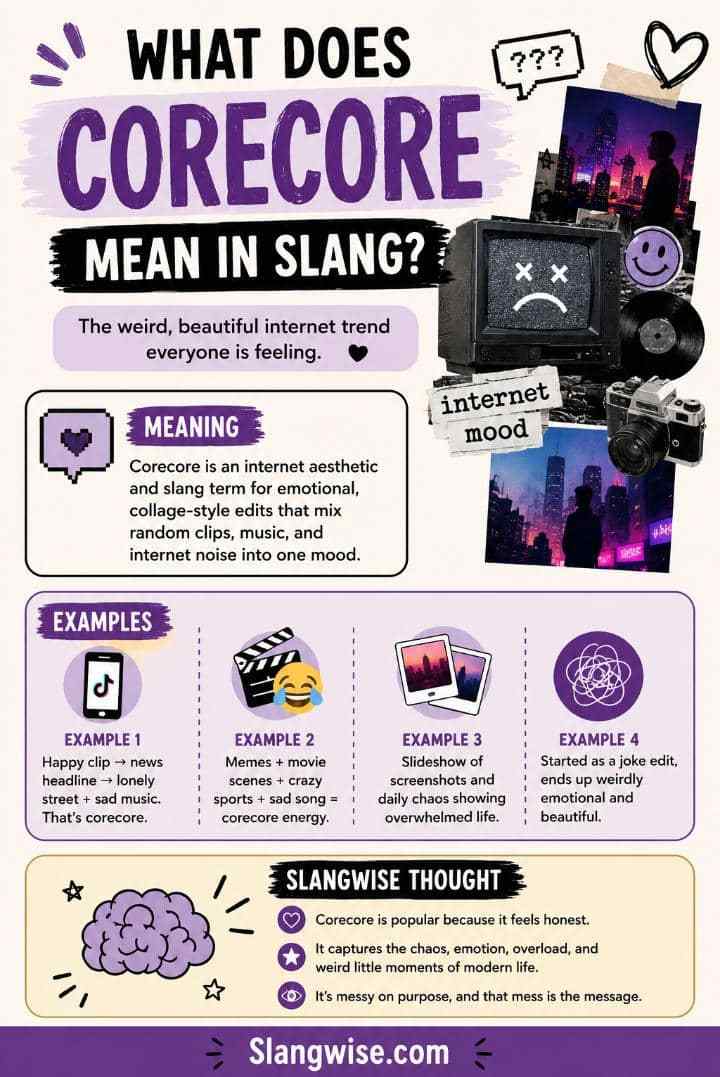
- Corecore is an internet aesthetic and slang term for emotional, collage-style edits that mix random clips, music, and internet noise into one mood.
- It is often used to reflect the feeling of being overwhelmed by modern digital life, not just to look “aesthetic.”
- The word is basically a playful twist on the internet’s long-running -core trend, which turned styles into labels like cottagecore and Barbiecore.
- Corecore is part art, part meme, part emotional dump, and that mix is exactly why people cannot stop talking about it.
- Get our free 270+ Internet Slang Ebook to get a bigger slang dictionary packed with meanings, examples, and more popular terms.
What does corecore mean in slang?
In slang, corecore is used to describe a type of online video or aesthetic that throws together seemingly random clips, usually with moody or reflective music, to create a strong emotional effect.
Think of it as internet collage with feelings. It is less about one clean, polished theme and more about capturing the messy, overstimulated, strange energy of being online right now.
What makes corecore stand out is that it does not feel like a normal aesthetic. It often includes memes, news clips, movie scenes, livestream moments, and everyday internet junk all smashed together on purpose.
The result can feel sad, chaotic, funny, thoughtful, or all four at once. That is why people describe it as an anti trend, or at least a trend that is suspicious of trends.
READ ALSO: Zombieing Meaning in Slang: The Creepy Dating Move That Comes Back From the Dead
Corecore origin
The word comes from the internet’s long love affair with the suffix -core, which grew out of older style labels and became a fast way to name visual moods and micro aesthetics online.
Over time, people started using the suffix for all kinds of looks and identities, from cottagecore to Barbiecore, and that overuse eventually inspired jokes and spin offs like corecore.
Corecore itself emerged as a response to that over saturation. Instead of naming one neat style, it doubled the word into corecore as a kind of joke and a critique.
Early versions appeared on Tumblr and later spread more widely through TikTok, where the format evolved into the emotional, mixed clip style people now recognize.
One widely discussed early video came from January 2021, and the hashtag later grew into hundreds of millions of views.
That origin story matters because corecore is not just “random edits.” It came out of digital fatigue, post 2020 mood shifts, and the feeling that online life had become too loud, too fast, and too packed with content.
In that sense, corecore is both a joke about internet culture and a real emotional response to it.
Examples of corecore in real life
Here are a few simple examples to help the term click.
Example 1:
A TikTok starts with a happy clip of friends laughing, jumps to a news headline, then cuts to a lonely street at night with soft piano music.
That is very corecore because it mixes unrelated material to create a deep feeling.
Example 2:
A video uses memes, a movie scene, a screaming football clip, and a sad song, then somehow leaves you thinking about life.
That is corecore energy.
Example 3:
Someone posts a slideshow of screenshots, daily chaos, and random internet moments to show how overwhelming modern life feels.
That also fits corecore.
Example 4:
A creator says they are making a joke edit, but the final result is weirdly emotional and strangely beautiful.
Yep, that is corecore too.
READ MORE: Love Bombing Meaning in Slang: The Intense Relationship Red Flag That Feels Like a Dream at First
Slangwise Thought
Here is the interesting part: corecore is not popular because it is polished. It is popular because it feels honest in a way that a lot of internet content does not.
In my view, that is why people connect with it so fast. It captures the brain fog, the emotion, the overload, and the weird little moments we all scroll past every day. It is messy on purpose, and that mess is the message.
Why people keep using it
People use corecore when they want to name that specific feeling of being online too much and seeing too much at once. It is not only a style label. It is also a mood label.
Sometimes it means a video is deliberately deep. Sometimes it means the edit is absurd but strangely moving. And sometimes it is used a little sarcastically, because internet users love calling something profound while also making fun of it.
That is part of why corecore feels so Gen Z. It is self aware, aesthetic, emotional, ironic, and a little exhausted all at once. It can comment on consumer culture, digital overload, loneliness, or just the weirdness of modern life.
You are not just watching a video. You are watching somebody try to bottle the internet’s emotional static.
Final thought
If you strip it down, corecore means an internet collage aesthetic built from random clips and heavy feeling. But that plain definition does not fully capture why it matters.
Corecore is what happens when online culture gets so loud that people start turning the noise itself into art.
It is chaos, but with a point. It is a joke, but also a cry from the digital deep end. And that is exactly why it stuck.
READ ALSO: Discover 27 of the most efficient slang words ever created, from tiny text shortcuts to iconic internet classics.
Frequently Asked Questions
Not exactly. It is more chaotic and reflective than most aesthetics, and it often focuses on emotion and digital overload instead of a clean visual theme.
Because many corecore edits use melancholic music and mixed clips to evoke loneliness, sadness, or the pressure of modern life.
It is both. Some people treat it like real art, while others see it as a playful response to internet over saturation.
It came from the internet’s long running -core naming style, then doubled into corecore as a satirical twist on that trend.
Table of Contents