
Briefly
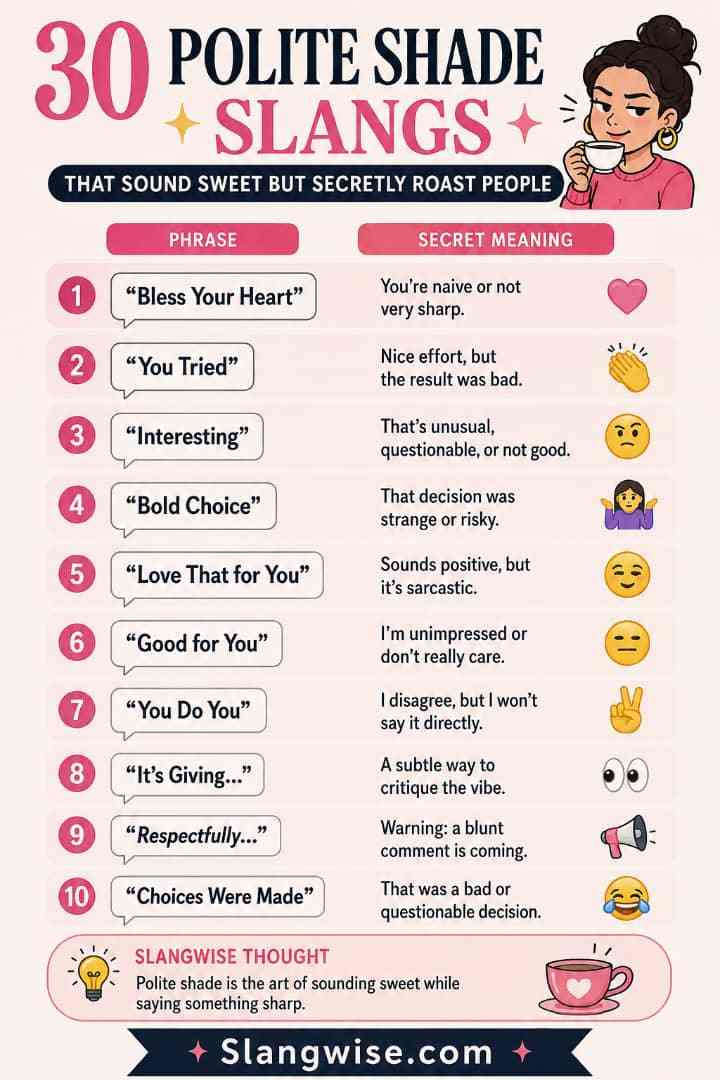
- Polite shade slang is the art of saying something sharp in a sweet voice.
- These phrases sound harmless at first, but the real meaning depends on tone, timing, and context.
- People love polite shade because it lets them call out behavior without sounding openly rude.
- Social media made this style of language even more popular because short, clever phrases travel fast.
- Knowing these terms helps you understand jokes, side comments, and subtle digs before they fly over your head.
Introduction
Not every insult arrives with a dramatic entrance. Some of the sharpest digs come wrapped in a smile, dressed in nice words, and delivered in a way that sounds almost helpful. That is exactly why polite shade slang is so interesting.
On the surface, these phrases can sound friendly, calm, or even supportive. Underneath, though, they often carry a tiny sting.
You have probably heard phrases like “Bless your heart,” “You tried,” or “Bold choice” and paused for a second. Are they being kind? Are they being shady? Are they joking? That little moment of confusion is part of the fun.
Polite shade works because it lets the speaker hide criticism inside politeness. It is not loud. It is not messy. It is quietly savage.
That is also why these phrases do so well online. TikTok, X, Instagram comments, group chats, and everyday conversations all love language that feels clever without being too aggressive.
A phrase that sounds sweet but lands like a subtle roast can be way more memorable than a direct insult. It is the kind of thing people repeat because it is funny, smart, and a little too relatable.
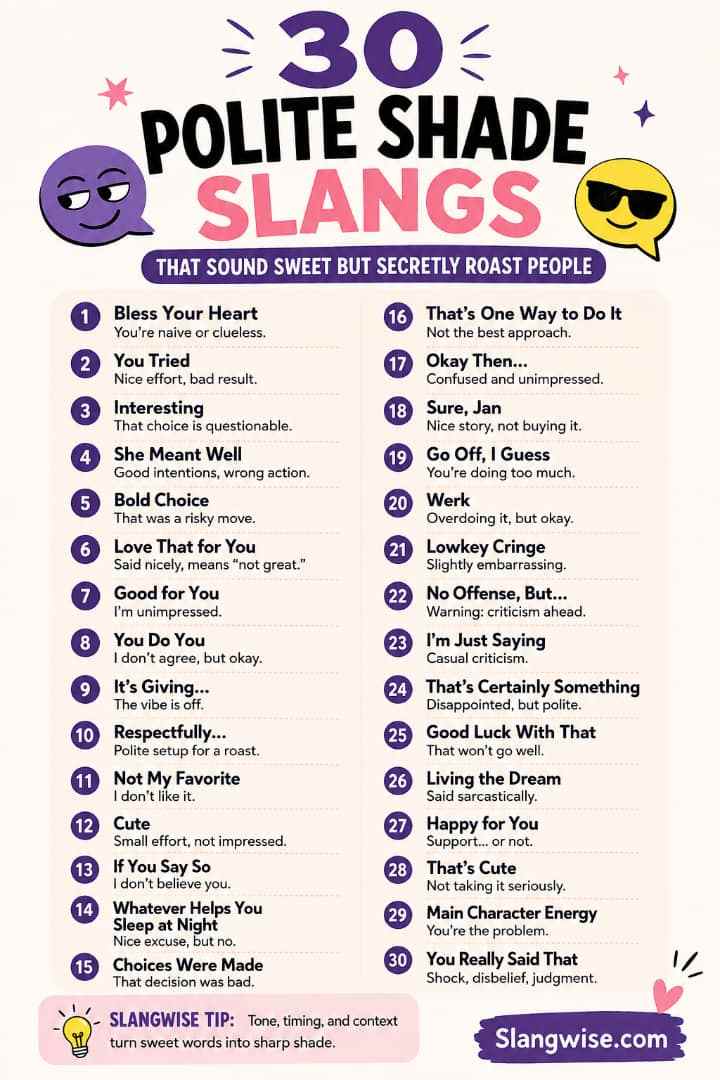
So in this post, we are going to break down 30 polite shade slangs in a way that is easy to follow, fun to read, and useful in real life. Ready? Let us read the room together.
1. Bless Your Heart
Meaning
This phrase sounds caring and gentle, but in many situations it is a polished way of saying someone is naive, clueless, or simply not very sharp. Depending on the tone, it can be sweet sympathy or disguised shade.
Example
“Bless your heart, you really thought that plan was going to work?”
Slangwise Thought
This is one of the most famous examples of polite shade because the words sound warm, but the message can be icy. The magic is in the tone. Said sincerely, it can feel kind. Said with a little pause and a soft smile, it suddenly becomes a tiny verbal jab. That is what makes it so iconic. It looks like comfort, but it often lands like a gentle roast with perfect manners.
2. You Tried
Meaning
This phrase can sound encouraging, but it often means the effort was there and the result was not. It is a soft way of saying “nice try, but no.”
Example
“You tried, and that is what matters… I guess.”
Slangwise Thought
“You tried” is shady because it gives just enough praise to avoid sounding cruel. It is the kind of thing people say when they want to acknowledge effort without pretending the outcome was good. That mix of encouragement and disappointment gives it its power. It is one of those phrases that can make someone laugh and cringe at the same time.
3. Interesting
Meaning
On the surface, this word seems neutral. In shady conversation, it often means unusual, questionable, or not impressive, but the speaker is being too polite to say that directly.
Example
“Interesting. That is the outfit you chose for the interview?”
Slangwise Thought
“Interesting” is one of the oldest polite shade words in the book. It works because it is vague enough to sound harmless, yet loaded enough to make people nervous. The real meaning is often not about curiosity. It is about restraint. The speaker clearly has more to say, but decides to keep it classy. That silence is where the shade lives.
4. She Meant Well
Meaning
This phrase is often used to excuse a bad comment, awkward action, or messy decision. It means the person had good intentions, but the result still came out wrong.
Example
“She meant well, but that was not the right thing to say in public.”
Slangwise Thought
“She meant well” is polite because it protects the person while still admitting the problem. It is a soft landing for failure. Instead of saying someone was rude, careless, or embarrassing, the speaker chooses a kinder path. Still, everybody hears the subtext. The intention may have been good, but the outcome? Not so much.
READ ALSO: 7 Secret Tricks to Master Internet Slang Before Everyone Else Does
5. Bold Choice
Meaning
This phrase sounds like a compliment, but it usually means the speaker thinks the decision was strange, risky, or questionable.
Example
“Bold choice wearing neon green to a formal dinner.”
Slangwise Thought
“Bold choice” is a masterclass in polite shade because it sounds like confidence while quietly questioning judgment. It can be used for fashion, behavior, opinions, or lifestyle choices. What makes it funny is that it sounds so calm. There is no shouting, no drama, no obvious insult. Just a clean little comment that says, “I saw that, and I have questions.”
6. Love That for You
Meaning
This phrase can be genuinely supportive, but it is often used sarcastically to imply that someone made a strange or bad decision.
Example
“You quit your job to become a full time influencer? Love that for you.”
Slangwise Thought
This one became huge because it sounds positive no matter how it is used. That is exactly why it works so well as shade. You can say it with a cheerful voice and still make the other person feel judged. It is polite, trendy, and just sarcastic enough to keep things interesting. Sometimes it is a hug. Sometimes it is a roast in a pastel sweater.
7. Good for You
Meaning
This phrase can be sincere, but in shady situations it often means the speaker is unimpressed, indifferent, or quietly skeptical.
Example
“You woke up at 5 a.m. to answer emails? Good for you.”
Slangwise Thought
“Good for you” is one of those phrases that depends heavily on tone. Said warmly, it is support. Said flatly, it feels like emotional distance. That is what makes it such a useful polite shade line. It lets someone act polite while clearly not being moved. The message underneath is often, “That is your business, not mine.”
8. You Do You
Meaning
This phrase means “make your own choices,” but it often carries a hidden message of disagreement or quiet disapproval.
Example
“If that hairstyle works for you, you do you.”
Slangwise Thought
“You do you” is clever because it sounds like acceptance, yet it can easily become a very polite form of side eye. It is what people say when they do not want to argue, but they also do not want to be associated with the decision. It keeps the peace while still allowing a little distance. That is classic polite shade behavior.
9. It’s Giving…
Meaning
This phrase is used to describe the vibe or energy of something, but it often becomes a subtle way to criticize it.
Example
“It is giving ‘I did not read the assignment.’”
Slangwise Thought
“It’s giving” is one of the most flexible modern slang phrases because you can use it for almost anything. Style, energy, mood, effort, attitude. When used with shade, it becomes a very slick way to point out something embarrassing or overdone. The phrase sounds playful, but the person on the receiving end usually knows exactly what it means.
10. Respectfully…
Meaning
This word is used as a polite setup before saying something blunt, critical, or slightly savage.
Example
“Respectfully, that was not a good presentation.”
Slangwise Thought
The genius of “respectfully” is that it pretends to soften the blow, but it also makes the blow feel sharper because everyone knows what is coming. It is like putting a bow on criticism. The phrase creates a little buffer, but the message still gets through. In group chats and online comments, it is a favorite for people who want to roast with manners.
11. Not My Favorite
Meaning
This is a softer way to say you dislike something without sounding too harsh.
Example
“That song is not my favorite, but I can see why people like it.”
Slangwise Thought
This phrase is the polite cousin of “I do not like that.” It gives the speaker room to be kind while still sharing their opinion. In some cases, it is sincere. In shady situations, it becomes a very gentle dismissal. It is one of the best examples of how people can say a lot by saying very little.
12. Cute
Meaning
“Cute” can mean adorable, but in shade language it often means unserious, unimpressive, or too little too late.
Example
“Oh, that comeback was cute.”
Slangwise Thought
This word is tiny but dangerous. When said in the right tone, “cute” can reduce a big effort into something small and forgettable. That is what makes it such an effective polite insult. It sounds light. It sounds harmless. But it can absolutely sting. A single word, delivered right, can carry the whole side eye.
13. If You Say So
Meaning
This phrase often signals that the speaker does not fully believe what they just heard.
Example
“You are the best driver in the group? If you say so.”
Slangwise Thought
This is a perfect example of polite disagreement. It does not start a fight. It does not call anyone a liar directly. It simply places the burden of belief back on the other person. That quiet disbelief is what makes it shady. It is a nice way of saying, “I am not convinced.”
14. Whatever Helps You Sleep at Night
Meaning
This phrase suggests that the other person is making excuses or telling themselves a story that is not fully true.
Example
“If that excuse makes sense to you, whatever helps you sleep at night.”
Slangwise Thought
This one has a little more bite than the others because it implies denial, self comfort, or rationalizing a bad choice. Still, it keeps the tone just polite enough to avoid open conflict. It is the kind of line that sounds calm while clearly carrying a message. People use it when they want the other person to know they are not buying the explanation.
DISCOVER: 45 AI Slang Words Everyone Should Know in 2026
15. Choices Were Made
Meaning
This phrase means the decision was noticeable, questionable, or just plain bad, but the speaker is being diplomatic about it.
Example
“After seeing that haircut, all I can say is… choices were made.”
Slangwise Thought
“Choices were made” is a beautiful piece of polite shade because it sounds so neutral while being extremely judgmental. It does not even need to explain itself. Everyone already understands the vibe. The phrase works especially well online because it lets people roast without sounding too mean. It is basically the verbal version of a very slow blink.
16. That’s One Way to Do It
Meaning
This phrase means the method was unusual or not ideal.
Example
“You used tape, glitter, and a shoe to fix it? That is one way to do it.”
Slangwise Thought
This phrase is sneaky because it sounds like recognition, but it usually means the speaker thinks there was a better option available. It gives the other person credit for creativity while also making it clear that the approach was questionable. That balance between praise and critique is exactly what makes polite shade so entertaining.
17. Okay Then…
Meaning
This phrase can express confusion, awkwardness, or mild disapproval.
Example
“You left the group chat because nobody replied fast enough? Okay then…”
Slangwise Thought
“Okay then…” is short, quiet, and very effective. It can end a conversation without actually ending it. That pause after the words does a lot of work. It suggests the speaker is processing what just happened and not necessarily impressed. It is not loud shade. It is the kind that lands through awkward silence.
18. Sure, Jan
Meaning
This meme phrase is used when the speaker does not believe what someone is saying.
Example
“You totally invented that trend? Sure, Jan.”
Slangwise Thought
“Sure, Jan” has major internet history energy because it became a classic skeptical response. It sounds friendly enough at first, but everyone knows it is sarcastic. The phrase is strong because it is playful while still calling out nonsense. It is one of the cleanest ways to say, “Nice story, but no.”
19. Go Off, I Guess
Meaning
This phrase can sound encouraging, but it often means the person is doing too much, being dramatic, or making a scene.
Example
“You really started an argument in the comments over that? Go off, I guess.”
Slangwise Thought
This line is perfect for shady commentary because it mimics support while quietly throwing doubt on the behavior. The “I guess” is doing a lot of heavy lifting. It turns excitement into reluctant approval. It is the kind of thing people say when they are amused, slightly concerned, and not trying to get too involved.
20. Werk
Meaning
This word can be genuine hype, but it can also be used sarcastically when someone is clearly overdoing it.
Example
“Werk, if that is the look you were going for.”
Slangwise Thought
“Werk” is fun because it lives in that blurry space between praise and shade. It can cheer someone on, or it can be used with a dramatic pause to imply that the performance is a little much. That flexibility is what keeps it trendy. It sounds playful, but like many polite shade phrases, tone is everything.
21. Lowkey Cringe
Meaning
This phrase means something is slightly embarrassing or awkward, but not in a huge or dramatic way.
Example
“That apology video was lowkey cringe.”
Slangwise Thought
“Lowkey cringe” is a softer roast because it admits the embarrassment without exaggerating it. It is not saying the situation is a total disaster. It is just saying it is quietly uncomfortable. That makes it perfect for online reactions where people want to be honest without sounding like a full blown hater.
READ MORE: Lipid Slang Meaning: The Weird Science Compliment Taking Over Internet Talk
22. No Offense, But…
Meaning
This phrase is usually a warning that a critical comment is coming.
Example
“No offense, but your argument does not really make sense.”
Slangwise Thought
This is one of the oldest polite shade setups in the world. It rarely protects feelings, but it does signal that the speaker is about to say something blunt. The phrase gives the illusion of softness before the sharp part arrives. Everybody knows what it means. That is why it works so well and why people use it constantly.
23. I’m Just Saying
Meaning
This phrase is used to make criticism sound casual or harmless, even when it is clearly pointed.
Example
“I am just saying, the older version looked better.”
Slangwise Thought
This is one of the most classic ways to dodge responsibility for shade. The speaker gets to say the thing and then pretend they are not being intense about it. It creates distance between the opinion and the person saying it. That distance is what makes the phrase feel smooth, sly, and just a little suspicious.
24. That’s Certainly Something
Meaning
This phrase is a polite way to express disbelief, disappointment, or confusion without saying too much.
Example
“That performance was certainly something.”
Slangwise Thought
This phrase is almost too polite, which is exactly why it works. It sounds like the speaker is trying to stay calm, but everyone can tell there is more going on underneath. It is the kind of line you use when you do not want to fight, but you also do not want to pretend everything was fine. The shade is hidden in the restraint.
25. Good Luck With That
Meaning
This phrase can sound supportive, but it often means the speaker thinks the plan is unrealistic or doomed.
Example
“You are going to finish that entire project tonight? Good luck with that.”
Slangwise Thought
This is a very clean example of polite skepticism. The words sound encouraging, but the meaning usually leans toward doubt. It does not directly say “that will fail,” yet everyone hears the message. It is useful because it keeps the speaker from sounding harsh while still making their opinion obvious.
26. Living the Dream
Meaning
This phrase can be sincere, but it is often used sarcastically to describe a bad or exhausting situation.
Example
“How is work going? Living the dream.”
Slangwise Thought
“Living the dream” is one of the funniest sarcastic phrases because it sounds so positive that the irony becomes obvious. The person may be stressed, overworked, or deeply annoyed, but the phrase lets them say it with a smile. That contrast between words and reality is what makes it such good shade.
27. Happy for You
Meaning
This phrase can be genuine support, but it is also commonly used with a dry or sarcastic tone.
Example
“You got promoted again? Happy for you.”
Slangwise Thought
This phrase is tricky because it can be warm or cold depending on the delivery. When it is heartfelt, it is lovely. When it is clipped, it becomes very clear that the speaker is not exactly thrilled. That flexibility is why it shows up so often in shady conversations. It is polite enough to avoid direct conflict, but loaded enough to be read correctly.
28. That’s Cute
Meaning
This phrase can mean adorable, but in shade it usually means the speaker is not taking the situation seriously.
Example
“You think that tiny apology fixes everything? That is cute.”
Slangwise Thought
“That’s cute” is one of those phrases that can feel sweet one second and icy the next. It often gets used to downplay someone’s effort, idea, or confidence. The word itself is harmless. The tone is what turns it into a roast. That contrast is exactly why it stays popular in internet culture.
DISCOVER: 50 Military Slangs Terms That Reveal the Secrets, Humor, and Chaos Behind Service Life
29. Main Character Energy
Meaning
This phrase can be playful and positive, but it can also mean someone is acting overly dramatic, self focused, or like the world revolves around them.
Example
“Walking into the room late and acting like everyone was waiting for you? That is main character energy.”
Slangwise Thought
This is a modern slang favorite because it can be both a compliment and a polite dig. Used kindly, it means confidence and presence. Used shadefully, it means someone is being a little too much. That dual meaning makes it especially useful in conversations where people want to tease without being outright mean.
30. You Really Said That
Meaning
This phrase can express surprise, disbelief, or quiet judgment after someone says something awkward or bold.
Example
“You really said that in front of everybody?”
Slangwise Thought
This is a great closing phrase because it lets the speaker react without needing a full explanation. The question itself does the work. It suggests the statement was shocking, inappropriate, or unintentionally funny. It is polite, but only barely. The shade comes from the disbelief wrapped inside the calm wording.
Conclusion
Polite shade slang is one of the funniest parts of modern internet language because it proves you do not always need loud words to make a sharp point. A small phrase, a soft tone, or a carefully chosen sentence can say more than a full argument ever could.
That is why these expressions travel so well across social media. They are clever, memorable, and just subtle enough to let people save face while still getting the message across.
Sometimes they are playful. Sometimes they are savage. Sometimes they are both at once. And honestly, that is the charm.
The next time you hear someone say, “Bless your heart,” “Bold choice,” or “Good for you,” pause for a second. Are they being sweet, or are they serving polished shade with a smile? Once you learn how to spot these phrases, you start noticing them everywhere.
And that is the fun of slang. It is not only about words. It is about tone, timing, and the little social clues hidden between the lines.
FAQs
Polite shade slang is language that sounds kind, neutral, or even flattering, but actually carries a hidden insult, criticism, or sarcastic message.
People use it to sound less rude, avoid confrontation, keep things playful, or make a roast feel clever instead of harsh.
Not always. Some phrases are genuinely kind in the right context. The meaning depends on tone, body language, and the situation.
“Bless your heart” is one of the most famous because it can sound sweet while quietly delivering a sharp message.
Look at the tone, the pause, the facial expression, and the context. If the words sound positive but the energy feels off, it may be polite shade.
Table of Contents