
- Parasocial describes a one sided connection where a person feels close to a public figure, creator, character, or even AI, without a real mutual relationship.
- The term has become much more visible in Gen Z and internet culture because social media makes public figures feel more familiar and accessible.
- People use it to describe emotional attachment, fan behavior, and the feeling of “knowing” someone online even though the relationship is not reciprocal.
- The word can be neutral, descriptive, or critical depending on context, especially when people discuss boundaries or over attachment online.
Table of Contents
What Does Parasocial Mean in Slang?
Parasocial is one of those words that sounds academic at first, but it has become very normal in everyday online conversation.
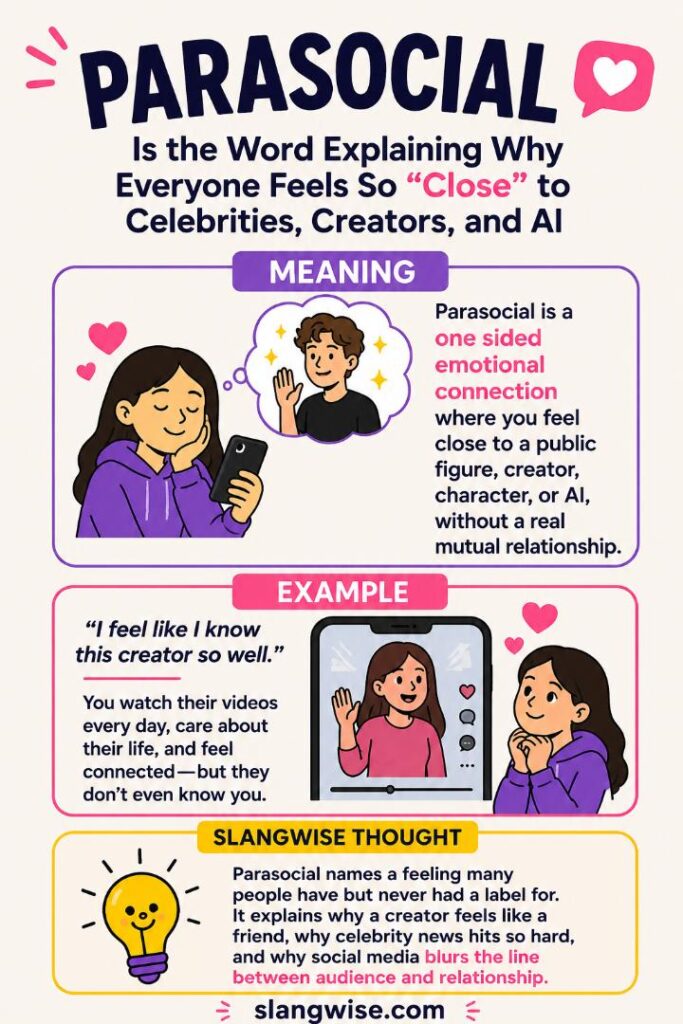
It describes a one sided emotional connection where someone feels close to a celebrity, influencer, streamer, fictional character, or even an AI, even though that connection is not mutual.
That is why people say things like, “That is kind of parasocial,” when they think someone is acting too personally invested in a public figure who does not actually know them.
But the word does not always have to sound negative. Sometimes it is just a plain description of how modern fan culture works.
In other words, parasocial is about a feeling of closeness without real reciprocity. One person may feel seen, understood, or emotionally connected, while the other side has no personal relationship at all. That is the core idea.
READ ALSO: Moot Meaning: The Gen Z Word Everyone Uses Without Explaining It. Here’s What It Actually Means
Slangwise Thought on Parasocial
My take is that parasocial is one of the most important words in modern internet culture because it names a feeling many people have but never had a neat label for.
It explains why a creator can feel like a friend, why a celebrity breakup can feel weirdly personal, and why social media can blur the line between audience and relationship.
Why Do People Use Parasocial So Much Now?
The word has exploded in popularity because social media changed the way people experience public figures.
Creators now speak directly to cameras, share routines, tell stories, reply in comments, and post almost like they are talking to one person at a time. That style makes the connection feel personal, even when it is revally one sided.
It is also showing up more because people are now applying it to AI. Recent dictionary coverage has noted that parasocial is being used to describe emotional connections people form with chatbots and other digital personas, not just celebrities or fictional characters. That is a big reason the word feels so current.
And yes, the word has a lot of cultural weight right now. In 2025, Cambridge Dictionary named parasocial its Word of the Year, reflecting how common the term had become in conversations about influencers, celebrities, and AI.
DISCOVER: 72 Most Popular Gen Z Slang Words of 2026 – Rizz, Delulu, Skibidi etc., And What They Secretly Mean Online
How Parasocial Shows Up in Real Life
You do not need a psychology degree to understand it. Think about the last time you watched someone’s videos every day and started feeling like you “knew” them.
Maybe you cared about their opinions, their routines, their relationship drama, or even their tone of voice. That can create a parasocial feeling because repeated exposure can make a public figure feel familiar and emotionally close.
A fan might say, “I know way too much about this creator,” or “That was a parasocial moment,” when they notice themselves getting too emotionally invested.
The word is often used in fandom spaces, especially where people interact constantly with celebrities, streamers, sports figures, or fictional characters.
It can also apply to emotional reactions. For example, people sometimes feel genuine sadness when a public figure they follow goes through a breakup, disappears from the internet, or dies.
Researchers have long noted that these one sided connections can feel emotionally real even though the relationship is not mutual.
Is Parasocial a Bad Thing?
Not always. The word itself is not automatically an insult. It is more of a label for a type of connection. Sometimes parasocial attachment is harmless and even comforting, especially when people enjoy entertainment, community, or companionship through media.
But it can become a problem when someone starts expecting a real relationship, real access, or real emotional responsibility from a person who does not know them personally.
That is when the term often shows up in a more critical way, especially online, where boundaries can get blurry fast.
So the smartest way to think about parasocial is this: it is not always unhealthy, but it becomes important when feelings start replacing reality. That distinction matters a lot in the age of influencers, livestreams, and AI companions.
SEE ALSO: Everyone Keeps Saying Lowkey. Here’s Why It Means More Than You Think
Why Parasocial Sticks So Easily
Parasocial works because it names something people already feel. It is short enough to use in conversation, but specific enough to explain a very modern experience. That is rare. Many slang terms are funny or trendy, but this one is useful.
It also fits the way we live online now. People are not just watching content anymore. They are building routines around creators, feeling emotionally invested in public lives, and sometimes mistaking familiarity for real connection. Parasocial gives all of that a single label.
Conclusion
Parasocial is the word for a one sided emotional connection that feels personal even though it is not mutual.
In slang, it helps people describe the strange but very normal feeling of being attached to a celebrity, creator, fictional character, or AI persona you have never actually met.
It can be neutral, funny, or a little critical, depending on how it is used. But at its core, it explains a very modern truth: the internet can make distance feel like closeness. And that is exactly why the word has become so important.
FAQs on Parasocial
It means feeling emotionally close to a public figure, creator, character, or AI even though the connection is one sided and not mutual.
No. It can be neutral or even comforting. It becomes negative mainly when the attachment turns into unrealistic expectations or boundary issues.
Yes. Recent dictionary updates and coverage now include AI chatbots and digital personas as possible targets of parasocial connection.
Because social media, livestreams, and direct creator communication make public figures feel more personal and accessible than before.
READ ALSO: You Have a Soft Grunge Heart If You Do These 9 Things (No. 6 Will Make You Cry)