
- “Moot” in slang usually means a mutual follower or mutual connection on social media.
- People use it for someone they follow and who follows them back, often in a friendly or fandom context.
- The word is common in online spaces like X, TikTok, Tumblr, and fandom communities.
- It can sound casual, warm, and community driven, which is why it spread so fast.
Table of Contents
What Does Moot Mean in Slang?
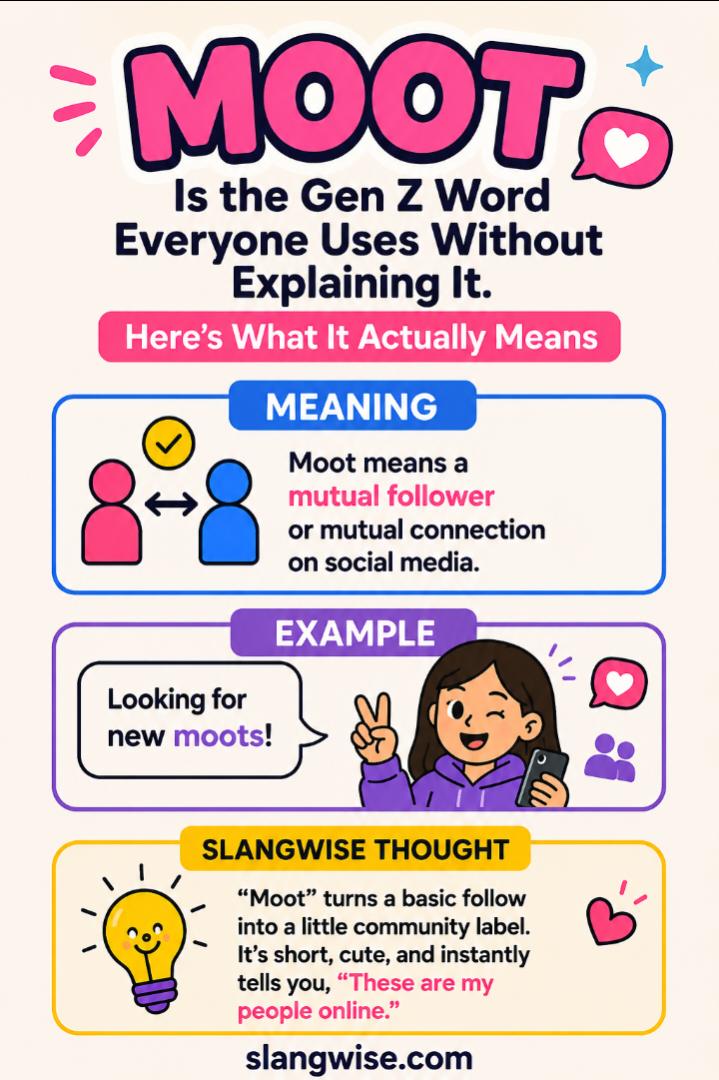
In Gen Z and internet slang, moot usually means a mutual or mutual follower. In simple terms, it is someone you follow online who follows you back. People also use the plural form moots when talking about a whole group of mutuals.
That makes the word feel very social and very online. It is not just about numbers or followers. It is about a two way connection that feels familiar, active, and sometimes even friendly.
A lot of people use “moots” to talk about the people they interact with often, especially in fandom spaces or on fast moving social platforms.
So if someone says, “My moots are so funny,” they are talking about the people who follow them back and usually engage with their posts. If they say, “Looking for new moots,” they mean they want more mutuals to connect with online. That is the heart of the slang.
READ ALSO: Bih Meaning in Gen Z Slang: What It Really Means and How People Use It
Slangwise Thought
My take is that “moot” is one of those words that makes online friendship feel smaller, warmer, and more personal. It turns a basic follow into a little community label. That is why people like it so much. It is short, cute, and instantly tells you, “These are my people online.”
Where Did Moot Come From?
The slang meaning comes from mutuals or mutual followers, with the word clipped down into a shorter, easier form.
Some explanations describe it as a shortening and phonetic respelling of “mutual follower,” which makes sense because internet slang often favors fast, compact words that are easy to type and repeat.
The word became especially noticeable in online communities where people interact a lot with the same group of accounts.
It was particularly common in fandom spaces, including K pop communities, and on platforms where mutual engagement matters a lot. Over time, it spread beyond those spaces and became a general internet slang term.
That is part of what makes “moot” interesting. It did not become popular because it was formal or polished. It became popular because it felt natural in the way people already talked online. Internet slang tends to grow when it saves time and creates a sense of belonging, and moot does both very well.
READ MORE: Snack Meaning in Gen Z Slang: Why Calling Someone a “Snack” Is Such a Big Compliment
How People Use Moot in Real Life
You will most often see “moot” or “moots” in casual online conversation. Someone might say, “My moots saw my post before anyone else,” meaning their mutuals were the first ones to notice it.
Another person might say, “I love all my moots,” which is basically an affectionate way of talking about their online circle.
It is also common in phrases like “follow for follow moots” or “looking for moots,” which are ways people signal that they want reciprocal online connections.
In other words, the word is often used when someone wants a friendlier, more interactive social media experience rather than one sided following.
A nice thing about the word is that it can feel friendly without being overly serious. It is not a formal relationship label. It is more like a little nickname for people in your online orbit. That is why it works so well in comment sections, captions, and casual DMs.
Why People Like Saying Moot
People like “moot” because it feels close and community based. It is a word that creates belonging. Instead of saying “followers” in a cold, technical way, “moots” makes the connection feel mutual and more human. That is a big reason it stuck.
It also fits the pace of online language. Short words win because they are easy to type, easy to remember, and easy to repeat.
Moot has that quick, chatty energy that fits modern social media perfectly. It sounds like something that belongs in a group chat, a fandom thread, or a quick post to your online friends.
And honestly, that is why it feels so Gen Z. The word does not try too hard. It just quietly signals that there is a shared online connection, and that is enough. In a world where people want to feel seen, even a tiny word like moot can carry a lot of social meaning.
DISCOVER: Why Everyone Keeps Saying Valid and Why It Means More Than Approval
Conclusion
“Moot” in slang means mutuals or mutual followers, usually people who follow each other and interact on social media.
It is a simple word, but it captures a very modern kind of friendship: casual, reciprocal, and built online. That is why it became so useful in fandom culture and across social platforms.
If someone calls you a moot, they are basically saying you are part of their digital circle. And in internet language, that is a pretty warm compliment.
FAQs On Moot
It usually means a mutual follower or mutual connection on social media.
Yes. “Moot” is often used in the singular, while “moots” is the plural form people use when talking about multiple mutuals.
It is most common on social media platforms and in fandom communities, especially where people interact with mutual followers.
Usually yes. It is generally friendly, casual, and community oriented, though the exact tone depends on how it is used.