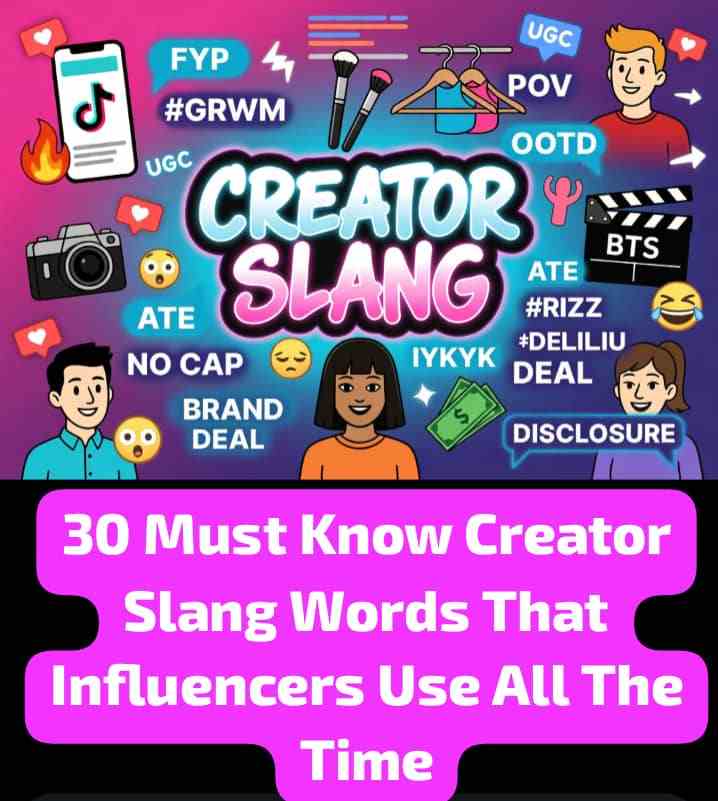
Ever watched a creator say something like “This better hit the FYP,” “GRWM with me,” or “no cap, this brand deal ate,” and felt like you were hearing a whole second language?
You are not imagining it. Creator slang is now part internet culture, part marketing language, and part community code. It shows up in captions, comments, pitch decks, livestreams, TikTok voice overs, Reels, YouTube Shorts, and even brand negotiations.
TikTok’s For You feed is designed as a personalized discovery feed, and social media glossaries from late 2025 and early 2026 show that creators are still using a mix of platform acronyms, Gen Z slang, and creator economy shorthand every single day.
In my opinion, that is what makes this language so interesting. It is not just “internet talk.” It is a practical toolkit for sounding relatable, building community, describing content formats fast, and talking about money without sounding stiff. That is also why a good creator slang guide has to cover both the playful words and the business words.
Table of Contents
In a nutshell
Creator slang is the fast moving language of online people who make content, consume content, and work with brands.
Some terms describe content formats, like GRWM, POV, OOTD, and BTS. Others describe reactions or vibes, like ate, rizz, cap, no cap, delulu, mid, and IYKYK.
The rest are the business side of the creator economy, including UGC, media kit, affiliate, sponsored, disclosure, whitelisting, and brand deal.
Together, they help creators speak quickly, signal belonging, and keep up with the culture that platforms keep rewarding.
Why creator slang matters so much
Creators use slang for the same reason musicians use hooks and comedians use catchphrases. It is efficient, memorable, and identity building.
A short slang phrase can carry a whole mood. “FYP” points to discovery, “UGC” points to authenticity, “whitelisting” points to paid amplification, and “ratioed” points to public pushback.
These words are now common enough to show up in major social media glossaries, creator resources, and platform policies.
There is also a strategic side. Creators and brands often use slang to sound natural without sounding forced. That matters because social platforms are built around discovery, engagement, and conversation, not just polished broadcasting.
At the same time, official guidance from the FTC and Meta makes it clear that sponsored content still needs transparency, even when it is wrapped in casual creator language.
The 30 creator slang words and phrases
1. FYP
If you spend any time on TikTok, you already know this one. FYP means For You Page, which is TikTok’s personalized discovery feed. Creators talk about “hitting the FYP” because they want their content to land in front of people who do not already follow them.
TikTok says the For You feed is the first feed users see and is shaped by interests and engagement, which is exactly why the phrase carries so much weight.
2. GRWM
GRWM means Get Ready With Me. It is one of the most recognizable creator formats across TikTok, Instagram, and YouTube style content. A GRWM can be makeup, outfit planning, skincare, getting dressed for an event, or just chatting while getting ready.
Sprout Social and Buffer both describe it as a creator format built around filming the preparation process, which is why it works so well for personality driven content.
3. POV
POV means Point of View. On social media, creators use it to drop viewers into a tiny scenario, joke, or story scene, like “POV: you are the friend who always gets the window seat.”
It is a storytelling shortcut that makes the viewer feel included, and social media glossaries consistently describe it as a perspective based format that helps creators frame an experience from inside the moment.
4. OOTD
OOTD stands for Outfit of the Day. It is a classic fashion and lifestyle acronym that creators use when showing what they are wearing, styling, or recommending.
It still matters because fashion content remains highly visual, and OOTD is an easy way to signal that the post is about style, fit, and personal taste. Social media glossaries continue to list it as a common shorthand in creator and fashion spaces.
5. BTS
BTS means Behind The Scenes. In creator world, this usually means the unpolished process behind the final post, including shoot setup, bloopers, prep, planning, and little moments that do not make the polished cut.
It is a trust builder because BTS content makes the creator feel more human and the process feel more real. Social media glossaries describe BTS as the look behind the making of a project or post.
6. UGC
UGC means User Generated Content. This can mean content made by ordinary users, but in the creator economy it often refers to creator made content that brands pay for and then reuse as ad style social content.
Hootsuite describes UGC as original, brand specific content created by users and published on social channels, while Meta’s branded content rules explain how creator content can be influenced by a business partner in exchange for value.
7. Ate
If someone says a creator “ate,” that is a compliment. It means they did something very well, usually with style, confidence, or perfect execution. You will hear it in comments like “She ate that look” or “He ate that performance.”
Modern glossaries and recent slang coverage still use it this way, and some also pair it with “left no crumbs” to push the praise even further.
8. Rizz
Rizz is one of the biggest creator slang words of the last few years. It generally means charisma, charm, or the ability to attract attention smoothly. In creator conversations, it often shows up when someone is describing flirting skill or magnetic presence.
Modern coverage still treats it as a mainstream internet word, and its popularity shows how quickly platform language can move into everyday speech.
9. No cap
No cap means for real, no lie, or I am being completely honest. Creators use it to make a statement sound firmer or more believable, especially when they are recommending a product, reacting to a trend, or sharing a strong opinion. Social media glossaries and slang dictionaries continue to define it as a truth marker.
DISCOVER: 21 Surprisingly Professional Slang Terms That Are Taking Over the Workplace
10. Cap
Cap is the opposite of no cap. It means a lie, exaggeration, or something that feels fake. When creators say “That is cap,” they are calling out something they do not believe. That paired structure, cap and no cap, has stayed popular because it is short, punchy, and instantly readable in comments.
11. Delulu
Delulu is short for delusional, but on social media it is usually playful rather than harsh. Creators use it for optimistic, unrealistic, or overconfident thinking, often with a wink, like “delulu is the solulu.”
Merriam Webster defines it as internet slang for delusional and notes that it can describe bold, self confident belief in one’s ambitions. Cambridge and other recent coverage also show that it has become a recognized internet term.
12. Mid
Mid means average, mediocre, or underwhelming. Creators use it when a trend, video, outfit, song, or product does not live up to the hype. Merriam Webster’s slang entry describes it as something of mediocre or disappointing quality, and that matches how it is used in creator comments when people want to say “not bad, just not special.”
13. IYKYK
IYKYK means If You Know, You Know. It is a signal for inside jokes, niche references, shared memories, and community specific moments. Creators use it when they want to wink at their audience without explaining everything.
Cambridge describes it as a shared joke or shared knowledge marker, and social media glossaries present it as a clear community building acronym.
14. TBT
TBT stands for Throwback Thursday. Creators use it for old photos, nostalgic clips, older campaign moments, and retro memories posted on Thursdays.
It is one of the older social media abbreviations, but it still works because nostalgia continues to perform well across platforms. Glossaries continue to list it as a standard social media acronym.
15. FOMO
FOMO means Fear Of Missing Out. In creator spaces, it is the feeling viewers get when they see everybody else attending the event, buying the product, joining the trend, or getting access to something first.
Social media glossaries describe it as the anxiety of missing trends or experiences seen online, which is why creators often lean on it when they want to create urgency or buzz.
16. AMA
AMA means Ask Me Anything. Creators use it for question and answer sessions, often on Stories, Lives, Reddit style posts, or comment prompts. It is one of the simplest engagement tools in the creator toolbox because it invites the audience to participate directly.
Hootsuite and Brandwatch both describe it as an interactive Q and A format that spread from Reddit to broader social media.
DISCOVER: The Silent Language of Success: 55 Must-Know Business Terms That Separate Amateurs from Pros
17. Viral
When creators say a post went viral, they mean it spread rapidly and widely across social media. Viral content is usually pushed by shares, reactions, reposts, and comments rather than paid promotion alone.
Recent social media glossaries and marketing resources continue to define viral content this way, which is why creators still chase the word like it is the ultimate win.
18. Sponsored
Sponsored means a brand paid for the content. Creators use it when a post, video, or story is part of a paid partnership or brand campaign. This term matters because sponsored content is not just a creative label, it also has transparency obligations.
The FTC and Meta both make it clear that paid endorsements and branded content need disclosure or partner labeling.
19. Affiliate
Affiliate refers to earning commission from tracked links or codes. Creators often say “affiliate link in bio” when they want followers to buy through a special referral link that can pay them a percentage of the sale.
Affiliate marketing glossaries define it as performance based marketing where the creator earns commission for driving sales or leads. That makes it a big deal in creator monetization.
20. Evergreen
Evergreen content is content that keeps working long after it is posted. It does not depend on a short lived trend or a news cycle, so a good guide, tutorial, or explainer can keep bringing views for months or years.
Recent glossary sources define evergreen as timeless content that stays relevant over time, which is exactly why creators and bloggers love it.
21. Seeding
Seeding, or product seeding, is when a brand sends free products to creators in hopes of getting organic content back. It is part PR, part relationship building, and part testing who might be a good fit for future paid work.
Sprout Social describes influencer seeding as a strategic test, while other creator marketing guides explain that brands often use it to spark unforced content.
22. Media Kit
A media kit is a creator’s pitch document. It usually includes audience stats, niche, engagement data, past collaborations, pricing, and contact details. In plain language, it is the creator version of a business résumé.
Recent creator resources and glossary pages describe it that way, and that description fits how brands use it when deciding who to hire.
23. Brand deal
A brand deal is a paid partnership between a creator and a company. Creators use the phrase casually, like “I just locked in a brand deal,” because it signals a monetized collaboration rather than a random post.
Meta’s branded content tools and FTC guidance both show that these deals are a formal part of creator advertising, even when the vibe in the caption is super casual.
24. Disclosure
Disclosure means telling the audience that content is sponsored or influenced by a brand. This is not optional in many cases.
The FTC updated its Endorsement Guides in June 2023 to address modern social media advertising, and both the FTC and Meta emphasize clarity about commercial relationships. When creators say “disclosure time,” they are talking about the compliance part of the post.
READ MORE: 21 Slang Words Brands Use Wrongly (and how to use them right)
25. IRL
IRL means In Real Life. Creators use it to separate offline life from online life, such as “meeting IRL” or “my IRL friends.” Social media dictionaries and dictionaries alike define it this way, and it is a useful shorthand whenever creators are talking about physical events, meetups, or moments outside the app.
26. Bet
Bet means okay, agreed, or I am down. It is the creator and Gen Z version of a quick yes. Sometimes it sounds more confident than yes and more casual than absolutely. Recent slang glossaries still define it that way, and it appears constantly in comments, DMs, and quick replies where creators want to keep the energy moving.
27. Organic
Organic means unpaid and naturally distributed. In creator conversations, organic content is the opposite of boosted, sponsored, or paid media. That can refer to a post, a story, a video, or any content that grows because people genuinely engage with it.
Current social media glossaries describe organic content as non paid content that reaches audiences without ad spend.
28. Whitelisting
Whitelisting is when a brand gets permission to run ads through a creator’s account or using their creator identity. In creator marketing, this is often discussed as creator licensing or partnership ads.
The term matters because it changes how content is used and how paid distribution works, which means creators need to understand the permissions and the pricing.
29. Thread
A thread is a series of connected posts or messages on one topic. Creators use it when one caption or one post is not enough, so they stack ideas in sequence.
Threads originally became famous on X and other text heavy platforms, but the concept now appears across social media. Glossaries from Brandwatch, Hootsuite, Later, and others still define it that way.
30. Ratioed
Ratioed means a post has been met with a lot more criticism, replies, or negative engagement than approval. Creators and commenters use it when a post gets overwhelmed by disagreement, often in a public and very visible way.
Merriam Webster’s slang entry and multiple social media glossaries describe ratioed as a sign of strong pushback, which is why it has become such a recognizable internet term.
READ ALSO: Quiet Quitting Meaning to Gen Z: The Shocking Truth Behind the Trend That’s Redefining Work Forever
What these words tell you about creator culture
If you step back, these 30 words reveal a few big truths about creator culture. First, creators love speed. Acronyms like FYP, GRWM, BTS, UGC, AMA, and IRL let people move fast without losing meaning. Second, creators love identity.
Words like IYKYK, bet, ate, rizz, and delulu help signal tone, confidence, humor, and belonging. Third, creators are also business people now, which is why terms like brand deal, media kit, affiliate, disclosure, seeding, and whitelisting sit right beside the fun slang.
That mix of play and professionalism is one of the most interesting things about the creator economy. A creator can be joking in one caption, negotiating a paid partnership in the next chat, and posting a BTS clip after that. The language flexes to fit all three jobs at once, which is exactly why these terms keep sticking around.
How to actually use creator slang without sounding awkward
The easiest way to sound natural is not to force it. Use the words that fit your audience, your platform, and your voice. If a term helps your reader understand the content faster, it is useful. If it makes your caption sound like a parody of the internet, skip it.
Sprout Social’s 2025 glossary makes the same basic point: language changes fast, and brand fit matters more than chasing every trend.
A simple rule is this: use slang to connect, not to pretend. If you are writing for creators, you can use FYP, GRWM, BTS, UGC, and affiliate confidently. If you are explaining a trend to beginners, add plain English right next to the term. That keeps your content friendly, useful, and searchable all at once.
Conclusion
Creator slang is more than trendy internet noise. It is the shared language of a culture that lives inside algorithms, comments, DMs, and brand decks. Once you know what FYP, GRWM, POV, UGC, ate, rizz, delulu, brand deal, disclosure, and the rest actually mean, the creator world becomes much easier to follow.
You stop feeling lost in the comments and start understanding how creators talk, sell, joke, and build community.
And honestly, that is the fun part. Creator slang changes fast, but the goal stays the same: communicate quickly, sound authentic, and keep people engaged.
Whether you are a creator, a brand, or just someone trying to decode TikTok language without blinking twice, this vocabulary gives you a much clearer seat at the table.
FAQs
Start with FYP, GRWM, POV, BTS, UGC, sponsored, affiliate, and disclosure. Those terms show up across both content and creator business conversations, so they give you the fastest understanding of how the creator economy works.
Not always. Some terms travel well across TikTok, Instagram, YouTube, X, and Threads, while others feel more native to one platform or another. That is why a word like FYP feels very TikTok specific, while thread and IRL are more platform flexible.
No. Gen Z helped popularize a lot of it, but creators, brands, and older audiences use many of these words now too. Recent coverage and glossaries show that the language keeps spreading because it is efficient, catchy, and useful in online conversation.
Yes. Once money, free products, or brand influence are involved, disclosure matters. The FTC’s Endorsement Guides and Meta’s branded content rules both reinforce that paid relationships should be labeled clearly, even when the post itself feels casual or playful.