
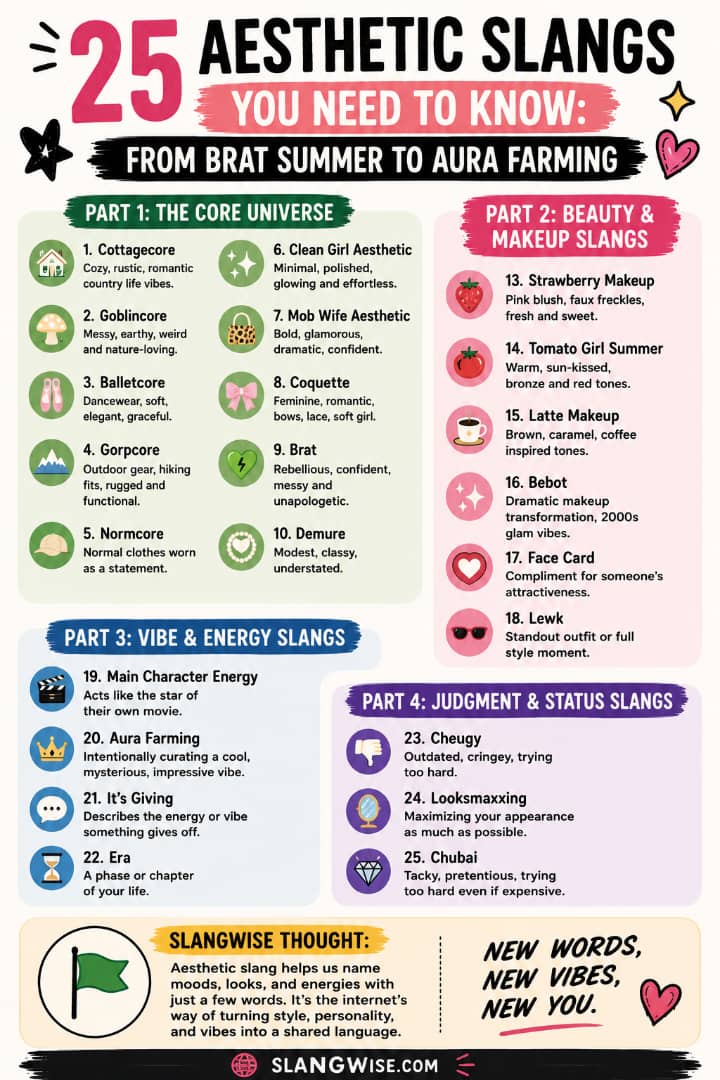
Aesthetic slang helps us name the exact mood, look, and energy someone is giving off. One word can say a lot more than a long explanation ever could.
The funny thing about aesthetic slang is that it keeps evolving. One month everyone is talking about a new core, the next month people are using a fresh phrase to describe a vibe, a look, or a whole online personality.
In my view, that is what makes aesthetic slang so useful. It is not just about sounding current. It is about having quicker, sharper ways to describe style, confidence, mood, and internet identity.
Some of these terms are about fashion. Some are about beauty. Some are about status, judgment, or the way somebody carries themselves online. And a few are just pure internet language that only makes sense once you have seen it in context.
So let us break it all down in a simple way.
Briefly:
- Aesthetic slangs help you name specific moods, looks, and vibes.
- The “core” suffix is one of the biggest tools for creating new aesthetics.
- Terms like aura farming, cheugy, and looksmaxxing describe how people curate and judge appearances online.
- Using aesthetic slang correctly shows that you understand the rhythm of internet culture.
What Actually Makes Something Aesthetic Slang
Before we get into the list, it helps to understand what aesthetic slang really means.
Simply, aesthetic slang refers to informal words and phrases that describe a style, mood, energy, or visual identity. Unlike general slang, which might simply mean something is good or bad, aesthetic slang tells you what kind of good or bad it is.
For example, calling something cheugy does not just mean it is bad. It means it is outdated in a very specific, usually embarrassing way. Saying someone has main character energy does not just mean they are confident. It means they carry themselves like they belong at the center of the scene.
These words usually start in niche online spaces, then spread into wider internet culture. Once that happens, they become part of how people describe style, personality, and social energy across TikTok, Pinterest, Instagram, and beyond.
Alright, enough setup. Let us get into the terms.
Part 1: The Core Universe
If you have spent any time on TikTok, Pinterest, or Tumblr style spaces, you have probably seen words ending in core. That suffix usually means an aesthetic centered around a specific idea, object, or mood.
Here are the big ones you should know.
1. Cottagecore
Cottagecore romanticises simple rural living. Think baking bread, gardening, flowy dresses, soft light, and cozy cottages. It is dreamy, nostalgic, and very peaceful.
When to use it: “Her apartment is pure cottagecore. She has dried flowers everywhere and keeps sourdough starter on the counter.”
Vibe check: soft, nostalgic, escapist.
2. Goblincore
Goblincore is the messy, chaotic cousin of cottagecore. It celebrates moss, mud, snails, mushrooms, bones, and anything that feels wild or delightfully unpolished. It is a rejection of clean and perfect aesthetics.
When to use it: “I do not want a polished garden. I want goblincore, with vines, frogs, and moss everywhere.”
Vibe check: earthy, chaotic, unapologetically weird.
3. Balletcore
Balletcore takes inspiration from dancewear and graceful femininity. Think wrap cardigans, leotards, tulle skirts, ballet flats, leg warmers, and soft pastel styling.
When to use it: “She wore a wrap cardigan and satin flats. Total balletcore energy.”
Vibe check: elegant, soft, effortless.
4. Gorpcore
Gorpcore is fashion inspired by practical outdoor gear. It includes fleece jackets, hiking boots, puffer vests, backpacks, and technical fabrics. It looks functional, rugged, and a little outdoorsy even in everyday settings.
When to use it: “He showed up in a fleece, hiking sneakers, and a backpack. Very gorpcore.”
Vibe check: rugged, practical, outdoor chic.
5. Normcore
Normcore is about making normal look cool. It uses plain jeans, white tees, sneakers, and basic clothes as a statement. The message is basically, I am not trying too hard, and that is the point.
When to use it: “She wore a plain sweatshirt and simple sneakers, but it actually felt very normcore.”
Vibe check: ironic, anti fashion, understated.
READ ALDO: 35 Fashion Slang Words That Style Lovers Keep Using In Fashion World
6. Clean Girl Aesthetic
The clean girl aesthetic is minimalist, polished, and “effortless” looking. It usually includes slicked back hair, gold hoops, neutral tones, white sneakers, glowing skin, and a very put together appearance.
When to use it: “Her feed is all beige, white, and gold. Total clean girl aesthetic.”
Vibe check: neat, calm, quiet luxury.
7. Mob Wife Aesthetic
Mob wife is bold, dramatic, and unapologetically glamorous. It is the opposite of clean girl. Think fur coats, leopard print, chunky gold jewellery, big hair, dark sunglasses, and red nails.
When to use it: “She walked in wearing a faux fur coat and huge hoops. That is mob wife energy.”
Vibe check: fierce, confident, dramatic.
8. Coquette
Coquette is flirtatious, romantic, feminine, and often vintage inspired. It uses bows, lace, ribbons, pink tones, heart shapes, and soft girly details to create a playful but elegant mood.
When to use it: “She decorated her room with pink bows and lace curtains. Very coquette.”
Vibe check: sweet, playful, feminine.
9. Brat
Brat describes someone who is unapologetically themselves, a little messy, rebellious, and confident. It comes with a loud, youthful energy and often signals that someone does not care what anybody thinks.
When to use it: “She danced on the table in neon green and did not care who was watching. That is brat.”
Vibe check: rebellious, bold, self assured.
10. Demure
Demure made a big comeback thanks to viral internet use. It describes a chic, understated, modest style, although people often use it ironically while doing the exact opposite.
When to use it: “Very demure, very mindful.”
Vibe check: soft, classy, ironically modest.
READ ALSO: Snatched Meaning: The Slang Word That Took Over Fashion, Makeup, and Comment Sections
11. Corecore
Corecore is a mashup of multiple aesthetics. It is chaotic, emotional, and often built from fast paced edits, sad music, and overlapping visual styles. It is basically the aesthetic of having no single aesthetic.
When to use it: “That edit flipping between cottagecore, cybercore, and liminal spaces is total corecore.”
Vibe check: chaotic, emotional, layered.
12. Weirdcore and Dreamcore
These two are often grouped together. Weirdcore uses unsettling, low quality, dreamlike visuals to create an eerie feeling. Dreamcore is softer and more peaceful, but still surreal and slightly unreal.
When to use it: “That empty mall photo is weirdcore. The pastel room floating in clouds is dreamcore.”
Vibe check: uncanny, nostalgic, surreal.
Part 2: Beauty and Makeup Aesthetic Slangs
These terms live mostly in beauty spaces on TikTok and Instagram. They describe looks, techniques, and glow up transformations.
13. Strawberry Makeup
Strawberry makeup features pink red blush across the cheeks and nose, glossy lips, and visible faux freckles. It looks fresh, youthful, and sweet.
When to use it: “Her blush was so intense she looked like a strawberry. I love strawberry makeup for summer.”
14. Tomato Girl Summer
Tomato girl is warmer and sun kissed than strawberry makeup. It swaps pinks for reds, bronzes, and earthy tones, giving off an Italian summer kind of glow.
When to use it: “She went full tomato girl with bronze eyeshadow and red blush.”
15. Latte Makeup
Latte makeup is all about browns, caramels, and warm neutrals. It creates a monochrome coffee inspired look across the eyes, cheeks, and lips.
When to use it: “Her eyeshadow matched her caramel sweater, which matched her lip gloss. Very latte makeup.”
16. Bebot
Bebot is a fresh aesthetic slang from 2026. It describes a dramatic makeup transformation, often with a nostalgic 2000s glam look, cool toned shadows, frosty highlights, and glossy lips.
When to use it: “She posted a bebot transformation video and I barely recognised her.”
Vibe check: nostalgic, glamorous, confident.
17. Face Card
Face card is a major compliment. It refers to someone’s facial attractiveness, and saying their face card never declines means they consistently look good no matter what.
When to use it: “He walked in and everybody turned around. Face card never declines.”
18. Lewk
Lewk is a sassy, exaggerated version of look. It usually refers to a standout outfit or full style that makes a statement.
When to use it: “That rhinestone catsuit with platform boots? That is a lewk.”
Part 3: Vibe and Energy Aesthetic Slangs
These slangs describe someone’s energy, aura, or overall presence rather than just their clothes.
19. Main Character Energy
Main character energy means someone acts like the protagonist of their own movie. They are confident, a little dramatic, and fully aware that life is their story. Sometimes it is genuine praise, and sometimes it is said ironically.
When to use it: “She walked into the cafe in slow motion with dramatic music playing in her headphones. That is main character energy.”
20. Aura Farming
Aura farming means intentionally curating your behaviour, clothes, or social media posts to look as cool, mysterious, or impressive as possible. It is basically trying to collect aura points through aesthetics and attitude.
When to use it: “He posted a black and white gym edit with dramatic music. Bro is aura farming.”
Vibe check: ironic, competitive, self aware.
21. It’s Giving
It is giving is used to describe the dominant mood or energy of something. It means this reminds me of this other thing, or this has that kind of energy.
Examples:
That outfit is giving 90s prom.
Her attitude is giving villain era.
This room is giving airport hotel.
When to use it: Any time you want to sound cool and slightly judgmental at the same time.
22. Era
Era is used to label a current phase of your life. It turns ordinary life moments into dramatic narrative arcs.
When to use it: “I am in my healing era.” “This is my gym era.” “We are entering our villain era.”
Part 4: Judgment and Status Aesthetic Slangs
These are the terms people use when they are judging, critiquing, or ranking aesthetics.
23. Cheugy
Cheugy describes something that feels basic, dated, or cringey, especially when it is tied to trends that feel out of style. It is often used to gently mock things that are trying too hard to be trendy but missed the moment.
When to use it: “She still has a collection of those old quote signs? That is cheugy.”
Vibe check: mocking, nostalgic, outdated.
24. Looksmaxxing
Looksmaxxing means optimising your appearance as much as possible. That can include grooming, posture, skincare, clothing, lighting, and every other detail people use to improve how attractive they appear online or in real life.
When to use it: “He has been in his looksmaxxing era for months. New haircut, skincare routine, and better fits.”
25. Chubai
Chubai is a newer 2026 term used to describe something tacky, pretentious, or trying too hard, even if it looks expensive. It is not about price. It is about the energy of trying hard and still missing the mark.
When to use it: “That sponsored post was so chubai. The fake smile and obvious script gave it away immediately.”
Vibe check: harsh, judgmental, over the top.
Why Aesthetic Slangs Matter
Let us be real for a second. The internet has completely changed the way we talk about style, mood, and identity. Not too long ago, people had only a handful of words to describe how something looked or felt.
Now, there are entire slang systems for talking about vibe, energy, fashion, polish, and even how try hard or effortless something appears.That is where aesthetic slang comes in.
These are specialised words and phrases that help people describe a specific look, mood, or social energy with much more detail than a generic word ever could. Want to talk about a soft, rural, cozy vibe? That is cottagecore.
Want to describe someone acting like the main character of their own life? That is main character energy. Want to call out somebody who is clearly trying too hard online? Aura farming might be the phrase.
These words are popular because they are fast, playful, and easy to remix. They have escaped group chats and now live everywhere, from TikTok captions to Instagram stories to real life conversations.
And honestly, that is the whole point. Aesthetic slang gives people a sharper way to talk about the internet age, where everyone is curating a vibe in one way or another.
How These Aesthetic Slangs Fit Together
When you step back and look at the whole list, the patterns become very clear. Some of these words describe style. Some describe beauty. Some describe identity and confidence. Others exist to judge, roast, or rank the energy something gives off.
The core slangs are the easiest to spot because they describe entire visual worlds. Beauty slangs focus more on makeup and transformation. Vibe slangs describe the energy a person gives off. Judgment slangs are used when people want to critique style or call something outdated, try hard, or fake.
And that is what makes aesthetic slang so interesting. It gives people a shortcut for describing highly specific feelings. Instead of saying something is just cool or ugly, they can say it is coquette, cheugy, aura farming, or clean girl. The meaning becomes much sharper, and the vibe becomes instantly clearer.
From what I have seen, that is also why these words spread so quickly. They are useful, expressive, and easy to repeat. Once a term helps people describe a mood they could not easily name before, it usually catches on fast.
How to Use Aesthetic Slang Without Getting Lost
The easiest way to understand aesthetic slang is to focus on context, not perfection. A word like cheugy usually sounds critical. Aura farming usually sounds ironic. Clean girl sounds polished. Mob wife sounds dramatic. Once you catch the tone, the rest becomes much easier.
You also do not need to memorize every term at once. Real slang is learned through exposure. You see it in a comment, hear it in a video, or catch it in a friend’s joke, and then the meaning starts to click.
In my view, that is the smartest way to handle it. Do not chase every new phrase like homework. Just pay attention to how people use the word, what mood it carries, and whether it is meant as praise, a roast, or a joke.
Slangwise Thought
What makes aesthetic slang so fascinating is that it is never just about the word itself. It is about the culture behind the word. These terms show how much online communication depends on mood, identity, and visual storytelling.
People are not only describing things anymore. They are labeling the exact kind of energy something gives off. That is why a single phrase can carry style, judgment, humour, and personality all at once.
The real takeaway is simple. Aesthetic slang is not just internet fluff. It is a shared language for describing how people present themselves, judge each other, and build meaning around style online.
And honestly, that is what makes it fun to follow.
Final Thoughts
The 25 aesthetic slangs in this guide are a strong snapshot of how people talk about style, identity, and online presence. Some will stay popular for years. Some will fade. Some will change shape and come back in a new form. That is completely normal.
Still, if you can understand terms like cottagecore, aura farming, cheugy, looksmaxxing, and main character energy, you are already much closer to the rhythm of aesthetic internet language. You do not need to use every term. You only need to recognize the feeling behind them.
And that is the real value of slang. It helps us talk about the moment we are living in, one vibe at a time.
Table of Contents