

I have noticed something interesting about texting slang: sometimes, the smallest expressions do the biggest conversational jobs. One of my favourites is HBU. It takes only three letters, yet it can turn a one-sided exchange into a natural back-and-forth conversation.
But there is a catch. Using HBU at the wrong moment can make you sound uninterested rather than friendly. So, what does it mean, how should you use it, and when is it better to type something else? Let me break it down with examples that make sense in everyday conversations.
What Does HBU Mean in Texting?
HBU means “How About You?” It is a casual texting abbreviation people use to return a question to someone or invite them to share their thoughts, feelings, plans, or experiences.
You will commonly see it in text messages, WhatsApp chats, Instagram DMs, Snapchat conversations, and other informal online interactions. It can appear as hbu, HBU, or Hbu. The capitalization does not change the meaning.
For example, imagine someone asks how your afternoon went. You reply, “Pretty good! I finally finished my assignment, hbu?” You have answered their question and invited them to share their own experience.
That is the beauty of HBU. Instead of allowing a conversation to stop after your answer, you give the other person an easy opportunity to contribute.
READ ALSO: YHBU Meaning: What YHBU Really Says About You
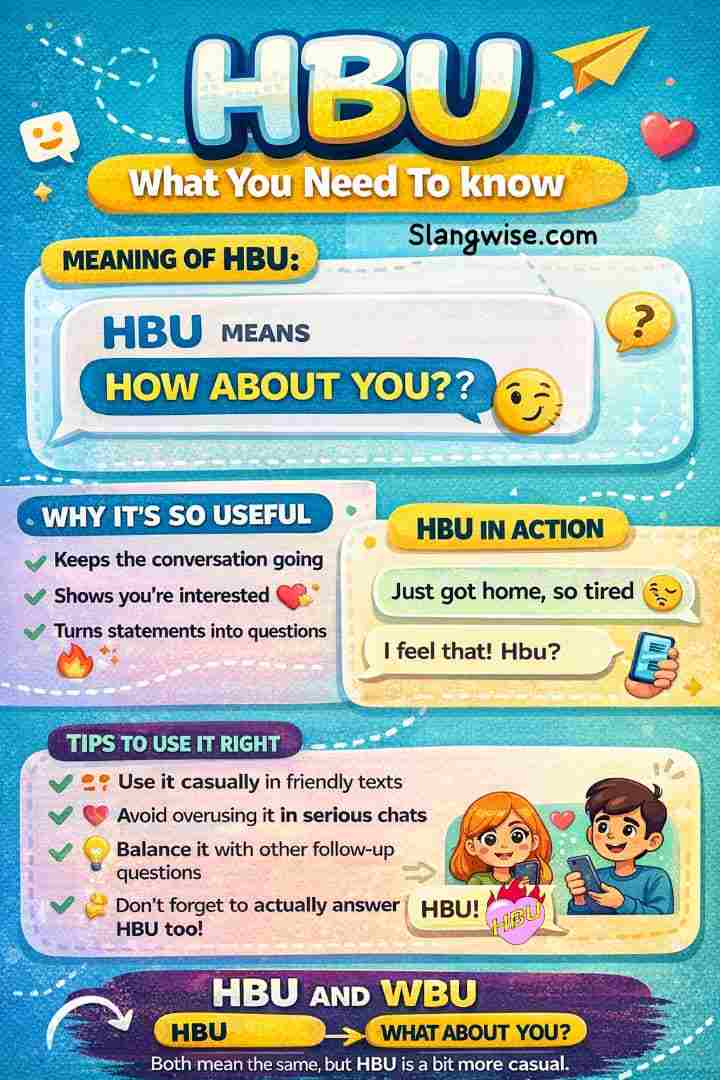
How HBU Works in Real Conversations
When explaining texting slang, I always think context matters just as much as the definition. Knowing what three letters stand for is helpful, but understanding how people use them is what makes you a better communicator.
Picture this familiar situation: you ask a friend about their weekend, and they reply, “I spent Saturday visiting my cousins. It was actually fun, hbu?” Rather than ending the exchange with “Nice,” you can tell them about your own weekend.
That little question creates room for both people to participate. Nobody has to carry the entire conversation, and neither person is expected to write a long paragraph.
Here are three other natural examples:
- Talking about food: “I could eat pizza every Friday, hbu? What’s your favourite takeaway?”
- Discussing free time: “I’m planning to learn how to cook something new this weekend, hbu?”
- Sharing opinions: “I actually enjoyed that new series. HBU? Did you like the ending?”
Notice that HBU works best when it follows something relevant. It gives the other person a clear reason to respond instead of leaving them to guess what you want to talk about.
READ ALSO: SYBAU Meaning in Text: What Does This Viral Slang Really Stand For?
HBU vs WBU: Are They Different?
Another abbreviation you will often encounter is WBU, which means “What About You?”
In everyday texting, HBU and WBU usually serve the same purpose. Both return the conversation to the other person and invite a response. The difference is mainly in the wording, not a strict difference in meaning or tone.
For example:
Using HBU: “I’m staying home and catching up on my reading, hbu?”
Using WBU: “I’m staying home and catching up on my reading, wbu?”
Both sound natural in a casual chat. I would choose whichever fits the way the other person communicates rather than worrying about a difference that usually does not matter.
DISCOVER: 27 Hustle Slang Words Everyone Is Using in 2026, and What They Really Mean
How to Reply When Someone Texts You HBU
Now, let us reverse the situation. Someone sends you a message ending in “hbu?” What should you say?
My advice is simple: answer the question honestly and add a little detail when appropriate. You do not have to impress anyone with a clever response. A natural answer is usually enough to get things moving.
Example 1: A casual check-in
Them: “I’m doing okay, just relaxing after school. HBU?”
You: “Pretty good too! I’m listening to music and taking a break.”
Example 2: A conversation about interests
Them: “I enjoy reading mystery novels, hbu?”
You: “I like fantasy stories more, but I’m always open to a good mystery. Have you read any favourites lately?”
Example 3: Making plans
Them: “I’m thinking about going to the library this weekend, hbu?”
You: “I might go too. I have a few books I’ve been meaning to finish.”
The pattern is straightforward: respond, share a little, and ask a relevant follow-up when it feels natural. That is much more engaging than replying with “good” and expecting the other person to do all the conversational work.
Three HBU Mistakes to Avoid
Although HBU is easy to understand, using it thoughtfully makes a difference.
1. Repeating It After Every Message
If every reply ends with HBU, your conversation can start feeling like a repetitive exchange rather than a genuine discussion. Share your own thoughts, react to what the other person says, and ask specific questions when something interests you.
2. Using It Instead of Showing Empathy
Imagine someone tells you they have had a difficult day. Immediately responding with “Sorry, hbu?” can sound dismissive because you have moved the focus away from their feelings too quickly.
A better response would be, “I’m sorry today has been rough. Do you want to talk about it?” Show interest in what they have shared before changing the subject.
3. Using It in Every Situation
HBU belongs mainly in informal conversations. For a formal email, an important work message, or a conversation with someone who may not understand the abbreviation, spelling out “How about you?” is a safer choice.
Does HBU Mean Someone Is Interested in You?
Here is a question worth addressing: when someone keeps asking HBU, does it mean they like you or want to get closer to you?
Not necessarily. HBU can show that a person wants to keep a conversation going, but it can also be ordinary politeness. The meaning depends on the wider interaction.
I recommend paying attention to the whole conversation. Does the person respond thoughtfully, remember what you tell them, and ask questions that show genuine curiosity? Those patterns offer more useful context than three letters alone.
And remember, a conversation does not have to continue indefinitely. If replies become consistently brief or the other person seems busy, give them room instead of forcing another HBU into the chat.
Explore our guide to the 250 Most Popular Internet Abbreviations of 2026 and learn more shortcuts people use online.
HBU Meaning: Five Things to Remember
Before we wrap up, here are the five most important points to remember about HBU:
- Meaning: HBU stands for “How About You?”
- Purpose: It invites someone to share their thoughts, feelings, plans, or experiences.
- Where to use it: It works best in casual texts, DMs, and friendly online conversations.
- Related slang: WBU means “What About You?” and usually serves the same purpose.
- Best practice: Use HBU naturally, pay attention to context, and show genuine interest in the other person’s response.
Final Thoughts: Small Words Can Keep Conversations Alive
HBU may be a tiny abbreviation, but it performs an important role in everyday texting. It helps you return a question, share the conversational spotlight, and show someone that you are interested in what they have to say.
Still, the real skill is not knowing when to type three letters. It is knowing when to listen, when to share, and when to ask a thoughtful follow-up question.
Now I have a question for you: do you prefer HBU or WBU when texting your friends? Leave your answer in the comments. And if you have ever received an HBU that made a conversation unexpectedly funny or awkward, tell us about it!
READ ALSO: FWIW Meaning: Why You’re Probably Using It Wrong and Why It’s Everywhere
FAQs About HBU
HBU means How About You? regardless of who sends it. It usually returns a question or invites you to share your own experience. By itself, it does not prove romantic interest.
HBU stands for How About You? while WBU stands for What About You? They are generally interchangeable in casual texting and serve the same conversational purpose.
Answer the question honestly, add a relevant detail if you want to, and ask a follow-up question when it feels natural. For example, you could say, I’m having a relaxing evening and catching up on a show. What are you watching?
HBU is informal texting slang, so it is generally better to write How About You? in professional emails or formal conversations, especially when you are unsure whether the recipient knows the abbreviation.
Further reading: For another explanation of HBU from a website dedicated to slang and informal expressions, visit Slang.org’s HBU meaning guide.
About the Author
Agboola John is the author of SlangWise, where he explores internet slang, texting abbreviations, and the expressions shaping online communication. His goal is to make digital language easier to understand through clear explanations, practical examples, and insights into how people use slang in everyday conversations.
Table of Contents