
JOMO Meaning in Slang
Some slang words come and go, but every now and then one shows up that names a feeling people already know very well. JOMO is one of those words.
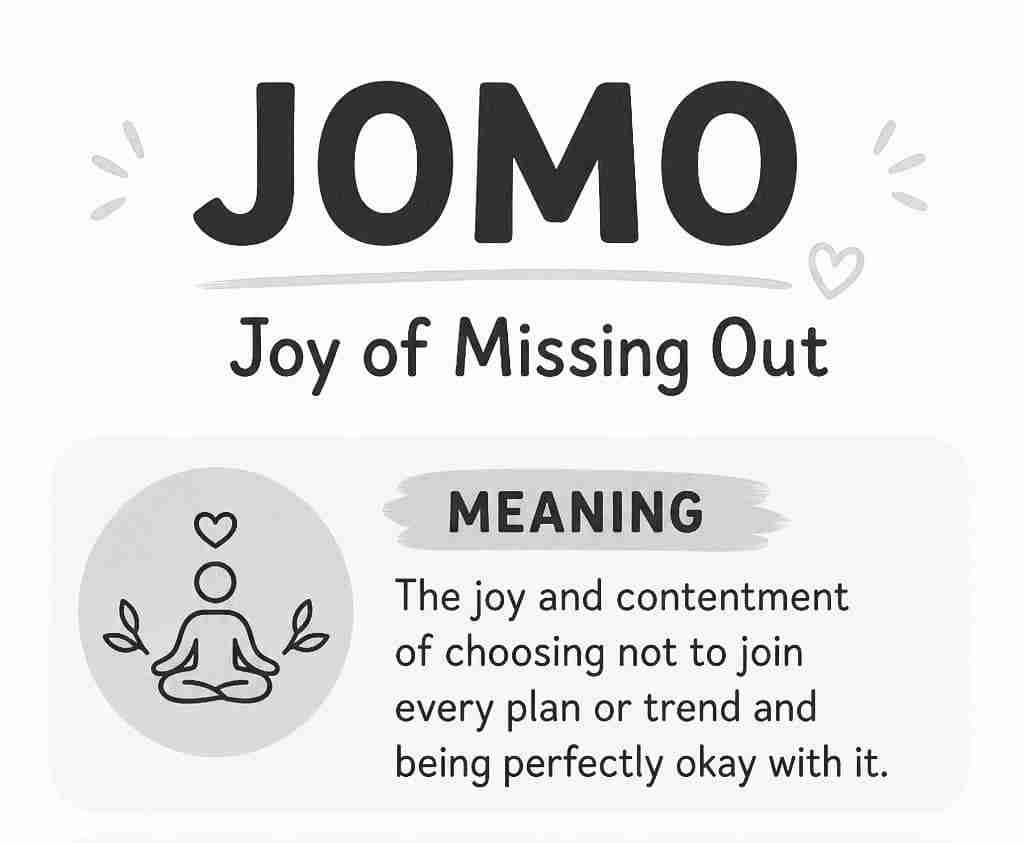
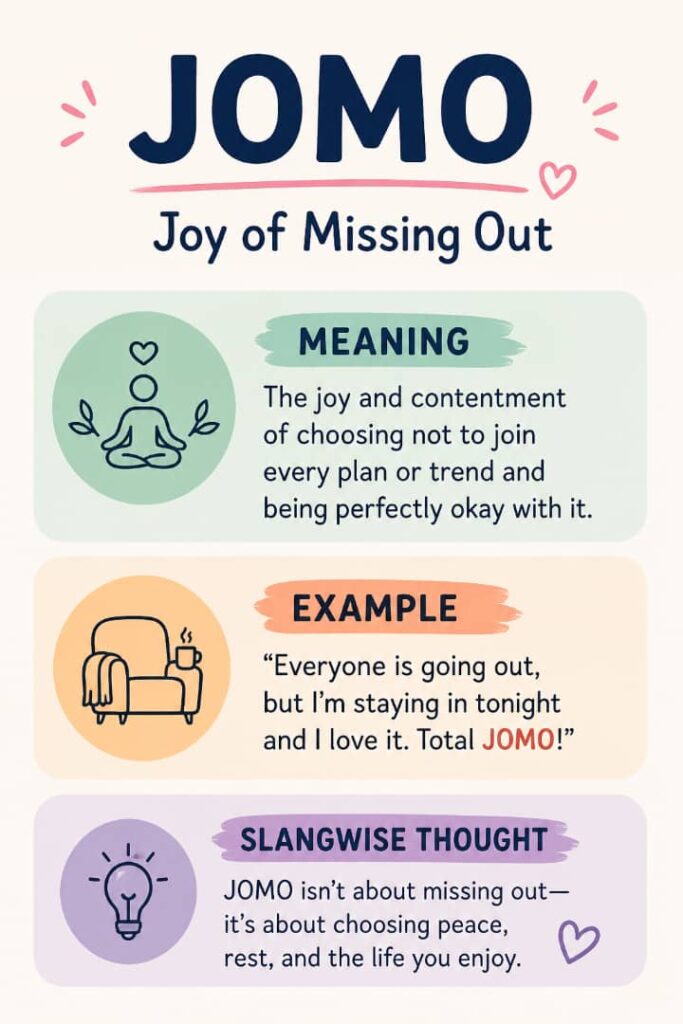
JOMO stands for joy of missing out. It describes the calm, happy feeling of choosing not to join every event, trend, or social plan and being completely fine with that choice. Instead of feeling anxious about what everyone else is doing, a person with JOMO feels content with their own space and their own time.
In simple words, JOMO means feeling good about missing out. It is the peaceful opposite of FOMO, which is the fear of missing out.
That is what makes the phrase so useful. It turns a modern pressure into something lighter, calmer, and more intentional.
In a Nutshell
- JOMO means joy of missing out.
- It describes being happy about choosing rest, quiet, or personal time.
- It is the opposite of FOMO, which is the fear of missing out.
- The phrase is often used in conversations about social media, self care, and lifestyle choices.
What Does JOMO Mean?
In slang, JOMO refers to the pleasure or satisfaction people feel when they choose not to join everything going on around them. It is not about being left out. It is about being perfectly okay with staying in, slowing down, or doing something more peaceful instead.
You might hear it when someone turns down a party and stays home to rest, switches off their phone for the evening, or simply enjoys a quiet day without worrying about what others are doing. The phrase captures the sense that missing out is not always a bad thing.
It is a modern way of saying, “I am good right here.”
In my humble opinion, that is part of why JOMO connects with so many people. It gives a name to the relief that comes from not trying to do everything at once.
So when someone says JOMO, they usually mean they are enjoying the calm that comes from opting out.
READ ALSO: FOMO Meaning Explained: Why This Tiny Slang Word Keeps Hooking Everyone Online
Slangwise Thought
One thing I have noticed about JOMO is that it sounds playful, but it carries a very real message.
It helps people talk about rest, boundaries, and contentment without making the conversation feel heavy. That is a big part of why it has stayed popular.
Why People Use JOMO Instead of Just Saying They Stayed Home
The phrase works because staying home and JOMO do not feel exactly the same.
Staying home is a fact. JOMO adds feeling. It suggests the person is not bored, lonely, or disappointed. They are actually happy with their choice. That extra layer is what gives the phrase its charm.
People use it when they want to show that they are not chasing every plan, every trend, or every invite. It is a quick and casual way to say, “I do not need to be everywhere to feel good.”
The Tone Can Change Depending on the Moment
This is where JOMO gets interesting.
The phrase can sound relaxed, smart, and self aware. In some cases, it sounds like a proud lifestyle choice. In other cases, it sounds like a gentle joke about skipping things on purpose. The meaning stays the same, but the tone can shift depending on who is saying it and how they say it.
That is why context matters so much. A person might say, “I am in full JOMO mode tonight,” and mean they are happily resting at home. Someone else might say it to tease a friend who never leaves the house. The phrase itself is flexible enough to work in both situations.
It can also sound different depending on the speaker. A friend may use it jokingly. A lifestyle writer may use it as a positive idea. A social media user may use it to describe a quiet night in a way that feels trendy and relatable.
DISCOVER: 30 Slang Words That Mean Totally Different Things to Different Generation
Where You Will Hear It Most
The phrase JOMO is most common in conversations about lifestyle, social media, and self care.
You will hear it when people talk about choosing quiet over crowded plans, or peace over pressure. It shows up a lot in posts about mental space, rest, and taking a break from online life.
You will also hear it in social media conversations, especially when people talk about logging off, ignoring comparison, or enjoying a slower pace. JOMO fits that world because it makes a private, personal choice sound positive instead of boring.
It can even show up in simple everyday chats when someone says they are skipping an event and feeling great about it. In that moment, the phrase quietly says, “I am not missing anything. I am enjoying my own time.”
What JOMO Is Not
A lot of people confuse JOMO with being antisocial, lazy, or uninterested in life. That is not what it means.
JOMO is not about hating people or avoiding everything. It is about making a choice and feeling good about it. A person with JOMO can still enjoy friends, events, travel, and fun plans. They just do not feel pressure to say yes to everything.
It is also not the same as loneliness. JOMO is a positive feeling. It comes from contentment, not isolation. That difference matters because the phrase is about peace, not withdrawal.
So the simple test is this: if someone is staying in but feeling relaxed and happy about it, that is JOMO. If they are staying in and wishing they were somewhere else, that is something else entirely.
What JOMO Looks Like in Real Life
You can spot JOMO in very ordinary moments.
It might be choosing a quiet night at home instead of a crowded event. It might be turning off notifications and enjoying a few calm hours. It might be reading, watching a film, journaling, resting, or just enjoying silence without feeling guilty about it.
For some people, JOMO is a cup of tea and a comfortable sofa. For others, it is a walk, a nap, a game, or time alone with no plans at all. The activity does not matter as much as the feeling behind it.
The key part is contentment. You are not missing out and feeling bad. You are missing out and feeling fine.
READ ALSO: Matchy Matchy Meaning Explained: Why This Slang Phrase Is Cute, Cringe, and Weirdly Stylish at the Same Time
Why the Phrase Became So Popular
JOMO became popular because modern life makes many people feel like they should always be doing more. More events. More updates. More replies. More comparison. More pressure.
The phrase gives people language for resisting that pressure. It reminds them that quiet can be valuable, and that not every invitation needs a yes. It makes a calm choice sound intentional instead of boring.
That is part of why the word works so well online. It is short, catchy, and easy to understand, but it also carries a bigger message about slowing down and choosing what matters most.
In my view, that is the real strength of JOMO. It is not only a trendy acronym. It is a reminder that peace can be its own kind of joy.
Examples of JOMO in a Sentence
Here are a few easy examples:
“Everyone went out last night, but I stayed home and felt pure JOMO.”
This means the person felt happy and relaxed about missing the event.
“I was totally in my JOMO era this weekend.”
This means the person enjoyed quiet time instead of social plans.
“She turned off her phone and chose JOMO over drama.”
This means she preferred peace and personal time over online pressure.
“After a long week, JOMO sounded better than going out.”
This means resting at home felt more enjoyable than attending an event.
“He loves his JOMO nights with no plans and no notifications.”
This means he enjoys quiet evenings without social pressure.
EXPLORE: 72 Most Popular Gen Z Slang Words of 2026 and What They Secretly Mean Online
Why the Phrase Works So Well Online
JOMO fits internet culture because it is short, catchy, and easy to turn into a mood or identity.
Social media loves language that can sum up a whole feeling in one neat phrase. JOMO does exactly that. It lets people talk about rest, boundaries, and personal space in a way that feels modern and relatable.
It also works because online life often creates comparison. People scroll through highlights and start thinking everyone else is doing more. JOMO pushes back gently. It says that being offline or being still can also be a good thing.
That is why the phrase keeps showing up in captions, comments, and posts. It sounds simple, but it speaks to something a lot of people feel.
A Friendly Way to Remember It
Here is the easiest way to remember the meaning:
JOMO means joy of missing out.
It is the “I am happy to skip this” phrase.
It is about choosing peace, quiet, and personal time without guilt.
It is often used when someone feels better about staying in than going out.
Final Thoughts
JOMO is one of those slang words that sounds light and cheerful, but it carries a very real message. It describes the joy of choosing not to join everything and still feeling perfectly content. That is why it resonates so strongly in a world where people often feel pressure to be everywhere at once.
It is simple, memorable, and easy to use in everyday conversation. Whether it shows up in talk about social media, quiet nights, or self care, the meaning stays the same. JOMO is about appreciating your own time and not feeling bad for protecting it.
At the end of the day, it means this: you can miss out and still feel good.
READ ALSO: 25 Gen Z Slang Terms for Money You’ll Actually Use in 2026
Frequently Asked Questions
It means joy of missing out. It describes feeling happy or content about skipping events or choosing personal time.
Yes. FOMO means fear of missing out, while JOMO means enjoying the choice to miss out.
No. JOMO is about choosing rest, quiet, or personal time without guilt. It is not the same as avoiding people altogether.
It is often used in conversations about social media, lifestyle, self care, and quiet time.
Table of Contents