
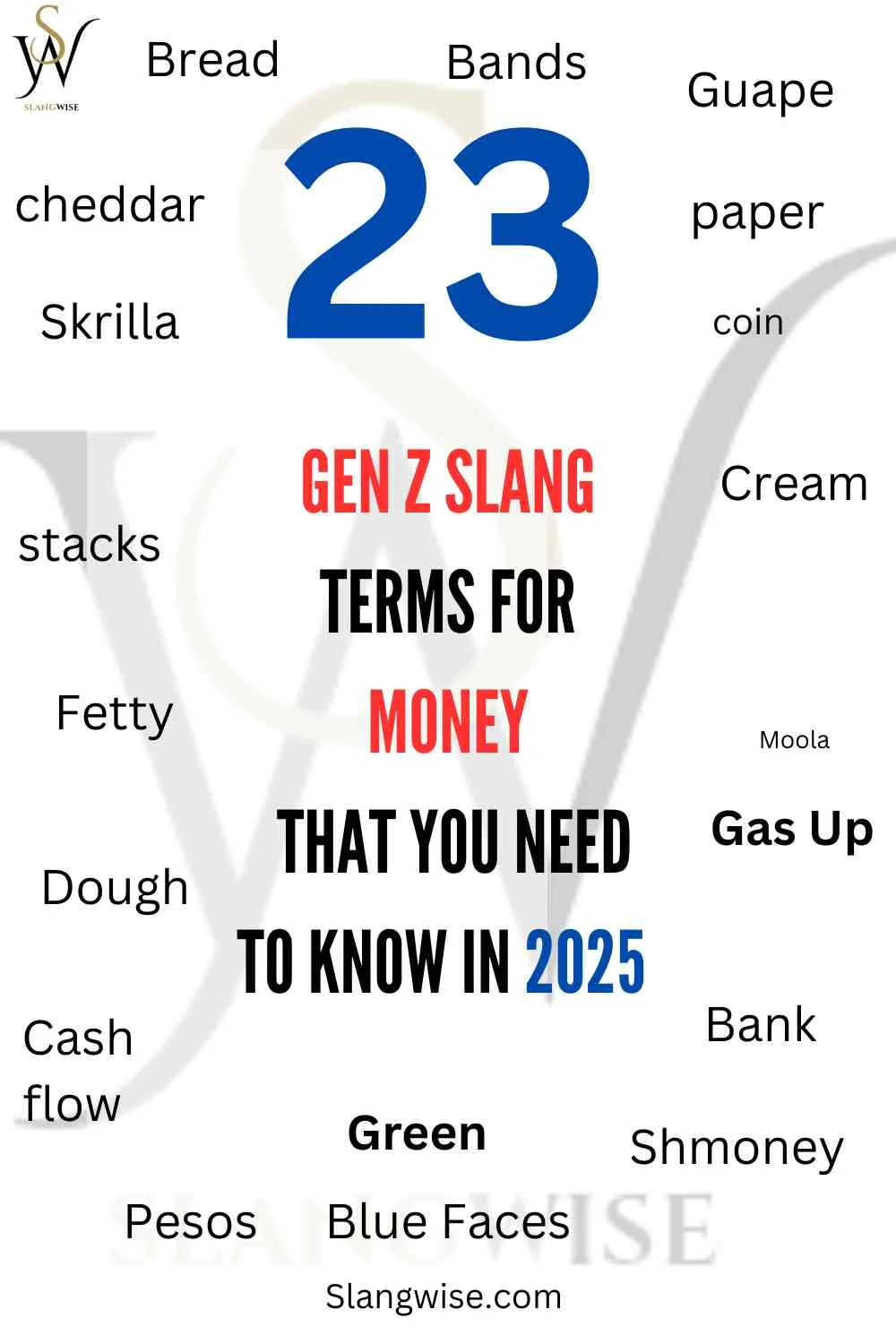
Okay, real talk. Gen Z has a way of making everything sound cooler, and money is no exception. We’ve taken cold, hard cash and turned it into a vibe; equal parts hustle, humor, and a little bit of a flex.
Based on what I’ve seen (and heard, and low-key adopted into my own vocabulary), these terms aren’t just about dollars and cents.
They’re about living.
Whether you’re stacking cash to start your own thing or blowing your “loot” on concert tickets you’ll be talking about for years, every single word tells a story.
So, grab your metaphorical notebook (or just bookmark this page, no judgment 😎) because here’s your ultimate cheat sheet to 25 Gen Z money slangs. I’ve decoded them with real-life examples so you can sound like you invented them yourself. (Did you? No shame if you did.)
Let’s get into it.
Table of Contents
1. Bread
You’ve probably heard this one before, but Gen Z revived it like it’s a vintage band tee. “Bread” is money, plain and simple; the OG slang that never goes stale. Why bread? Because “dough” (another classic) bakes into it. It’s all about the grind.
Example: “I’m baking mad bread this summer with my new side gig.” Suddenly, earning cash feels as cozy as a bakery. 😉
2. Guap
If Bread is your daily hustle, guap is that sudden windfall. This word screams big money energy. It’s not just a paycheck; it’s the kind of cash that makes you side-eye your bank app like, “Wait, is that a comma?”
Example: “Did you see Aaliyah’s TikTok? She’s swimming in guap after that brand collab.”
3. Bag
“Secure the bag” isn’t just slang; it’s a lifestyle. A “bag” is your prize, whether it’s a promotion, a scholarship, or cold hard cash. It’s about winning, period.
Example: “Just landed that freelance gig. Bag secured! Time to upgrade my setup.”
4. Bands
No, not the musical kind. Bands are stacks of cash held together by – you guessed it – rubber bands. It’s a flex that’s all about physical wealth.
Example: “They sold their sneaker collection and made bands overnight.” Go on, start that side hustle. 😎
5. Racks
If bands are stacks, racks are thousands. This term turns money into a mountain. It’s the kind of word that makes you whisper “Goals” while secretly checking your savings account.
Example: “She blew racks on VIP tickets to that festival.”
Discover 7 seemingly harmless slang terms secretly spreading hate online. Are you unknowingly using offensive words? Learn more now!
6. Cheddar
Cheesy? Maybe. Fun? Absolutely. Cheddar is money with a wink; playful but still says, “I’m here for business.” Bonus points if you pair it with a grin.
Example: “Part-time job? Nah, I’m chasing cheddar with my Etsy shop.”
7. Skrilla
Old-school but still cool, skrilla has street cred. It’s edgy, retro, and perfect for talking about your grind.
Example: “I’m out here collecting skrilla for my beats.”
8. Stacks
Think of stacks as the cousin of “bands”: it’s all about towering piles of cash. Some say a “stack” is exactly $1K.
Example: “I saved three stacks this year.” Translation: They’re either flexing savings or planning a very nice vacation.
9. Fetty
Shoutout to rapper Fetty Wap for this one. “Fetty” is pure Gen Z energy; young, bold, and tied to vibes, not just cash. It’s less about the amount and more about the feeling it gives you.
Example: “I’m saving my fetty for a road trip with the squad.”
Read Also: 72 most popular Gen Z Slangs of 2026 – A brief Overview
10. Paper
Simple, clean, and timeless. Paper is money stripped down to basics. No frills, no metaphors, just cash.
Example: “I’m chasing paper, not drama.” Suddenly, you’re the CEO of your own life.
11. Loot
Loot is the money you spend, not save. It’s for concert tickets, sneaker drops, or that overpriced latte you didn’t need but definitely deserved.
Example: “Spent all my loot on thrift finds. No regrets.” Adulting can wait.
12. Cashola
Add some salsa to “cash” and you get “cashola”; quirky, lighthearted, and perfect for low-stakes moments.
Example: “Spot me some cashola for pizza?” It’s the slang equivalent of a meme.
13. Coin
Think digital hustle. “Coin” is small, steady cash from gigs like reselling clothes or dog walking. Not a fortune, but it’s yours.
Example: “Made 200 coin dog-walking this week.”
14. Drip
Drip isn’t just money; it’s money turned into swagger. Those Air Jordans? That vintage jacket? That’s drip. It’s currency you wear.
Example: “Her drip’s wild. She’s got that CEO energy.”
15. Cream
Wu-Tang Clan said it best: C.R.E.A.M. (“Cash Rules Everything Around Me”). “Cream” is money as a mindset. Use it when you’re hustling for bigger dreams.
Example: “Focused on the cream, not the noise.”
16. Moolah
Grandma’s favorite term is back! Moolah is friendly, retro cash. It’s money without the stress.
Example: “Let’s save some moolah for a beach house this summer.”
17. Bank
Making bank is Gen Z’s version of “rolling in it.” It’s blunt, it’s braggy, and it works.
Example: “She just got that coding job. She’s making bank, so she’s treating us to sushi tonight.”
18. Shmoney
Carefree and catchy, shmoney is money you dance with. It’s the opposite of “budgeting.”
Example: “Got my shmoney, let’s hit the club!” It’s joy, bottled.
19. Blue Faces
Benjamins, but make it art. “lBlue faces are $100 bills, named for their distinct color. It’s specific, it’s cool, and it screams baller status.
Example: “He tipped the DJ in blue faces.”
Discover 100 teen slang words and hidden chat codes used in texts and social media. Learn what they mean, see examples, and spot warning signs parents should know.
20. Pesos
Not just currency; it’s money, period. This one gives global kingpin vibes.
Example: “This gig pays solid pesos,” whether you’re earning dollars, euros, or Monopoly money.
21. Green
Classic, clean, and color-coded. Green is money in its purest form. Timeless, like a crisp bill.
Example: “Stacking green for my startup.”
22. Dough
The OG sibling to Bread. Dough is money you knead (get it?). It’s humble and real.
Example: “Need more dough before I upgrade my gaming setup.”
23. Cash Flow
Gen Z loves a side hustle, and cash flow is the anthem. It’s steady, sustainable income that makes adulting feel cool.
Example: “My podcast’s finally got cash flow.”
24. Juice
You ever hear someone say, “My credit card has no juice”? That means it’s maxed out. But “juice” itself? It’s the power that money gives you. It’s that feeling when you’ve got enough cash to call the shots.
Example: “Got my first paycheck and now I’m moving with juice.”
25. Guala
This one’s a Spanish slang crossover that’s been fully adopted. “Guala” means money, but it’s also the sound of a cash counter in your head. It’s fast, flashy, and fun to say.
Example: “Made so much guala at the pop-up shop, I had to count it twice.”
Concluding Thoughts
Gen Z’s money slang isn’t just about cash. It’s about freedom, creativity, and rewriting the rules. “Securing the bag” isn’t greed; it’s ambition. Drip isn’t vanity, it’s self-expression. These terms turn money into a language of possibility.
So, which slang’s your favorite? Did I miss any? Drop it in the comments, and go secure that bread (or guap, or bag, or guala).