
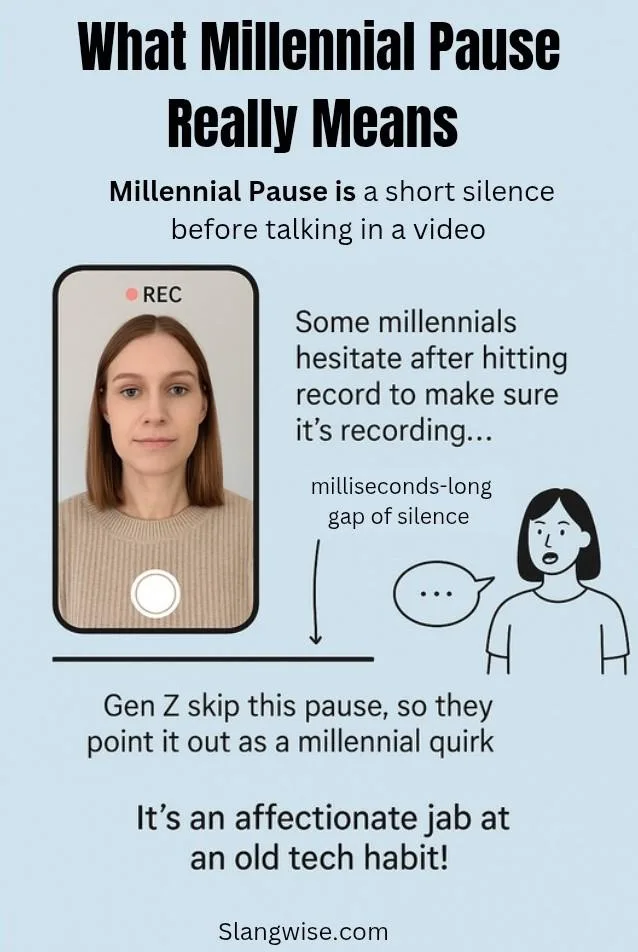
Millennial Pause is one of those internet phrases that makes a lot more sense once you have seen it in action. It refers to that tiny, deliberate pause at the start of a video before someone begins speaking.
Sometimes it lasts only a second or two, but it is enough to give the clip that old camcorder feel that many people instantly recognize.
What makes it interesting is that it is not just about timing. It carries personality. It feels nostalgic, a little funny, and very self aware. On TikTok, Instagram Reels, and YouTube Shorts, creators use it to mimic the awkward start of early home videos while also making a playful joke about generational habits.
If you have ever watched someone begin a video with a tiny pause before talking, you have already seen the Millennial Pause in action.
In this post, we will break down what it means, where it came from, how it spread online, and why it still gets attention today. Along the way, you will also see a few related phrases and natural ways creators use the trend in real content.
Millennial Pause in a Nutshell
The Millennial Pause is a brief pause at the start of a video before the speaker begins talking. It usually lasts one or two seconds, and it is meant to copy the slight delay that used to happen with old camcorders and home video recordings. That small delay is what gives the trend its nostalgic feel.
In simple terms, it is a way of saying, “Yes, I remember the days when recording a video was not instant and perfect.” That is part of why the phrase became so popular online. It mixes humor, memory, and a little bit of generational identity.
For many millennials, it feels familiar. For younger viewers, it feels retro and entertaining. For creators, it is a smart way to hook attention in the first few seconds.
Briefly:
- Meaning: a short pause before speaking in a video
- Why it matters: it copies the old camcorder start up feel
- Tone: nostalgic, funny, self aware, and relatable
- Who uses it: creators on TikTok, Reels, Shorts, and similar platforms
- Why people like it: it feels instantly recognizable and easy to turn into content
One thing I have noticed about trends like this is that they work best when they are simple enough for people to recognize immediately. The Millennial Pause is exactly that kind of trend. It does not need a long explanation in the moment. People see the pause, smile, and get the joke right away.
What Millennial Pause Really Means
The Millennial Pause is not just any pause. It is a deliberate pause that reminds viewers of old recording habits, especially the slight lag that happened with camcorders and early digital cameras. Back then, video did not always begin smoothly the second you pressed record. There was often a tiny gap before the action truly started.
Today, creators often recreate that gap on purpose. They might stand still for a moment, glance off camera, or wait before speaking. The result feels a little awkward in the best way. It gives the audience a playful signal that the video is referencing an older style of recording.
That is why the trend feels so amusing to people who remember home videos and early internet clips.
So when someone says, “That clip has a Millennial Pause,” they are usually pointing out that the video begins with a tiny hesitation before the speaker starts talking. It is a stylistic choice, but it also doubles as a cultural wink.
FIND OUT: 55 Most Popular WhatsApp Chat Slang Words Everyone Uses But Rarely Understands
Where Did the Millennial Pause Come From?
The trend did not appear out of nowhere. It grew out of a mix of old technology, internet culture, and nostalgia for earlier video styles. In the late 1990s and early 2000s, home camcorders often had a slight delay when recording began. That delay was not part of the plan. It happened because of how the devices worked.
Later, when early YouTube vloggers started filming more personal, homemade style videos, many of those clips kept the same slightly awkward beginning. Viewers came to associate that style with authenticity. It felt raw, personal, and real. That feeling stayed in the cultural memory, even after camera technology became much smoother and faster.
Then social media gave the idea a second life. Around 2023 and 2024, creators on TikTok and similar platforms began pointing out the habit, joking about it, and copying it on purpose. What had once been a technical quirk became a content style. That is the kind of transformation the internet loves. A small detail gets noticed, turned into a joke, and then repeated until it becomes a trend.
Here is the basic timeline in plain language:
- Late 1990s and early 2000s: camcorders often had a short recording delay
- Mid 2000s: early vloggers accidentally kept that style in their videos
- 2023 and 2024: social media creators revived the pause as a joke and trend
- Today: it is used for humor, nostalgia, and a quick attention grab
READ ALSO: 68 Most Popular TikTok Slang Words of 2026 Quick Meaning and Examples
How Creators Use the Millennial Pause Today
If you watch enough short form videos, you will notice that the Millennial Pause is often used to create a specific mood. It can make a video feel more natural, more self aware, or more playful. It can also help set up a joke. That tiny pause gives viewers just enough time to expect something funny, surprising, or familiar.
For example, a creator might begin like this:
“Hey guys, welcome back to the channel. So today I … want to show you my favorite apps for getting organized.”
That tiny pause before continuing is the whole point. It feels like the speaker is gathering their thoughts, but it also creates that retro video feel. It is subtle, yet very effective.
Here are some of the most common ways Gen Z and other creators use the trend online:
- Comedy skits: the pause creates space before a punchline
- Nostalgia vlogs: the pause helps the video feel like an old memory
- Tutorials and hacks: the pause adds personality before the tip starts
- Product reviews: the pause makes the comparison feel more dramatic or funny
For comedy skits, the pause often comes right before a playful reveal. For nostalgia content, it may be paired with VHS filters or retro music to make the whole clip feel like a throwback. For tutorials, it can make the creator sound more relaxed and human. For product reviews, it can turn a simple comparison into a quick joke about old versus new technology.
Sometimes the best content tricks are the smallest ones. In my view, that is one reason this trend keeps showing up. It does not require a huge setup. It only needs timing, awareness, and a good sense of humor.
Read Also: 35 most popular American slang words of 2025
Why the Millennial Pause Went Viral
Not every internet joke turns into a lasting trend, but the Millennial Pause had a few things going for it. First, it was instantly recognizable to many viewers. Second, it had a built in sense of humor. Third, it carried just enough nostalgia to make people feel like they were part of a shared memory.
That mix matters. People enjoy content that makes them feel seen. If a trend reminds someone of family videos, old webcams, or early YouTube, it creates a personal connection. At the same time, the pause is also funny because it is so slight. The joke is not huge or complicated. It is a tiny behavior that suddenly becomes a cultural signal.
Another reason it spread so easily is that it works well in short videos. The first few seconds of any clip matter a lot. If a creator can use a pause to grab interest, make a joke, or create a mood, that can help keep viewers watching. That is valuable on any platform where attention moves fast.
So the trend took off for a few clear reasons:
- Nostalgia: it reminds people of old home videos and early internet clips
- Recognition: people spot the joke quickly
- Humor: the pause makes the moment feel lightly awkward in a fun way
- Timing: it works well as an attention grab in the opening seconds
Millennial Pause Variants and Similar Phrases
Like many internet expressions, the Millennial Pause has a few related phrases and casual alternatives. These are not always exact synonyms, but they live in the same general idea space.
- Retro Intro: a broad way to describe an old style video opening
- VHS Wait: a phrase that highlights the old tape feel
- Analog Start: a nod to pre digital recording habits
- Old School Cue: a playful way to describe a legacy style beginning
You may also hear people describe similar behavior in other ways, such as a nostalgic pause or a throwback intro. These are not fixed slang terms in the same way, but they help explain the same general effect.
There is also a broader internet habit of naming little video behaviors, especially when they reveal something about a generation or a platform culture. That is part of what makes the Millennial Pause so interesting. It is not just about the pause itself. It is about what the pause suggests.
READ ALSO: Big Yikes Meaning Explained: Why This Cringe Reaction Slang Took Over Gen Z
A Quick Look at Why It Feels So Relatable
The Millennial Pause works because it taps into a shared experience. Many people remember cameras that were not as immediate as the ones we use now. Many people also remember the early days of online video, when content felt less polished and more personal. That memory makes the trend feel warm and familiar.
It also has a soft social function. The pause says, “I know where this comes from, and I know you probably do too.” That kind of in group recognition is powerful online. It turns a tiny behavior into a small badge of identity.
From a content creator’s point of view, the trend is useful because it is easy to copy, easy to understand, and easy to build on. From a viewer’s point of view, it is entertaining because it feels like a wink rather than a lecture. That balance is one of the reasons the trend stayed popular longer than many others.
Slangwise Thought
At Slangwise, we like trends like this because they show how everyday habits become internet language. The Millennial Pause started as a technical delay, then turned into a style choice, and finally became a social joke. That is a pretty good example of how culture and technology keep shaping each other.
The real takeaway here is that meaning online often comes from repetition and shared memory. A small pause does not stay small once people start naming it, copying it, and using it to signal something about themselves. According to my findings, that is exactly how a phrase or trend earns a place in internet culture. It begins as a habit, then becomes a signal, then becomes a story people tell each other.
That is why the Millennial Pause feels bigger than the pause itself. It is a joke, a nod to the past, and a clever way to make a video feel more human. And honestly, that combination is hard to ignore.
Conclusion
The Millennial Pause is a simple idea with a surprisingly rich cultural life. It refers to the short hesitation at the start of a video, but it also points to nostalgia, humor, and the way older recording habits still shape how people create content today. What began as a camcorder quirk has become a recognizable online style.
If you are making short form content, the Millennial Pause can be a useful tool. It can help you set the mood, build a joke, or add a little personality to your opening. If you are simply watching videos online, it can be fun to notice just how often creators use it without even thinking about it.
So the next time a video starts with that tiny delay, you will know exactly what you are seeing. It is not just a pause. It is a little piece of internet culture with a lot of personality.
Reference
The Atlantic, “Are You Sure You’re Not Guilty of the ‘Millennial Pause’?”
Kate Lindsay’s cultural analysis of the generational roots and online life of the pause.
Frequently Asked Questions
No, it is not limited to millennials. Anyone can use it. Creators of any age can add the pause to bring in nostalgia, humor, or a retro feel to their videos.
The pause is usually about one to two seconds. It should be long enough for viewers to notice it, but short enough to keep the video flowing naturally.
No, you do not need them. Filters and retro sounds can enhance the effect, but the pause alone is enough if the context is clear.
People find it funny because it feels slightly awkward in a familiar way. It reminds viewers of old recordings and early videos, which makes the moment feel nostalgic and playful.
About the Author
Agboola John is the founder of SlangWise.com, where internet lingo meets cultural insight. With a passion for decoding video trends and social media quirks, Agboola brings clear, easy to follow explanations to every post.
Table of Contents