
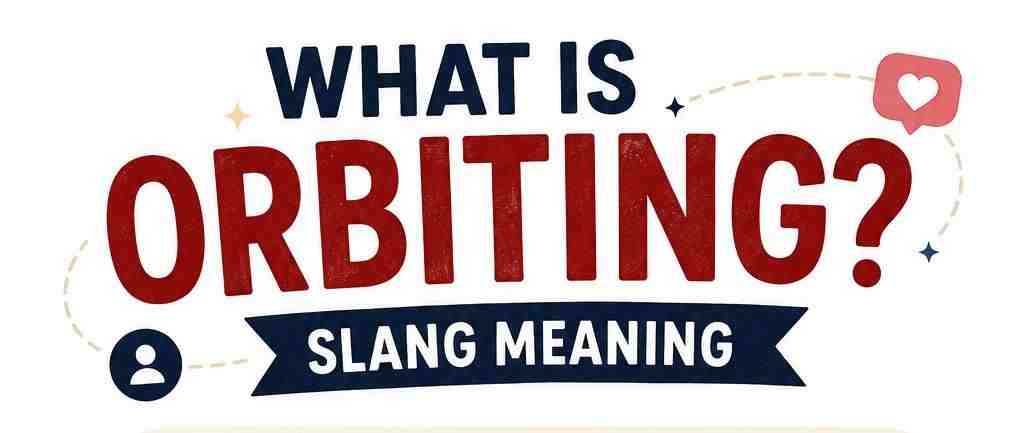
- Orbiting means someone stays active around your social media after communication fades. They may stop texting or calling, but they still watch your stories, like your posts, or react to your content.
- It is different from ghosting because the person never fully disappears. Instead of cutting all contact, they continue hovering online without building a real connection.
- Orbiting can create confusion and mixed signals. The constant online presence may make it seem like the person is still interested even when they make no meaningful effort.
- Real communication matters more than social media attention. Likes, views, and reactions may look meaningful, but consistency and direct conversation are what truly show interest.
What Does Orbiting Mean in Slang?
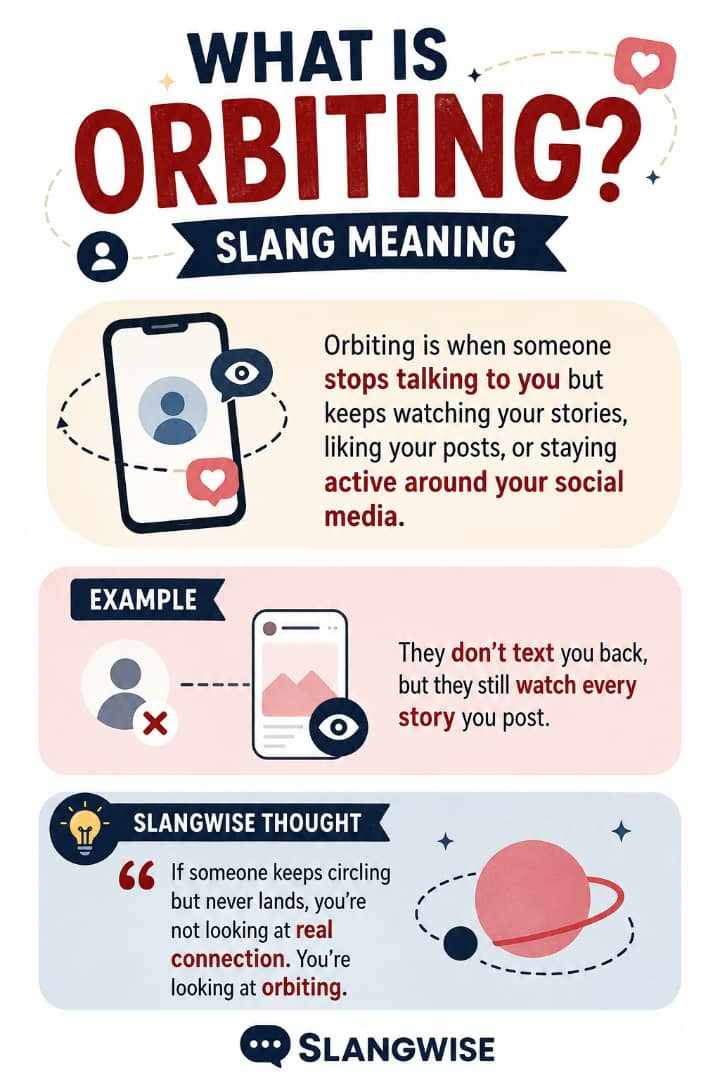
Orbiting is a dating and relationship slang term for when someone stops direct contact with you but keeps hovering around your online life. They may not text, call, or make real plans, but they still like your posts, view your stories, react to your content, or stay visibly present on social media. In other words, they are no longer in the conversation, but they are still in the circle.
A simple way to think about it is this: ghosting is disappearing, while orbiting is disappearing only in person or in private, then staying active around you online. Some modern dating explainers even describe orbiting as “the new ghosting,” because it keeps the connection awkwardly alive without any real communication.
I think that is why the word feels so accurate. It borrows the image of a planet circling something, close enough to be seen, but never landing. That visual captures the whole vibe perfectly: attention without commitment, presence without real contact.
DISCOVER: 30 Popular Dating Slang Terms of 2026 That’ll Have You Laughing, Ghosting, and Rizzing…
Why Orbiting Feels So Strange
Orbiting is confusing because it sends two messages at once. On one hand, the person has backed away from direct communication. On the other hand, they keep showing up in your digital space, which can make it feel like they are still interested. That mix can keep someone wondering, “So are they done, or are they not?”
Psychology Today describes orbiting as circling around someone online, making your presence known through likes and social activity, while never making serious contact. That pattern can feel especially frustrating because it leaves the other person with visibility but no clarity.
Here is the thing: online attention is not the same as actual effort. Someone can watch every story you post and still avoid the one thing that matters most, which is real communication. That is what makes orbiting so emotionally messy.
What Orbiting Looks Like in Real Life
Orbiting usually starts after a breakup, a faded talking stage, or a connection that never quite became official. The person may stop replying in a meaningful way, but they continue interacting with your social media. They might like your photos, react to your stories, or appear around your content just often enough to stay on your radar.
Sometimes it looks harmless at first. A like here, a story view there, maybe a quick reaction to a post. But when direct contact is missing and the online hovering keeps happening, it stops feeling casual and starts feeling deliberate. That is the moment orbiting becomes noticeable.
The tricky part is that orbiting does not always mean the person has bad intentions. Some people may be curious, nostalgic, or simply unable to fully disconnect. But even if their intention is not cruel, the effect can still be unsettling for the person being orbited.
READ ALSO: Breadcrumbing Meaning in Slang: The Sneaky Dating Habit Everyone Should Know About
Orbiting vs Ghosting
Orbiting and ghosting are related, but they are not the same thing. Ghosting is when someone abruptly ends communication and disappears without explanation. Orbiting is when that same person continues to remain visible online after the direct contact has ended.
That difference matters because ghosting gives silence, while orbiting gives a weird kind of ongoing presence. One feels like a door closing. The other feels like someone standing in the hallway, not entering, not leaving, just lingering.
In my view, orbiting can feel more unsettling than ghosting for some people because the social media activity keeps reopening the question of what the other person wants. Every like can feel like a tiny hint, even when there is no actual conversation behind it.
Common Signs Someone Is Orbiting You
One clear sign is that the person has stopped direct conversation but still shows up everywhere online. They may not answer messages, but they are quick to watch your stories, like your posts, or keep tabs on what you are doing. That visible pattern is one of the clearest signs of orbiting.
Another sign is the gap between digital presence and real effort. If someone is happy to engage with your content but never reaches out in a meaningful way, never makes plans, and never starts a real conversation, that is not closeness. It is hovering.
You may also notice that the person seems to appear at emotionally convenient times, such as right after you post something personal, confident, or new. That kind of timing can make orbiting feel intentional even when no words are exchanged.
READ ALSO: Beige Flag Meaning Explained: The Tiny Dating Quirk Everyone Keeps Noticing
Why People Orbit Others
People orbit for different reasons. Some are simply reluctant to let go, even when they do not want a real relationship. Others may enjoy staying visible because it gives them a sense of access without the responsibility of commitment. Some may not even realize how confusing their behavior is from the outside.
The term is part of a larger wave of modern dating language that describes how technology has changed the way people connect and disconnect. Psychology Today notes that newer dating terms often reflect the way social media keeps people tied to one another even after direct contact ends.
That is one reason orbiting has become such a useful word. It names a pattern that older vocabulary did not capture very well. Without the term, a lot of people would only be able to say, “They still watch my stuff but never talk to me,” which is accurate but not nearly as sharp.
A Quick Self Check
Ask yourself this: is the person actually communicating with you, or just staying visible around you? Are they making a real effort to connect, or only popping up in places where they do not have to be vulnerable or clear? Those questions usually separate genuine interest from orbiting pretty quickly.
Another helpful question is whether their online behavior gives you clarity or confusion. Orbiting tends to keep people emotionally suspended because it offers just enough activity to make them wonder what is going on. Real connection does not need that much decoding.
How to Handle Orbiting
The healthiest response is usually to focus on the absence of direct effort, not the presence of online attention. A like is not a conversation. A story view is not a plan. A reaction emoji is not commitment. The more you separate digital signals from real engagement, the easier it becomes to read the situation clearly.
It can also help to stop treating orbiting like a puzzle you have to solve. In many cases, the behavior is already the answer. If someone wants access to your life, they can communicate directly. If they only want to hover, you do not owe them extra emotional space.
FIND OUT: DTF Meaning in Slang: What It Really Means in Text and Online Chats
Final Thoughts
Orbiting is a very modern kind of slang, and it fits modern behavior really well. It describes the strange in between stage where someone is no longer truly present, but still hanging around your online world. That is why the term has stuck: it captures both the distance and the weird visibility at the same time.
The main thing to remember is simple. If someone keeps circling but never lands, you are not looking at real connection. You are looking at orbiting. And once you can name it, it becomes much easier to see it for what it is.
FAQs About Orbiting
Orbiting is a slang term for when someone stops direct communication with you but continues interacting with your social media activity, such as viewing stories or liking posts.
Not exactly. Breadcrumbing usually involves giving small bits of direct attention to keep someone interested, while orbiting focuses more on staying visible online without meaningful communication.
People may orbit because they are curious, nostalgic, emotionally unavailable, or unsure about fully letting go. Some also enjoy keeping a connection open without committing to real interaction.
The best approach is to focus on actions instead of online activity. Story views and likes are not the same as genuine communication, effort, or emotional commitment.
Table of Contents