
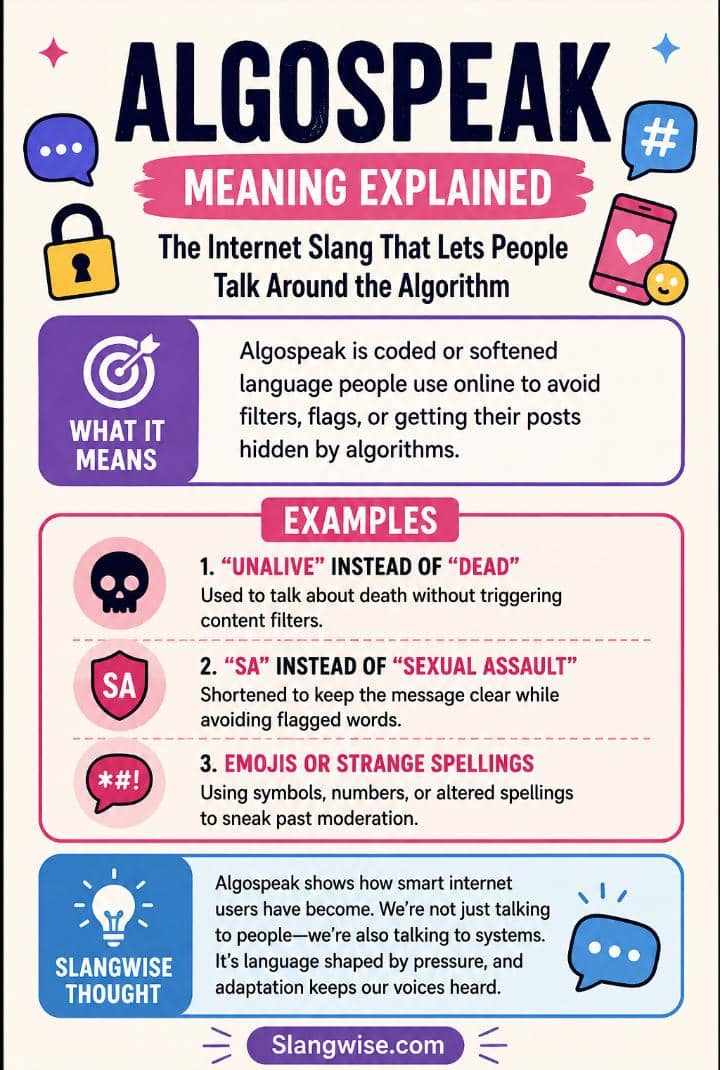
- Algospeak is slang for coded or softened language people use online so their posts are less likely to be filtered, flagged, or down ranked by platform algorithms.
- It usually mixes creativity and self protection. People change spellings, swap words, or use symbols and emojis to keep their message visible.
- The term itself comes from algorithm + speak, and it has been around since at least 2016 online before becoming widely discussed in 2022.
- Algospeak is not just one trick word. It is a whole style of online communication that keeps evolving as platforms and moderation tools change.
- Take the Slang Quiz and download our free 270+ Internet Slang Dictionary to test how fluent your internet brain really is.
Table of Contents
What Does Algospeak Mean?
Algospeak is the kind of online language people use when they want to say something without setting off the platform’s automated filters.
In simple terms, it is coded internet speech shaped by algorithms, moderation systems, and the constant need to stay visible on social media. People might change a word, shorten it, misspell it, or replace it with a softer version so the post still gets through.
That is why algospeak feels so modern. It is not just slang for fun. It is slang shaped by the internet’s rules.
On TikTok, for example, creators have used it to avoid content moderation while still talking about sensitive topics, and researchers have described it as a deliberate way to contest and evade algorithmic moderation.
Where Did Algospeak Come From?
The word is built from algorithm and speak, which makes the meaning easy to remember once you see it.
The term was already appearing online by 2016, but it only became much more widely discussed later, especially as people started noticing how social media platforms reward certain wording and hide other wording.
What made algospeak blow up was not just one platform. It was the whole internet culture around being watched by machines. Once people realized that a certain word could lower reach, trigger a filter, or get a post removed, they started inventing workarounds.
That is where algospeak became more than a niche internet trick and turned into a real part of online language.
READ ALSO: Algo Farmer Meaning: The New Internet Slang for People Who Chase the Algorithm
Why Do People Use Algospeak?
People use algospeak for a few big reasons. Sometimes they want to avoid being censored. Sometimes they want to keep their content brand safe. Sometimes they are just trying to make sure their post does not disappear into the algorithmic void.
In other cases, algospeak becomes a kind of community code, where people inside a group know exactly what a softened term means.
That is what makes it so interesting. Algospeak is both practical and playful. It can feel like a workaround, a joke, a shield, and a signal of belonging all at once. That is also why it keeps spreading: once a workaround becomes popular, people copy it, remix it, and turn it into new slang.
Algospeak Examples You Will Actually Recognize
Here are a few common examples of algospeak in action:
1. “Unalive” instead of “dead”
This is one of the most recognizable examples. People use it when they want to discuss death without using a word that may be filtered or treated as sensitive by the platform.
2. “SA” instead of “sexual assault”
The idea is to keep the message understandable while avoiding words that may be flagged.
3. Emojis or strange spellings instead of direct words
Creators may use symbols, numbers, or altered spelling to sneak past moderation while still being understood by their audience. Researchers describe this as coded language and veiled language used to avoid keyword detection.
You can also see algospeak in broader online habits, like replacing a controversial term with a softer phrase, or using a niche nickname that only the target audience understands. That is why algospeak keeps changing. It is less about one fixed word and more about a flexible internet survival skill.
Slangwise Thought
Algospeak shows how smart internet users have become. People are not just speaking to other humans anymore. They are also speaking to systems that decide what gets seen, what gets hidden, and what gets pushed to the top.
So when someone uses algospeak, they are not being random. They are adapting. They are learning the rules of the digital world and bending those rules just enough to keep their voice alive.
READ ALSO: Shrekking Meaning in Dating Slang: The Viral Term People Are Talking About
Is Algospeak Good or Bad?
Honestly, it is a little of both. On one hand, it helps people communicate around unfair or overly strict moderation. On the other hand, it can make language messy, confusing, and sometimes misleading.
It can also push people to rely on hints and codes instead of being direct. Still, that tension is exactly what makes algospeak such a powerful slang term: it is language shaped by pressure.
Some recent discussions even treat algospeak as part of a bigger linguistic shift, where social media does not just spread slang, but actively changes how words are formed, chosen, and understood.
In that sense, algospeak is not a small trend. It is a sign of how much platforms influence everyday speech.
How to Use Algospeak Naturally
Use the word algospeak when you want to talk about that online style of coded, filtered, or softened language. You could say:
- “That caption is pure algospeak.”
- “People are using algospeak to avoid moderation.”
- “The platform changes are making everyone speak in algospeak.”
It works best when you are talking about social media, content moderation, or internet culture. It sounds especially natural when you are describing a post, a creator, or a trend that clearly uses softened language to stay visible.
Algospeak Examples in Conversations
Here are three simple examples of how algospeak might show up in conversation:
Example 1:
“Did you notice how creators are saying unalive instead of dead now? That is algospeak in action.”
Example 2:
“She rewrote the whole caption because the original version was too direct. Total algospeak move.”
Example 3:
“He used emojis and weird spelling so the post would not get flagged. That is classic algospeak.”
READ ALSO: Summerween Meaning in Slang: Why Everyone Is Suddenly Doing Halloween in Summer
Conclusion
Algospeak is one of those internet slang terms that tells you a lot about our online world in just a single word. It means coded language shaped by algorithms, moderation systems, and the constant effort to stay heard on social platforms.
It is clever, evolving, and very much a sign of the times. If slang reflects culture, then algospeak reflects a culture where humans are always negotiating with machines.
That is what makes it so fascinating. It is not just a trend. It is a reminder that language changes when the rules of communication change.
FAQs on Algospeak
It means coded or softened language people use online to avoid triggering moderation systems or algorithmic filters.
It comes from algorithm plus speak, and it has been used online since at least 2016.
No. It is strongly associated with TikTok, but the idea appears across social platforms and other online spaces too.
Because it shows how people adapt language to platform rules, and how social media algorithms can shape what we say and how we say it.