
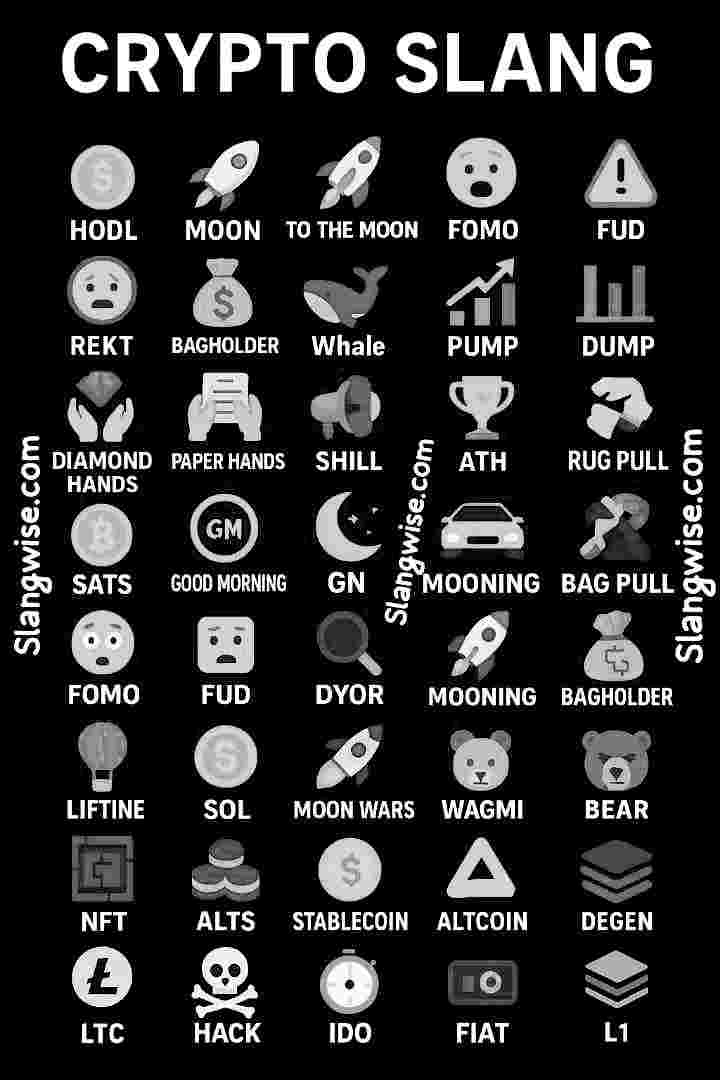
- Crypto slang is the shortcut language of the crypto world. It helps people share ideas fast in chats, posts, and trading groups.
- Knowing the slang makes crypto feel less confusing. You will understand market talk, community jokes, and warning signs much faster.
- Some terms describe emotions, like FOMO and FUD. Others describe market behavior, like pump and dump, whale moves, and bear markets.
- A few slang words are more practical than funny. Terms like wallet, seed phrase, gas fees, DEX, and smart contract are important for everyday use.
- This guide gives you 55 simple crypto slang terms, including 10 fresh additions, plus new FAQs to help you remember and use them with confidence.
Introduction
When I first got into cryptocurrency, it felt like everyone else had joined a private club and I had been handed a confusing secret code. People were saying things like HODL, FOMO, whale, DYOR, and rekt as if those words were completely normal. If you have ever felt the same way, you are definitely not alone.
Crypto has its own language because the space moves fast. Prices change quickly, new coins appear all the time, and communities talk in short, sharp phrases that save time. That is why slang matters. It is not just for jokes. It helps people share advice, warn each other about risk, celebrate gains, and explain what is happening in the market.
This guide will walk you through 55 essential crypto slang terms in simple English. I will keep things friendly, clear, and practical so you can actually understand how these words are used. I have also added 10 new crypto terms that are very useful in today’s market.
One important note before we begin: crypto is exciting, but it is also risky. Slang can help you understand the conversation, but it should never replace careful research. Use this guide to learn the language, not to rush into trades blindly.
So, let’s get into it.
What Is Cryptocurrency in Simple Words?
Before the slang, let us briefly ground ourselves.
Cryptocurrency is digital money that lives on a blockchain. Instead of being controlled by one bank or government, many crypto networks run on shared computer systems. That means transactions can be open, verifiable, and often faster than old style banking systems.
People use crypto for many reasons. Some want to send money across borders. Some want to invest. Some like the technology. Others enjoy the communities around it. Whatever the reason, one thing is clear: once you start reading crypto posts, you will see a lot of slang.
That is why learning the words matters. It helps you understand the mood of the market, spot hype, and avoid getting lost in the noise.
Crypto Slang Glossary: 55 Essential Terms

1. HODL
HODL means hold your crypto instead of selling too early. It started as a typo, but now it is one of the most famous words in crypto. People use it when they believe a coin has long term value and they want to stay patient through market swings.
2. FOMO
FOMO means fear of missing out. It happens when a coin starts rising and people rush to buy because they worry the price will keep going up without them. This often leads to emotional decisions, which can be expensive.
3. FUD
FUD stands for fear, uncertainty, and doubt. It is used when people spread negative talk that makes others panic. Sometimes the concern is real, and sometimes it is just noise. Smart investors learn to tell the difference.
4. DYOR
DYOR means do your own research. It is one of the most important phrases in crypto. Instead of blindly following influencers or random posts, you check the project yourself, read the basics, and make your own judgment.
5. Whale
A whale is a person or group that owns a very large amount of crypto. Because they hold so much, their buying or selling can affect the market. When whales move, people often pay attention.
6. Hype
Hype is the loud excitement around a coin, project, or trend. It can bring attention and new buyers, but too much hype can also hide weak facts. If a project is all noise and no substance, be careful.
7. Shill
To shill means to promote a coin or project very aggressively, often because the promoter benefits from it. Not every recommendation is bad, but shilling usually feels pushy, one sided, and too good to be true.
8. Pump and Dump
This is when a coin is pushed up with hype so insiders can sell later at a higher price. The price rises fast, then crashes hard. It is one of the oldest tricks in speculative markets.
9. Moon
When people say a coin is going to the moon, they mean they expect the price to rise a lot. It is a hopeful, excited phrase. It sounds fun, but it should never replace real analysis.
10. Bagholder
A bagholder is someone stuck holding a coin that has lost a lot of value. The person hoped it would rise, but now they are left with a weak position and little confidence in the project.
11. REKT
REKT is short slang for wrecked. It describes a painful loss, often after bad timing or too much risk. If someone says they got rekt, they usually mean they lost money in a sharp and unpleasant way.
12. ATH
ATH means all time high. It is the highest price a coin has ever reached. Crypto communities watch ATHs closely because they often bring excitement, profit taking, and a lot of new attention.
13. ATL
ATL means all time low. It is the lowest price a coin has ever hit. Some investors see this as a warning sign, while others see it as a possible value zone. Either way, it matters.
14. Bull Market
A bull market is a period when prices are generally rising and people feel optimistic. In crypto, bull markets can move fast and create strong excitement, but they can also make people overconfident.
15. Bear Market
A bear market is a period of falling prices and weak confidence. People become cautious, trading slows down, and many coins lose value. Bear markets test patience more than skill.
READ ALSO: The Ultimate List of 250 Most Popular Internet Slang Words of 2026
16. Staking
Staking means locking up crypto to help support a blockchain network and earn rewards. Many people like staking because it can feel like a more active way to hold coins while the network runs.
17. Gas Fees
Gas fees are the costs you pay to make a transaction on certain blockchains, especially Ethereum and similar networks. When the network is busy, fees can rise. That is why timing matters.
18. Blockchain
A blockchain is the system that records crypto transactions in linked blocks of data. Think of it as a public digital ledger. It helps create transparency and makes tampering much harder.
19. Wallet
A crypto wallet is where you store the keys that let you access your coins. It does not hold cash in the usual sense. Instead, it helps you manage your crypto safely.
20. Seed Phrase
A seed phrase is a group of words that can restore your wallet if you lose access. It is extremely important. Anyone who gets your seed phrase can control your funds, so it should be kept private.
21. Hot Wallet
A hot wallet is connected to the internet. It is convenient for quick use, trading, and daily transfers. The tradeoff is that being online can make it less secure than offline storage.
22. Cold Wallet
A cold wallet keeps your crypto offline, usually on a hardware device or another offline system. It is often used for long term storage because it gives stronger protection against online attacks.
23. NFT
NFT stands for non fungible token. It means a digital item that is unique and cannot be swapped one for one like regular coins. NFTs can represent art, collectibles, memberships, and more.
24. DeFi
DeFi means decentralized finance. It refers to financial services that run on blockchain without traditional banks in the middle. People use DeFi for lending, borrowing, trading, and earning rewards.
25. DEX
A DEX is a decentralized exchange. It lets people trade crypto directly through smart contracts instead of using a central company to handle the trade. Many crypto users like the freedom, but it takes more care to use.
26. CEX
A CEX is a centralized exchange. This is a platform run by a company, like a regular crypto exchange. It is often easier for beginners, but the company controls the platform and usually handles custody.
27. Smart Contract
A smart contract is code that automatically carries out an agreement when conditions are met. It removes a lot of manual work and is one of the most important ideas in crypto technology.
28. Tokenomics
Tokenomics means the economic design of a token. It covers supply, distribution, rewards, burns, and use cases. Strong tokenomics can help a project last longer, while weak tokenomics can hurt it.
29. Airdrop
An airdrop is when a project gives free tokens to users or holders. It is often used to attract attention, reward early supporters, or grow a community. Free tokens sound great, but always check the project carefully.
30. Rug Pull
A rug pull happens when a project team disappears or drains funds, leaving investors with worthless tokens. It is one of the most painful scams in crypto and a major reason why research matters.
31. Degen
Degen is short for degenerate. In crypto, it usually means someone who takes very risky trades, often chasing huge returns with little caution. People sometimes use the word jokingly, but the behavior is still risky.
32. Liquidity
Liquidity means how easily you can buy or sell an asset without causing a big price change. High liquidity is usually better because it makes trading smoother and less stressful.
33. Liquidity Pool
A liquidity pool is a shared pool of crypto locked in a smart contract to help people trade on decentralized exchanges. Users who provide funds may earn fees or rewards in return.
34. Whitelist
A whitelist is a list of approved users who get special access to a launch, sale, or event. In crypto, being whitelisted can mean early access to a token mint or NFT drop.
35. Mint
To mint means to create a new token or NFT on the blockchain. In NFT culture, minting often means claiming or generating the item directly from the project.
READ ALSO: 50 Forex Terms Every Trader Must Know Before Their Next Trade
36. Bridging
Bridging means moving crypto from one blockchain to another through a bridge service. It can open up more opportunities, but it also requires care because bridges have been a weak point in crypto security.
37. Oracle
An oracle is a service that brings outside real world data into a blockchain. Smart contracts often need this data to work properly, such as price feeds or event information.
38. Validator
A validator is a network participant that helps confirm transactions and keep some blockchains running. Validators are important in proof of stake systems because they support the network and maintain trust.
39. MEV
MEV stands for maximal extractable value. It refers to extra profit that can be taken from ordering transactions in a certain way. It sounds technical, but the basic idea is simple: transaction order can matter a lot.
40. Stablecoin
A stablecoin is a cryptocurrency designed to stay close to a stable value, often tied to a currency like the US dollar. People use stablecoins to move money quickly without as much price movement.
41. Depeg
A depeg happens when a stablecoin or similar asset loses the value it was supposed to hold. This can cause panic because it means the token is no longer staying close to its target price.
42. APY
APY means annual percentage yield. It shows how much return something may earn over a year, often including compounding. In crypto, APY is often used in staking and DeFi discussions.
43. Yield Farming
Yield farming means moving crypto through different DeFi platforms to try to earn the best possible return. It can look attractive, but it is more complex than simple staking and often carries extra risk.
44. Impermanent Loss
Impermanent loss is a possible loss that liquidity providers face when the price of tokens in a pool changes. It is called impermanent because the loss may change, but it still matters a lot in DeFi.
45. Maxis
Maxis are people who strongly believe one coin is the best and often defend it at every turn. The most famous example is Bitcoin maximalism, but the term can apply to other coins too.
46. Pump
A pump is a sudden rise in price, often driven by news, hype, or heavy buying. Sometimes the move is real and healthy. Other times it is artificial and short lived.
47. Dump
A dump is a sudden sell off that pushes prices down quickly. It often follows a pump, which is why you will hear both words together so often in crypto conversation.
48. Paper Hands
Paper hands means a person sells too early because they cannot handle price drops or stress. It is usually said in a teasing way, but it points to weak conviction or fear.
49. Diamond Hands
Diamond hands means holding through volatility without panic selling. It is the opposite of paper hands. People use it when they want to praise patience and strong conviction.
50. Ape In
To ape in means to jump into a trade quickly without much caution or research. It sounds playful, but it is a risky habit. Emotional speed and smart investing do not always go together.
51. Exit Liquidity
Exit liquidity is when new buyers end up providing the money that lets earlier holders sell. In simple words, it means you might be the one helping someone else cash out at your expense.
52. Wallet Address
A wallet address is the public string you share to receive crypto. Think of it like an account number. It is safe to share when receiving funds, but you still need to check it carefully.
53. Block Explorer
A block explorer is a website or tool that lets you look up blockchain transactions, wallets, tokens, and blocks. It is a very useful way to verify what is happening on chain.
54. Layer 2
A layer 2 is a system built on top of a main blockchain to make transactions faster and cheaper. Many users like layer 2 networks because they can improve speed without changing the main chain itself.
55. Governance Token
A governance token gives holders the right to vote on decisions in a crypto project or DAO. It is one way communities try to manage projects together instead of relying on one central boss.
DISCOVER: The Silent Language of Success: 55 Must-Know Business Terms That Separate Amateurs from Pros
10 More New Crypto Terms Worth Knowing
These ten terms are especially useful if you want your crypto vocabulary to feel more current.
56. DAO
DAO means decentralized autonomous organization. It is a group that uses blockchain rules and voting to make decisions together. Think of it as a community with shared control.
57. ERC 20
ERC 20 is a common token standard on Ethereum. It helps different tokens follow the same basic rules so wallets and exchanges can support them more easily.
58. Cross Chain
Cross chain means working across more than one blockchain. This matters because many users now move assets, apps, and data between different networks.
59. On Chain
On chain means activity that happens directly on the blockchain and can be publicly checked. It is useful when people want proof instead of just social media claims.
60. Off Chain
Off chain means activity that happens outside the blockchain itself. It can be faster or cheaper, but it may not be as transparent as on chain activity.
61. Whales Watching
Whale watching means tracking large crypto holders to see what they are doing. It is not a perfect strategy, but it can give clues about market mood.
62. Snapshot
A snapshot is a record of who holds what at a specific moment in time. Projects often use snapshots for airdrops, governance votes, or rewards.
63. Burn
Burning tokens means permanently removing them from circulation. Projects do this to reduce supply or create scarcity. When done well, it can support the token economy.
64. Launchpad
A launchpad is a platform that helps new crypto projects raise funds or launch tokens. It can give investors early access, but early access also means early risk.
65. Gasless
Gasless means a transaction or action that does not require the user to pay gas directly. Some apps hide the fee or cover it another way, which makes the experience easier for beginners.
How to Use Crypto Slang the Smart Way
Now that you know the words, the next step is using them wisely.
First, do not force slang into every sentence. That usually makes writing sound fake. Use the words when they help explain something clearly.
Second, pay attention to context. A word like pump can mean a real price move or a scam. A word like shill can be playful in one group and a serious warning in another.
Third, remember that slang is not the same as truth. Someone can use the right words and still give bad advice. That is why DYOR is still one of the most important phrases in the entire space.
Fourth, do not let the language pressure you into risky decisions. When people shout ape in or to the moon, it can be fun to read, but it should not replace careful thinking.
Fifth, use the slang to understand the culture, not to copy the hype. Once you can read the room, you will make better choices and spot weak projects faster.
EXPLORE: Shopping Slang: 60 Must-Know Terms Every Smart Deal-Hunter Uses
Conclusion
Crypto slang is more than internet talk. It is part of the culture, the humor, the warnings, and the strategy of the crypto world. Once you understand the language, the space feels less confusing and much more interesting.
The good news is that you do not need to memorize everything in one day. Start with the basics. Learn the words you see most often. Then build from there. The more you read, the more natural it becomes.
If you remember only a few things from this guide, make them these: DYOR, watch out for FOMO, question FUD, respect whales, and never confuse hype with real value. That mindset will help you much more than any buzzword ever could.
Crypto may be full of noise, but now you know how to read it a little better. And that is a big step.
Frequently Asked Questions
A CEX is a centralized exchange run by a company. A DEX is decentralized and uses smart contracts for trading. Each has its own pros and cons.
Whales hold large amounts of crypto, so their buying and selling can move prices or shape market sentiment. People watch them because their actions can be a clue.
The biggest mistake is thinking that sounding knowledgeable means being prepared. You can know every slang word and still make a bad trade if you skip research.
Use them in real conversations, make a small cheat sheet, and review them often. It helps to connect each word to a simple example in your head.
Not exactly. HODL means hold through volatility, but it does not mean ignoring every signal forever. Smart holding still involves thinking, planning, and risk management.
Because crypto moves quickly. Slang helps people communicate faster, react to market events, and build a shared community language.
Crypto slang is the short, informal language people use in cryptocurrency communities. It includes abbreviations, jokes, warnings, and words that describe market behavior.
The most useful beginner words are HODL, FOMO, FUD, DYOR, whale, wallet, gas fees, staking, and rug pull. These come up everywhere.
DYOR helps protect you from bad decisions based on hype, influencer talk, or group pressure. It encourages you to check facts before buying or joining a project.
Not always. Some terms are universal, but different groups may use them in slightly different ways. Always read the conversation around the word
Table of Contents