
- “Lowkey” usually means something subtle, modest, private, or not loudly expressed.
- In Gen Z slang, it often describes a feeling, opinion, or desire that is real but softly admitted.
- People use it when they do not want to sound too intense, dramatic, or obvious.
- It pairs naturally with everyday talk, social media captions, and casual honesty.
Table of Contents
What Does “Lowkey” Mean in Gen Z Slang?
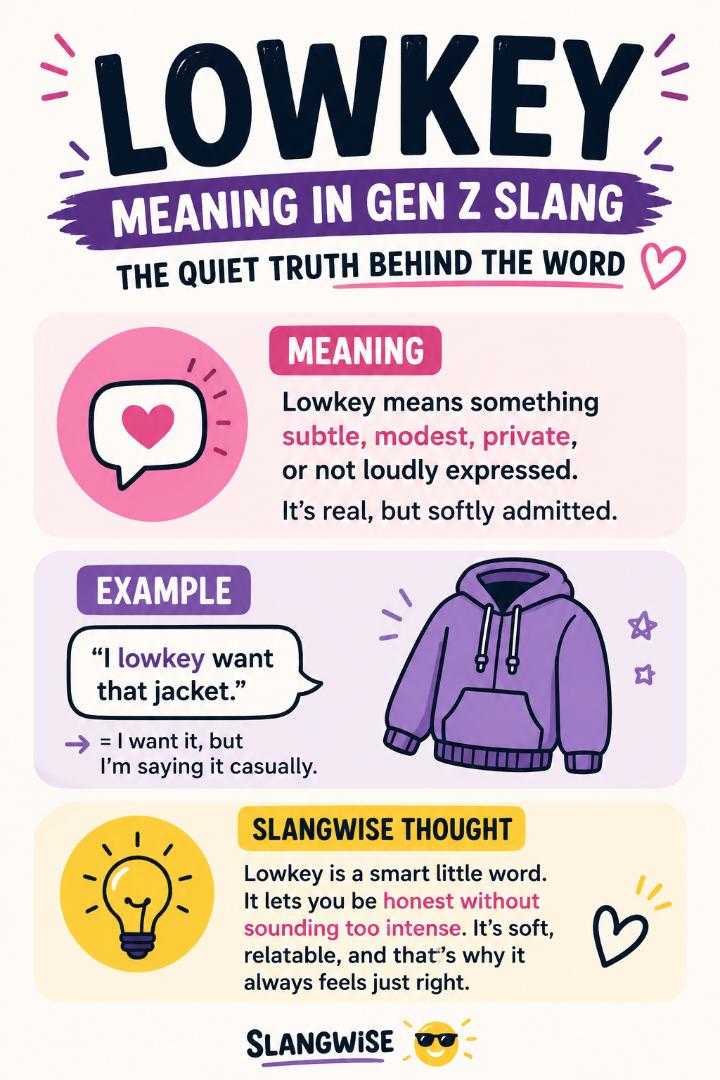
“Lowkey” is one of those words that feels soft, casual, and a little sneaky in the best way. In Gen Z slang, it usually means something like “kind of,” “a little,” “quietly,” or “not too openly.” It is the word people use when they want to say something honest without making a huge scene about it.
For example, someone might say, “I lowkey want that jacket,” and they are not really hiding the feeling. They are just saying it in a calmer, more relaxed way. That is the charm of the word. It lets people admit what they think or feel while still keeping the energy light.
The interesting thing about “lowkey” is that it sits right between honesty and understatement. It does not mean fake. It does not mean hidden forever.
It means “this is true, but I am saying it gently.” That is why it works so well in conversation, especially online, where people love short expressions that carry more vibe than grammar.
READ ALSO: Lowkenuinely Meaning in Slang: The Tiny TikTok Word That Sounds Made Up but Somehow Says Exactly What You Mean
Slangwise Thought on Lowkey
My take is that “lowkey” is one of the smartest little words in modern slang because it helps people sound real without sounding too exposed.
Lowkey gives you room to be honest, playful, and emotionally smooth at the same time. That is a big reason it has lasted so long and still feels fresh in Gen Z speech.
Where Did the Word Come From?
The older meaning of “low-key” points to something quiet, restrained, subdued, or not flashy. That original sense still exists today, and it helps explain why the slang version feels so natural. When people use it now, they are borrowing that same “quiet energy” and applying it to thoughts, feelings, and opinions.
Over time, the word moved from describing style and intensity to describing attitude. So instead of just saying a party is low-key, people now say they lowkey like someone, lowkey want to stay home, or lowkey think a movie was amazing.
That shift is what makes the slang version feel so useful. It captures a feeling that is real, but not loud.
That is also why “lowkey” pairs so well with social media language. Online conversation often rewards quick reactions, soft confessions, and casual truth telling. “Lowkey” fits right into that space because it sounds relaxed, relatable, and a little personal without being over the top.
EXPLORE: 72 Most Popular Gen Z Slang Words of 2026 – Rizz, Delulu, Skibidi etc., And What They Secretly Mean Online
How People Use Lowkey in Conversations
You will hear “lowkey” in all kinds of everyday situations. A student might say, “I lowkey did better than I expected,” meaning they are pleasantly surprised but not trying to brag.
A friend might say, “I lowkey miss that show,” which means the feeling is genuine, but they are saying it casually. Someone might also say, “I lowkey do not want to go,” which is a softer way of expressing reluctance.
That is what makes it so flexible. It can show mild excitement, quiet attraction, hidden opinions, or reluctant honesty. It is almost like a verbal shrug that still tells the truth. It helps people sound chill even when they are being sincere.
There is also a fun contrast with “highkey,” which is often used for the opposite idea: something open, obvious, or strongly expressed. So if “highkey” is the loud version, “lowkey” is the softer version. That contrast is part of why the phrase has stayed so memorable.
Why Gen Zs Like Saying Lowkey
Gen Zs like “lowkey” because it feels natural. It is not stiff, formal, or complicated. It sounds like how real people talk when they are being honest but do not want to make a big deal out of it. That gives it a relaxed, modern feel that works well in text, captions, comments, and spoken conversation.
It also has personality. “Lowkey” can make a sentence feel more human and less robotic. Instead of sounding like a full announcement, it sounds like a side note, a confession, or a quiet opinion. That is a big part of why it is still so popular with younger speakers.
READ MORE: 23 Gen Z Reaction Slangs: Why Everyone Keep Saying I’m Dead, Big Mood, No Cap etc.
Conclusion
“Lowkey” in Gen Z slang is all about subtle honesty. It means something is real, but not loudly declared. It can describe a feeling, a preference, a wish, or even a quiet opinion that someone is not trying to broadcast to the world.
The word works because it is simple, flexible, and emotionally accurate. It gives people a way to be expressive without being dramatic. That is a very modern kind of communication, and honestly, that is why lowkey keeps showing up everywhere.
FAQs
Lowkey is soft, subtle, and understated, while highkey is open, obvious, and more strongly expressed.
Not usually. It is much better for casual conversation, texting, and social media than for formal writing.
It can be either. The tone depends on the sentence. It can show liking, dislike, honesty, or mild hesitation.
It usually means slightly, quietly, subtly, or not too openly, while still being genuine.