
💀 Emoji Meaning in Slang
Have you ever seen someone reply with just 💀 and thought, “Wait, are they being dramatic, funny, or actually talking about death?” That is a very normal reaction. This emoji looks simple, but in slang it can carry a completely different meaning from what its shape suggests.
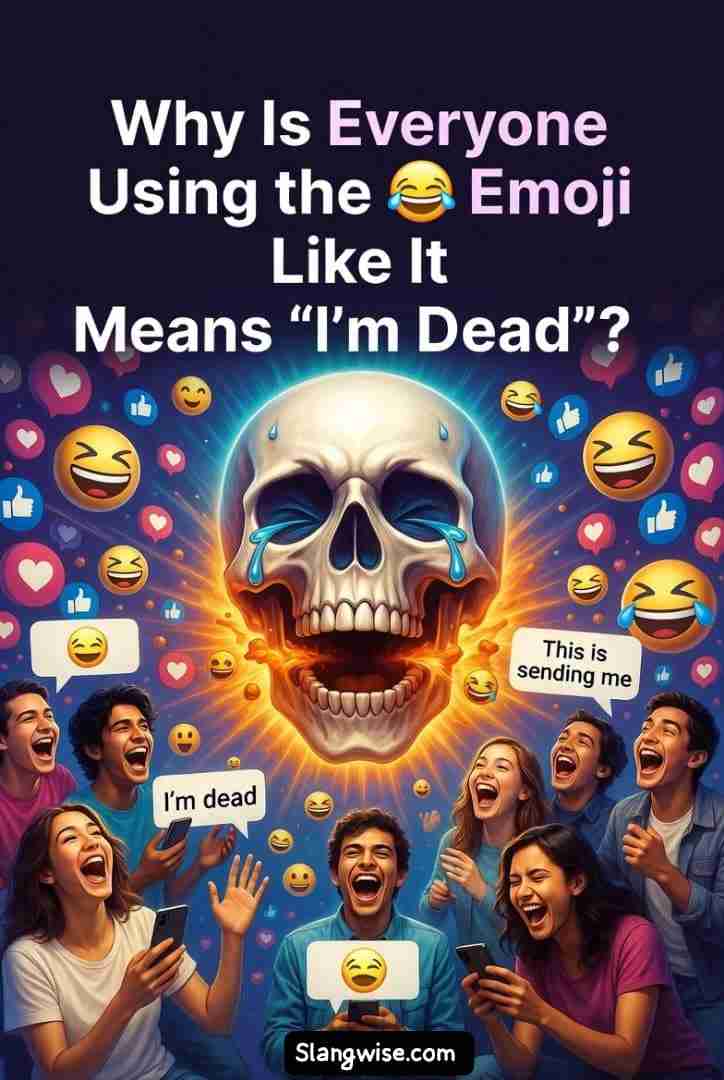
In recent internet slangs, the 💀 emoji is most often used to mean “I’m dead” in a funny way, or “I am laughing so hard I cannot even explain it.”
Emojipedia says it commonly expresses figurative death, such as dying from extreme laughter, frustration, or affection, and Dictionary.com notes that younger users often use it to express strong laughter.
In a Nutshell
In simple words, 💀 in slang usually means something is so funny that it is “killing” the person with laughter. It can also show shock, embarrassment, frustration, or dramatic reaction, depending on the conversation. In other words, it is often a playful way to say, “That was hilarious,” not a literal warning about death.
What Does the 💀 Emoji Mean in Slang?
The slang meaning of 💀 is one of the easiest emoji meanings to misunderstand if you only look at the picture. A skull normally suggests something dark, scary, or related to death.
But online, especially on TikTok and in text chats, younger users often use it to mean “I’m dead” as in “I am laughing too hard.” Emojipedia even says the skull emoji is often used as a laughing emoji by Gen Z to capture the idea of “I’m dying laughing,” which gets shortened to “I’m dead.”
So if someone sends you a joke and you reply with 💀, you are usually saying, “That cracked me up,” or “I cannot handle how funny this is.” It is a kind of shorthand for exaggerated laughter.
Why Do People Use a Skull to Mean Laughter?
That is the funny part. The skull works because it is an over-the-top way to show intensity. Instead of typing a long sentence like “I am laughing so hard right now,” people can just drop one tiny emoji and everyone understands the vibe. In fact the skull emoji has become a popular laughter symbol, especially in Gen Z internet culture.
It is also a bit dramatic, and internet slang loves drama. Saying 💀 is more expressive than a plain “lol.” It tells the other person that the joke was not just funny, but extremely funny. That big reaction is part of the appeal.
READ ALSO: 50 Hidden Emoji Slang Terms That Are Changing How We Talk
Is 💀 Always Funny?
No, and that is where context matters. While the most common slang meaning is laughter, the skull emoji can also express figurative death from frustration or affection. While Dictionary.com similarly explains that it can signal death or doom in a literal or figurative sense, depending on the message.
That means the emoji can shift tone. In one chat, it might mean, “That is so funny I cannot breathe.” In another, it might mean, “I am emotionally overwhelmed,” or, “That situation is so bad it is killing me.” The key is to read the rest of the message.
What Does the 💀 Emoji Mean on TikTok?
On TikTok, the skull emoji became a fast way to react to something hilarious, awkward, shocking, or painfully relatable. TikTokers use it to express strong laughter, and Emojipedia’s TikTok list says 💀 means figurative “I’m dead,” often as an alternative to the face with tears of joy emoji.
That is why you will often see comments like: “Not me doing this 💀” “This is too funny 💀” “Bro I am dead 💀”
In these examples, nobody is actually talking about death. They are reacting to something funny or ridiculous in a short, expressive way.
READ ALSO: 🧠 Big Brain Move Meaning: 99% Of People Use It Sarcastically (But Here’s The Truth)
How Is 💀 Different From 😂?
A lot of people use 😂 to mean laughter, but 💀 usually feels more intense, more ironic, or more Gen Z coded. The skull emoji is used by younger texters to express strong laughter, similar to how people use other laughter emojis. And it is often used as an alternative to the face with tears of joy emoji.
A simple way to think about it is this:
😂 = “That is funny.”
💀 = “That is so funny I am gone.”
The second one sounds more dramatic, which is exactly why it has become so popular online.
When Should You Use the 💀 Emoji?
Use 💀 when you want to react to something funny, shocking, or wildly dramatic in a casual chat. It works well in text messages, social media comments, memes, and friendly online conversation.
For example:
“Your story had me 💀” “That plot twist was insane 💀” “I cannot believe she said that 💀”
In all of these, the emoji adds energy and makes the reaction feel more human and playful.
READ ALSO: The Ultimate List of 250 Most Popular Internet Slang Words of 2026
When Should You Be Careful With It?
You should be careful when the conversation is serious, emotional, or could be misunderstood. Because the skull emoji can still literally mean death, danger, or doom, it may not be the best choice in sensitive conversations.
As explained earlier, the skull emoji can signal death or danger literally or figuratively, and Emojipedia notes that it is popular around Halloween as well, which shows how different the tone can be.
So if someone is talking about a serious issue, grief, or safety, the skull emoji may not be the right response. In casual chats, though, it is usually understood as humor or exaggerated reaction.
Is the 💀 Emoji the Same as ☠️?
Not exactly. They look similar, but their common uses are a little different. 💀 Skull commonly expresses figurative death, especially from laughter, while ☠️ Skull and Crossbones is more strongly tied to death, danger, poison, pirates, and hazardous material warnings.
According to Dictionary.com, the skull and crossbones emoji is used to mean death or danger, both literally and figuratively.
That means 💀 is more likely to mean “I am dead from laughter,” while ☠️ leans more toward danger, death, or spooky vibes. They can overlap, but they do not always give the same feeling.
Why Did the 💀 Emoji Become So Popular?
Because it is short, expressive, and funny in its own weird way. Internet language loves symbols that can do a lot with very little, and the skull emoji does that perfectly.
As you must have seen, younger social media users rely on it to express strong laughter, and of course, it has become a laughing emoji, especially on TikTok.
It also fits the way people talk online now. Messages are faster, shorter, and more visual. One emoji can replace a whole sentence, and 💀 does exactly that. It is dramatic, memorable, and easy to recognize.
READ MORE: 35 New Slang Words Taking Over the Internet Right Now (2026 Watchlist)
Easy Examples of the 💀 Emoji in Slang
Here are some simple examples:
- Girl, I am 💀.
- That joke was so bad it made me 💀.
- The way he said that 💀
- This video has me 💀
In each case, the emoji means the person is laughing, shocked, or reacting strongly. It is not literal. It is just a quick and playful way to show emotion.
The Real Meaning of the 💀 Emoji
So what does 💀 really mean in slang? Most of the time, it means I am dead from laughter or that is ridiculously funny. It can also show frustration, embarrassment, or a dramatic reaction. Context decides the exact meaning, but the internet use is usually playful rather than serious.
That is why the emoji is so popular. It is tiny, but it says a lot. It can turn a normal reply into a funny one, and it instantly gives the conversation a more modern, internet style tone.
Conclusion
The 💀 emoji is one of the clearest examples of how internet slang can completely change a symbol’s meaning. On its face, it looks dark or serious. In slang, though, it often means “I’m dead laughing” or “this is too funny.”
It can also show frustration, shock, or dramatic emphasis, depending on the situation. Emojipedia and Dictionary.com both show that this figurative use is now well established, especially among younger social media users.
If you know the tone, you know the meaning. That is the real trick with this emoji. It is not about literal death most of the time. It is about strong reaction, strong humor, and strong online energy.
Table of Contents