
Table of Contents
Gobby Meaning in Slang
Some slang words describe a mood. Some describe a personality. Gobby does both. It is the kind of word that sounds exactly like the attitude it carries, which is why it feels so vivid in British English.
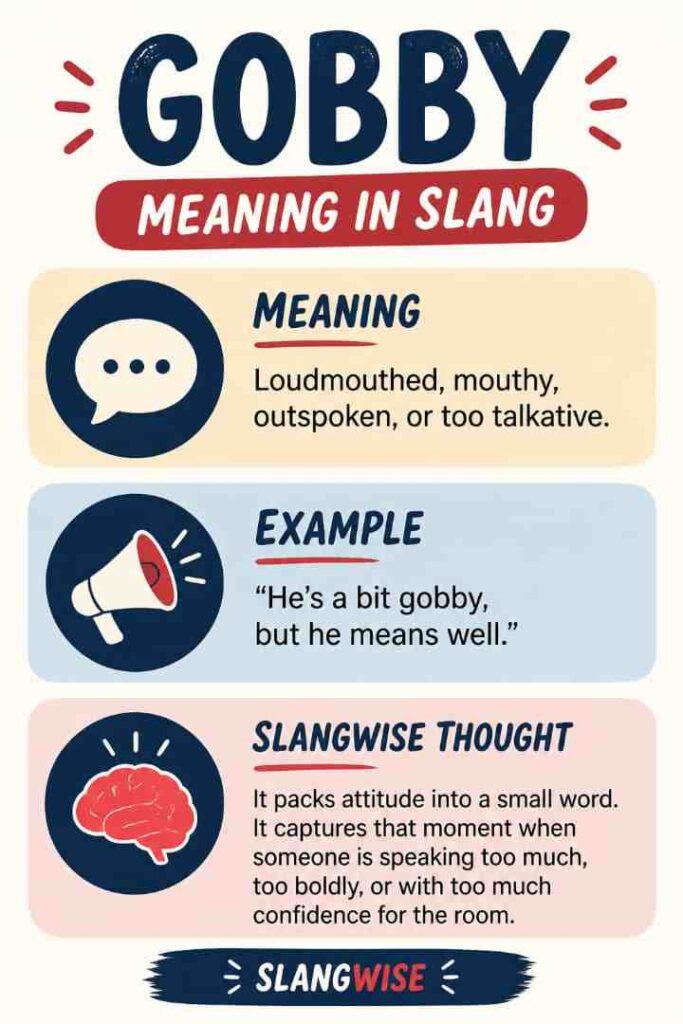
In slang, gobby usually means talkative, outspoken, mouthy, or loudmouthed. Depending on the situation, it can sound teasing, annoyed, or mildly disapproving, especially when someone is speaking too much or being a little too forward.
That is part of what makes it so useful. Instead of saying someone is simply chatty, gobby adds extra meaning. It can suggest that the person is loud, opinionated, rude, or a bit too eager to speak their mind. In other words, it carries attitude.
So iin this post, I’ll share with you what the slang gobby means in every sense of it.
In a Nutshell
- Gobby is informal British slang.
- It usually means mouthy, outspoken, loudmouthed, or too talkative.
- It often has a negative or critical tone.
- It comes from gob, a slang word for mouth.
- It can be teasing, sharp, or annoyed depending on context.
What Does Gobby Mean?
If someone says, “He is a bit gobby,” they usually mean he talks a lot, speaks too boldly, or has a mouthy attitude. It can be used to describe a person, their behavior, or even the way they come across in a conversation.
It is not the same as saying someone is just chatty. Chatty sounds friendly. Gobby sounds more like the person is loud, pushy, or saying too much. Sometimes it even suggests they should have kept certain opinions to themselves.
That sharper edge is what gives the word its personality.
SEE ALSO: 50 Popular British Slang Words That Will Make Your UK Chats Sound Local
Slangwise Thought
One thing I like about gobby is how much attitude it packs into such a small word. It feels very human, because it captures that moment when someone is not just speaking, but speaking with too much force, volume, or confidence for the room.
That is why it works so well in everyday conversation. It gives you a quick way to describe a person who is being loud, mouthy, or overly outspoken without needing a long explanation.
Where the Word Comes From
Gobby is connected to gob, a British slang word for mouth. That makes the meaning feel very natural. If someone is gobby, it is almost as if their mouth is doing too much work.
The word likely developed from that mouth based idea, and it may also be related to gabby, which has a similar sense of talking a lot. So the history of the word matches the way people still use it today.
That is part of the charm of slang. It often grows from simple everyday images, and gobby is a perfect example of that.
Why People Use Gobby
People use gobby because it is vivid. It does not just say someone talks. It suggests they talk too much, too loudly, or too boldly. That makes it more expressive than a plain word like talkative.
It also feels strongly British, which gives it a certain flavor in conversation. Depending on the tone, it can sound playful, annoyed, sarcastic, or cutting. That flexibility is one reason it sticks around.
It is short, memorable, and packed with personality. That is usually a good sign that a slang word will last.
READ ALSO: American Slang vs British Slang in 2026: 55 Words That Sound Similar Until You Cross the Pond
How Gobby Feels in Real Conversation
Here are some natural ways it might appear:
“He is a bit gobby, but he means well.”
“Do not get gobby with me.”
“She got a bit gobby in the meeting.”
“He was being gobby at the pub.”
“I was a bit gobby when I was younger.”
In each example, the word points to someone who is speaking too loudly, too boldly, or with too much attitude. It is rarely a compliment, but it is not always a serious insult either.
Why It Can Sound Teasing or Critical
The tone of gobby depends on the moment. In a friendly setting, it can sound teasing. In an argument, it can sound harsh. That is what makes it such a flexible slang word.
Sometimes it is used almost affectionately, especially if friends are joking about someone who never stops talking. Other times, it clearly means the speaker is annoyed and thinks the person is being too much.
So while the word is informal, it is not simple. It carries social meaning, not just dictionary meaning.
DISCOVER: Why Everyone Keeps Saying Fit Check and Fit Testing and What They Actually Mean
Further Examples
“That kid is so gobby.”
This means the child talks too much or speaks too boldly.
“She got gobby when someone disagreed with her.”
This means she became loud, mouthy, or overly outspoken.
“He is always gobby in class.”
This suggests he talks too much or interrupts a lot.
“Do not be gobby just because you are annoyed.”
This means do not speak rudely or too aggressively.
“She can be a bit gobby, but she is funny.”
This shows that the word can be used in a more mixed or playful way.
Where You Are Most Likely to Hear It
Gobby is strongly associated with British English, especially informal speech. You are more likely to hear it in casual conversation, in the UK, or in content that reflects British slang and everyday speech patterns.
It may show up in arguments, jokes, gossip, online comments, or situations where someone wants a quick and colorful way to criticize someone who is being loud or mouthy.
Because it sounds so natural in spoken English, it usually feels more alive in conversation than in formal writing.
READ ALSO: Matchy Matchy Meaning Explained: Why This Slang Phrase Is Cute, Cringe, and Weirdly Stylish at the Same Time
What Gobby Is Not
Gobby is not the same as simply being talkative. It also does not usually mean someone is friendly or confident in a calm way. The word carries edge.
It is also not a formal word, and it is not commonly used in polished or professional settings. It belongs to casual British speech, where tone matters just as much as the meaning itself.
That is why it works best when the speaker wants to sound direct, expressive, or slightly judgmental.
READ ALSO: What Does Innit Really Mean? The British Slang Word Everyone Uses but Few People Fully Understand
Final Thoughts
Gobby is one of those slang words that sounds exactly like the energy it describes. It is short, punchy, and full of attitude. Most of the time, it points to someone who is too loud, too mouthy, or too quick to speak their mind.
Because it comes from gob, the connection to the mouth and to speech feels very natural. That is what makes the word so memorable. It does not just describe talking. It describes talking with edge.
So when you hear gobby, think of someone who is bold, loud, outspoken, and maybe just a little too much for the room.
Frequently Asked Questions
Yes. It can describe someone’s attitude, speech, or the way they act in a situation.
Usually no. It often has a critical or disapproving tone, though it can sometimes be teasing.
It comes from gob, a slang word for mouth.
It usually means loudmouthed, mouthy, outspoken, or too talkative.
Yes, it is strongly associated with British informal English.