
- Fan behavior usually means acting like an overly intense fan in a way that feels obvious, extra, or embarrassing.
- It is often used online to call out people who are too obsessed, too nosy, or too quick to defend someone they stan.
- The phrase can be playful, but it can also be a sharp way of saying someone is crossing a line.
- It sits close to words like stan, parasocial, and toxic fandom.
Table of Contents
What “fan behavior” means in slang
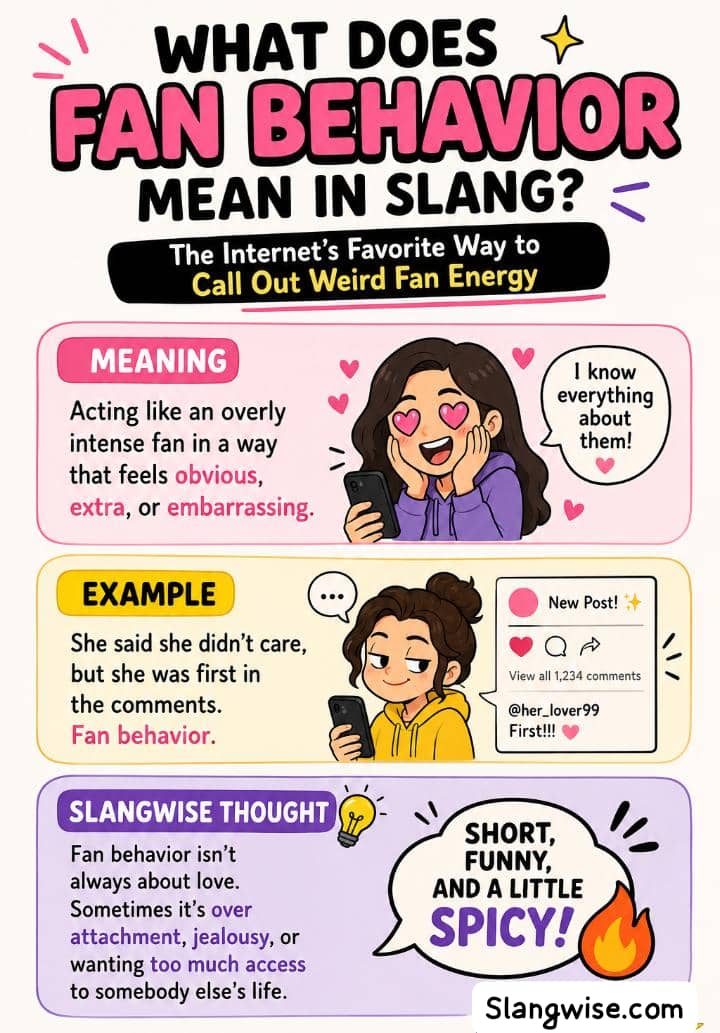
In slang, fan behavior is a phrase people (most especially Gen Zs and Gen Alphas) use when someone is acting like a super invested fan in a way that feels like too much.
It can mean obsessively watching someone’s posts, copying their style, defending them like it is a full time job, or acting weirdly concerned about their business.
The catchphrase is most common online, where people use it to call out behavior that feels nosy, excessive, or boundary pushing. It is not always a serious insult. Sometimes it is funny. Sometimes it is shady. Sometimes it is both at once.
What makes it interesting is that it can go in two directions. One person might say it jokingly, like, “Oh wow, that is fan behavior.” Another person might say it with full attitude, meaning, “You are acting too invested, and it is not cute.”
READ ALSO: Highkey Meaning: The Gen Z Word That Says What Everyone Else Is Trying to Hide
Origin of fan behavior
The phrase fan behavior comes from the everyday word fan, which originally refers to someone who admires or supports a person, team, brand, or creator. That part is simple enough.
The slang twist comes from the way internet culture turned ordinary admiration into something more exaggerated, more watchful, and sometimes more chaotic.
As social media grew, people started noticing that some fans were not just supportive. They were deeply involved, overly reactive, and sometimes way too invested in the private lives of public figures.
That is where the phrase started to make sense. Instead of just saying someone was a fan, people began saying their actions were fan behavior when the person acted like their admiration had crossed a line.
In other words, the slang did not come from a formal dictionary kind of origin. It grew naturally from online culture, fandom spaces, celebrity culture, and the way people joke about obsession on the internet.
It is the kind of phrase that feels very modern because it belongs to the age of comment sections, stan accounts, viral drama, and constant online watching.
Examples of fan behavior in real life
Here are some simple examples to make it easy to spot:
Example 1:
Someone says they do not care about a celebrity, but they know every update, every rumor, and every post within seconds.
That can be called fan behavior because the person is clearly paying too much attention.
Example 2:
A person keeps defending a creator in comment sections even when nobody asked them to.
That can also be fan behavior, especially if they act like the creator’s personal bodyguard.
Example 3:
One friend starts copying another friend’s hairstyle, slang, outfits, and online persona just to seem close to them.
People might say that is fan behavior because it looks like over admiration mixed with imitation.
Example 4:
A fan gets upset when their favorite artist dates someone, then starts posting long rants about it all day.
That is classic fan behavior because the reaction is bigger than the situation.
Example 5:
Someone tries to sneak into every conversation about a public figure just to show they know the most details.
That is also fan behavior, because it gives “I am way too involved.”
EXPLORE: 40 Most Popular Internet Catchphrases of 2026 (Updated)
Why people Use Fan Behavior
People use “fan behavior” when they want to call out someone who seems too emotionally invested in a person, creator, celebrity, or even a friend. That investment can show up as constant watching, over defending, collecting every detail, or trying to stay close in a way that feels one sided.
The phrase also sits close to stan culture. A stan is usually a very devoted fan, but “fan behavior” often has a more judgmental tone. It is what people say when support starts looking obsessive or embarrassing instead of normal.
There is also a deeper side to it. Sometimes this kind of intensity comes from a parasocial mindset, where someone feels unusually connected to a public figure who does not actually know them. That is part of why fan behavior can get so extreme online.
Slangwise Thought on Fan Behavior
Here is the real tea: fan behavior is not always about love. Sometimes it is about over attachment, jealousy, or wanting too much access to somebody else’s life.
In my view, that is why the phrase hits so hard online. It is short, funny, and a little spicy, but it says a lot in just two words.
SEE ALSO: Bih Meaning in Gen Z Slang: What It Really Means and How People Use It
How to use it naturally
You will usually hear this phrase in casual online conversation, comments, captions, or group chats. It works best when someone is acting oddly invested and you want to point it out without writing a whole paragraph.
Here are a few natural ways it might sound:
- “You know his whole schedule? That is fan behavior.”
- “She said she did not care, but she was first in the comments. Fan behavior.”
- “That level of defending is giving fan behavior.”
- “Copying her entire look is crazy fan behavior.”
- “Bro, why are you tracking every move like that? Fan behavior.”
The tone matters. With friends, it can sound playful. With strangers, it can sound shady. In public fandom spaces, it can sound like a full clapback.
So the safest way to understand it is this: the phrase usually means you are acting like a very intense fan, and everybody can see it.
Final thought on Fan Behavior
At its core, fan behavior slang is about excess. Too much watching. Too much defending. Too much copying. Too much emotional investment. Sometimes that intensity comes from admiration, but slang usually uses the phrase when admiration starts looking embarrassing, invasive, or just plain extra.
That is why it has become such a useful internet insult and joke at the same time. It sounds casual, but it carries attitude underneath. And once you know the vibe, you will start spotting it everywhere.
Frequently Asked Questions
Not always. It can be playful, but in slang it usually points to behavior that feels too intense or too obvious.
They are related, but not identical. Stanning usually means strong support, while fan behavior often suggests the support has crossed into something extra or questionable.
Yes. People use it for any situation where someone is acting overly invested, nosy, or copycat like.
Because it is often used as a quick callout. It is short, sharp, and loaded with attitude, which makes it perfect for social media banter.