
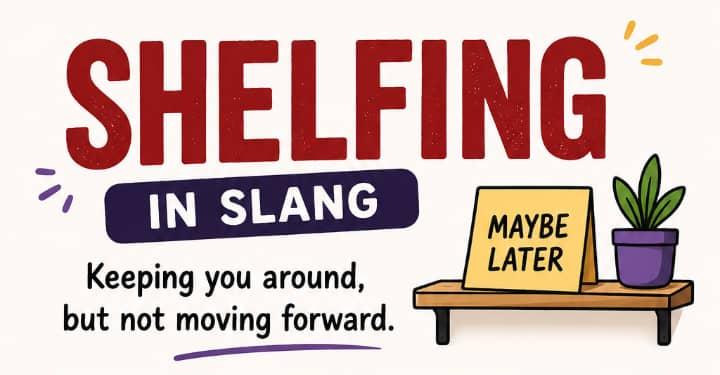
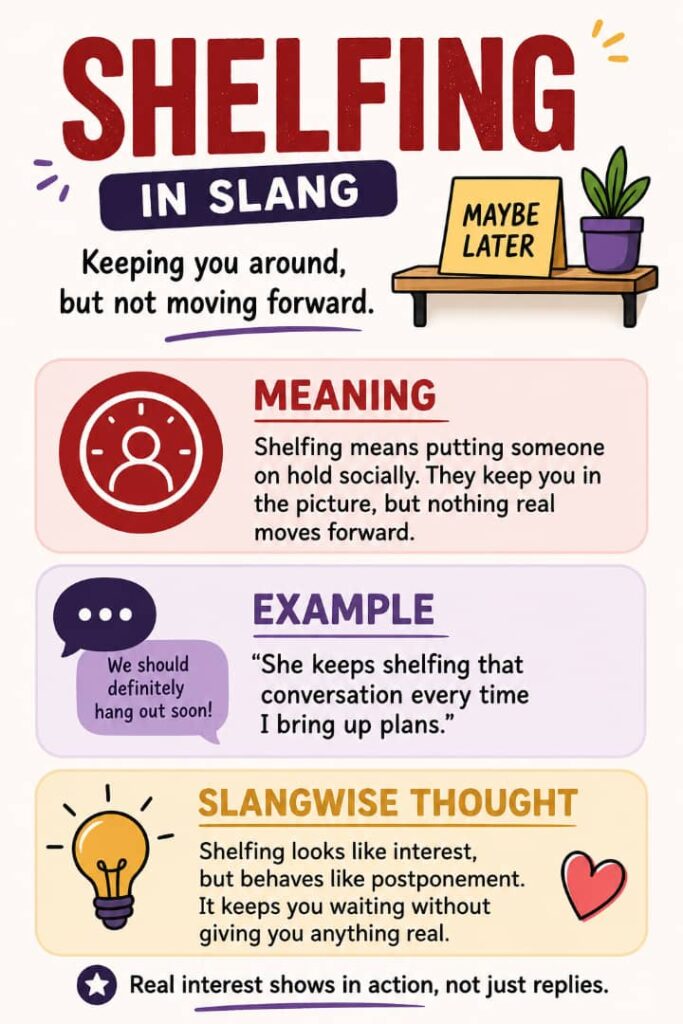
In slang, shelfing means putting someone on hold socially. It is when a person is kept around, kept talking to, or kept in the picture, but nothing real moves forward. No clear plans. No real commitment. Just delay.
You can see shelfing in dating, friendships, and even casual online chatting. The connection is not fully cut off, but it is not going anywhere either. That is what makes it so frustrating. It looks like interest, but behaves like postponement.
So today, let us break it down properly. What does shelfing mean in slang? How is it different from ghosting and breadcrumbing? Why do people use the word so often now? And how can you tell when somebody is shelving you instead of being genuinely interested?
Table of Contents
In a Nutshell
- Shelfing means keeping someone socially available without moving things forward.
- It often sounds promising, but behaves like delay.
- It can happen in dating, friendships, or casual conversations.
- The person being shelved is usually left waiting with no clear answer.
READ ALSO: Zest Mood Meaning in Slang: The Viral Little Phrase That Sounds Sweet, But Hits Different
What Does Shelfing Mean?
In essence, shelfing is a social holding pattern. Someone keeps the conversation alive, keeps the replies coming, and keeps the door cracked open, but they never actually step through it. They may say they are busy, not ready, overwhelmed, or planning to reconnect later, yet nothing meaningful ever happens.
That is why the term feels so accurate. Shelfing is not the same as being fully ignored. It is more like being kept on standby. You are not out of the picture, but you are not really being chosen either.
In everyday use, shelfing can describe a person, a relationship, a chat, or even a friendship that is stuck in limbo. The tone may still be friendly. The messages may still sound warm. But the follow through never arrives. That is the whole point of the word.
Where People Use It
Shelfing shows up most often in modern dating talk. Someone may keep chatting online, keep saying the timing is not right, and keep suggesting that something could happen later, but they never make a real move. The conversation continues while the actual relationship stays frozen.
It can also show up in friendships. For example, someone might keep saying, “We should hang out soon,” but weeks or months pass without any real plan. The connection is still there, but it is stuck in the future that never comes.
That is part of why shelfing became such a useful slang word. It describes a situation people recognize immediately, even if they have never had a name for it before.
READ ALSO: Hop On and Hop Off Meaning in Slang: The Two Tiny Phrases That Keep Conversations Moving
Shelfing vs Ghosting vs Breadcrumbing
This is where people often get mixed up, so let us keep it simple.
Ghosting is when someone disappears completely. Breadcrumbing is when someone gives just enough attention to keep you interested. Shelfing is when someone keeps you waiting with vague promises, soft excuses, and no real movement forward.
So the difference is easy to remember. Ghosting ends the connection. Breadcrumbing teases it. Shelfing delays it.
And honestly, shelfing can feel more confusing than ghosting because the communication is still there. The person is not gone, but they are also not making any real effort. That limbo is what makes it so draining.
Why Shelfing Feels So Real
People connect with shelfing because it describes a very common modern experience. Communication is easier than ever, but easy communication does not always mean real intent. Someone can reply fast and still not be serious. They can stay present in the chat and still avoid making anything concrete.
That is why shelfing hits a nerve. It names the gap between conversation and action. It captures the feeling of being kept around, but not moved forward. In my view, that is exactly why the word spread so naturally.
Nobody likes feeling like a backup plan. Nobody likes being treated like a maybe. Shelfing gives people a short, sharp way to call that out.
SEE ALSO: 40 Most Popular Internet Catchphrases of 2026 (Updated)
What Shelfing Usually Looks Like
Shelfing is often subtle. It does not always look rude at first glance. In fact, it can look polite, warm, and even thoughtful. That is what makes it tricky.
Here are some common signs:
- The person keeps talking but never makes concrete plans.
- They sound interested, but always stay vague.
- They keep saying later, soon, or when things calm down.
- The connection stays alive, but nothing progresses.
- You feel like you are waiting for a moment that never arrives.
The key thing to notice is the pattern. One delayed reply is not shelfing. One busy week is not shelfing. But repeated interest with no follow through can start to look exactly like it.
Examples of Shelfing in Slang
Here are a few natural ways people might use the word:
- “Stop shelfing me and just tell me if you actually want to meet.”
- “She keeps shelfing that conversation every time I bring up plans.”
- “I thought he was interested, but I think I got shelved.”
- “Do not keep me on the shelf if you are not serious.”
These examples show the basic idea clearly. The person is not fully cut off, but they are also not being moved forward. That in between space is what shelfing is all about.
SEE ALSO: Gen Z vs Gen Alpha Slang in 2026: What the Newest Internet Words Really Mean
Why the Word Works So Well
Shelfing is such a good slang word because it is simple and visual. A shelf is a place where something is set aside for later. It is not being used right now, but it is still being kept around. That is exactly the feeling the slang carries.
The word also sounds a little gentle, which makes the meaning even more interesting. It does not scream drama, but the behavior it describes can still feel disappointing or disrespectful. That contrast is part of what makes the slang memorable.
Based on what I have seen, people like words like this because they name a hidden pattern in a neat way. Once you hear shelfing, it becomes easier to spot it in real life.
Slangwise Thought
What stands out to me about shelfing is how well it captures social delay without making the situation sound too formal or too harsh. It is a slang word, but it points to something very real. Someone keeps you around, keeps the conversation warm, and keeps the future sounding possible, but never actually gives you anything solid.
The real value of the term is that it helps you name the pattern quickly. And once a pattern has a name, it becomes much easier to recognize, talk about, and move away from.
READ ALSO: 72 Most Popular Gen Z Slang Words of 2026 – Rizz, Delulu, Skibidi etc., And What They Secretly Mean Online
How to Tell If Someone Is Shelfing You
One of the best ways to spot shelfing is to look at actions instead of just words. People can sound interested for a long time, but the real question is whether anything is actually happening.
Ask yourself:
- Do they keep talking but never make firm plans?
- Are the excuses always vague and repeated?
- Does the connection stay alive without moving anywhere?
- Do you feel like you are waiting more than you are connecting?
If the answer keeps pointing toward delay instead of progress, shelfing may be what is happening. Real interest usually shows up in action, not just in replies.
Wrapping It Up
Shelfing in slang means putting someone on hold socially. It describes a situation where a person is kept around without real follow through, real planning, or real commitment. It often shows up in dating and friendships, and it sits somewhere between ghosting and breadcrumbing.
The main idea is simple. Shelfing looks like interest, but behaves like postponement. Once you know the word, it becomes easier to spot, easier to explain, and a lot harder to mistake for genuine effort.
Frequently Asked Questions
Shelfing means putting someone on hold socially, keeping them around without real follow through or commitment.
Not exactly. Ghosting means disappearing completely, while shelfing keeps the connection going but stuck.
No. It is used most often in dating, but it can also describe friendships and other social situations.
A common sign is repeated interest with no concrete plans, plus vague promises about later that never become real.