
Some internet words describe a mood. Others describe a whole strategy. Ragebait is one of those words that does both at the same time.
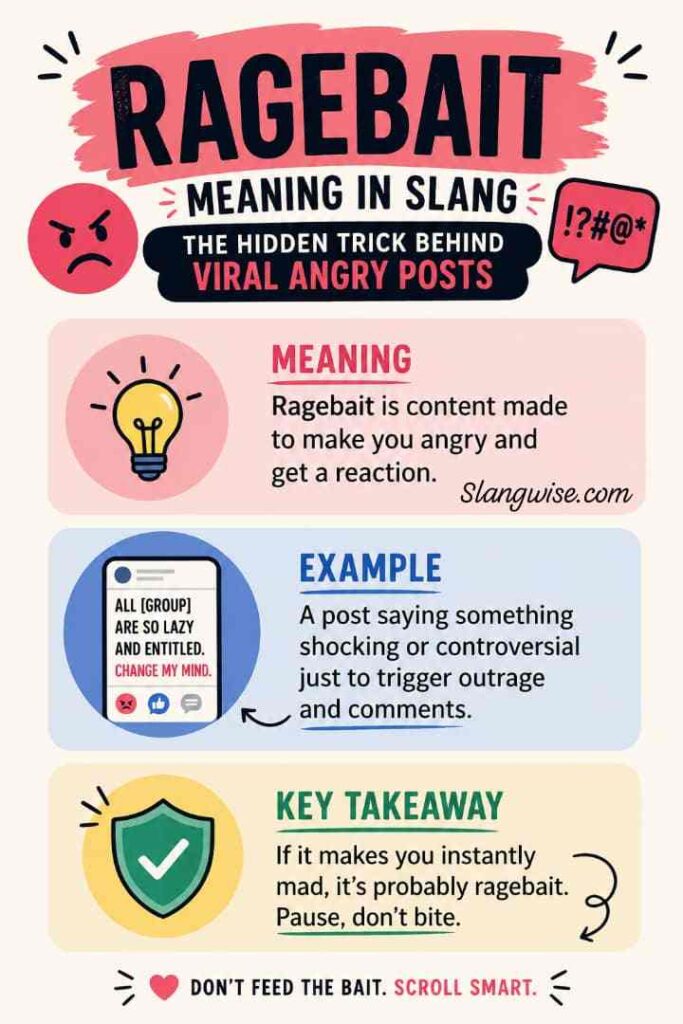
In simple terms, ragebait is content made to provoke anger, frustration, or outrage so that people will react to it. That reaction might be a comment, a share, a quote post, or a heated debate in the replies. The whole point is not to inform you. The whole point is to get a strong emotional response out of you.
If you have ever seen a post that felt obviously annoying, strangely one sided, or just a little too perfect at pushing people’s buttons, there is a good chance it was ragebait. And yes, that includes posts that are not always fully fake. In fact, at times, rage bait uses a real issue, but frames it in a way that is designed to make people mad first and think later.
So today, let us break it down in a way that actually makes sense. What does ragebait mean? How is it different from rage bait? Why do people use ragebaiting as a strategy online? And most importantly, how do you spot it before it drags you into a pointless comment war?
Quickly
- Ragebait is content made to make people angry.
- Rage bait means the same thing, just written as two words.
- Ragebaiting is the act of posting or sharing content to trigger outrage.
- The goal is usually engagement, not truth, balance, or helpful discussion.
So What Does Ragebait Mean?
Ragebait is slang for content that is intentionally designed to make people angry enough to react. The word combines rage, meaning intense anger, and bait, meaning something used to lure a reaction. Put together, it paints a very clear picture. It is the internet version of poking someone and then acting surprised when they respond.
That is why ragebait works so well. People online are quick to react, especially when they feel insulted, misunderstood, or pushed into taking a side. Ragebait takes advantage of that. It creates a situation where people feel like they have to respond immediately, even when the post itself is shallow, misleading, or obviously trying too hard.
In everyday use, ragebait can refer to a post, video, headline, caption, or even a comment that seems built to trigger annoyance. It can be political, social, cultural, or just plain petty. The format changes, but the goal stays the same. Get people mad, get them talking, and get the algorithm moving.
READ ALSO: 68 Most Popular TikTok Slang Words of 2026 – Quick Meaning and Examples
Why People Keep Posting Ragebait
Here is the part people do not always say out loud: ragebait often works because outrage spreads fast. Anger is highly shareable. People do not just see a post they dislike and move on. They screenshot it, quote it, reply to it, argue about it, and send it to friends with a message like, “Look at this nonsense.”
That means ragebait can be useful for anyone chasing visibility. More reactions can mean more reach. More reach can mean more followers, more clicks, more attention, and sometimes even more money.
That is why ragebaiting exists as a tactic. It is not always about genuine belief. Sometimes it is simply about using emotion as fuel.
And as a matter of fact, that is what makes the term so useful. It helps people name a pattern they already feel in their bones. A post is not merely annoying. It is strategically annoying. That difference matters.
How Ragebaiting Works in Real Life
Ragebaiting is the action behind the word. It means deliberately creating or spreading ragebait content. Sometimes it looks like a very extreme opinion posted with dramatic confidence.
Sometimes it looks like a false comparison, an unfair generalization, or a hot take that feels designed to spark arguments rather than conversation.
Examples include:
- a post that insults a large group just to get a reaction
- a headline that twists a normal topic into something absurd
- a video that presents a half truth as if it were the full story
- a comment made only to stir people up in the replies
The common thread is intent. Ragebaiting is not just saying something controversial by accident. It is often about knowing exactly which nerve to press. The more people argue, the more the post succeeds in the eyes of the person posting it.
FIND OUT: OPP Meaning in Slang: Why This Tiny Word Usually Means Somebody Is Not on Your Side
What Ragebait Usually Looks Like
Ragebait can be obvious or subtle. The obvious kind is easy to spot because it is loud, dramatic, and almost cartoonish in how hard it tries to offend. The subtle kind is sneakier. It might look like a normal post until you notice how carefully it is framed to get people heated.
Here are a few common signs:
- The wording is extremely dramatic for no clear reason.
- The post leaves out important context on purpose.
- The author seems more interested in reactions than facts.
- The content pushes a very predictable emotional button.
- The replies are full of people saying, “This is clearly bait.”
That last one is especially common. Once people start calling something bait, the post often loses some of its power. But by then, it may already have done its job and spread widely.
Why It Hooks People So Easily
Ragebait is effective because it works on human instinct. When something feels unfair or insulting, many people want to correct it immediately. They want to defend their side, point out the flaw, or prove the poster wrong. That is a very normal reaction, which is exactly why the tactic is so powerful.
But the tricky part is this. Once you react, you are helping the post spread. Even if you are replying to criticize it, the algorithm often treats all engagement as valuable. So the thing that annoys you can end up being rewarded because it successfully got you involved.
That is why ragebait can feel so frustrating. It can make thoughtful people feel manipulated. You think you are responding to nonsense, but in a sense, the nonsense was built for your response from the very beginning.
SEE ALSO: 23 Gen Z Reactions Slangs: Why Everyone Keeps Saying I’m Dead, Big Mood, No Cap etc.
Slangwise Thought
What I find interesting about ragebait is that it says a lot about how online attention works now. The word is not just slang for “annoying post.” It is a label for a whole internet strategy built around emotional provocation.
Based on what I have seen, people use it because it helps them name the difference between honest disagreement and content that is clearly fishing for outrage.
That is the real power of the term. It gives users a way to say, “This is not a real conversation. This is bait.” And once you can name that pattern, it becomes easier to step back from it instead of getting pulled in every time.
How to Spot Ragebait Without Falling for It
One of the best skills online is learning when not to bite. Ragebait loses power when people stop feeding it. That does not mean ignoring everything. It means slowing down long enough to ask a few simple questions.
For example:
- Does this post seem more angry than informative?
- Is the creator leaving out context on purpose?
- Does it feel engineered to provoke rather than explain?
- Would a calm conversation even be possible here?
If the answer keeps pointing toward drama instead of clarity, you are probably looking at ragebait. The safest move is often to scroll past, especially if the post seems designed to waste your time and energy. After all, your attention is valuable. Not every random outrage trap deserves it.
A Few Ragebait Examples
Here are some easy ways people might use the term in everyday speech:
- “Do not reply to that. It is obvious ragebait.”
- “This whole account is just ragebaiting for clicks.”
- “That headline is pure rage bait.”
- “They knew exactly what they were doing. Total ragebait.”
Notice how the tone is usually casual but slightly annoyed. That fits the word perfectly. Ragebait is not a formal term. It belongs to the internet, where people point at something irritating and immediately try to name the trick behind it.
DISCOVER: Gen Z vs Gen Alpha Slang in 2026: What the Newest Internet Words Really Mean
The Bigger Picture
Ragebait is more than a slang word. It is also a useful reminder that not everything online is made in good faith. Some content is designed to inform, some is made to entertain, and some is made to provoke. Once you learn to tell the difference, the internet becomes a little less exhausting.
That does not mean you should never react to anything. Real problems deserve real responses. But ragebait asks for a reaction first and a thought second. That is why it is important to pause before jumping into the comment box. A few seconds of distance can save you a lot of frustration.
And honestly, that is a pretty good internet skill in general.
Wrapping It Up
Ragebait means content made to provoke anger so people will react, and ragebaiting is the act of doing it on purpose. Whether it appears as ragebait, rage bait, or ragebaiting, the idea stays the same. It is content that tries to hook you emotionally instead of giving you something useful.
In everyday slang, the word is a neat way to call out obvious manipulation. It helps you recognize when a post is genuinely worth discussing and when it is just trying to stir the pot. Once you know the difference, you can scroll smarter, reply less impulsively, and save your energy for things that actually matter.
READ ALSO: Slayed Without Remorse Meaning in Gen Z Slang: Why This Phrase Feels So Powerful
Frequently Asked Questions
Ragebait means content made to make people angry, upset, or frustrated so they will react or engage.
Yes. Rage bait and ragebait usually mean the same thing. The spacing is just a style choice
Ragebaiting means creating or posting content on purpose to trigger anger and reactions from people online.
If a post feels overly dramatic, misleading, or clearly built to provoke outrage instead of start a real discussion, it is probably ragebait.
Table of Contents