
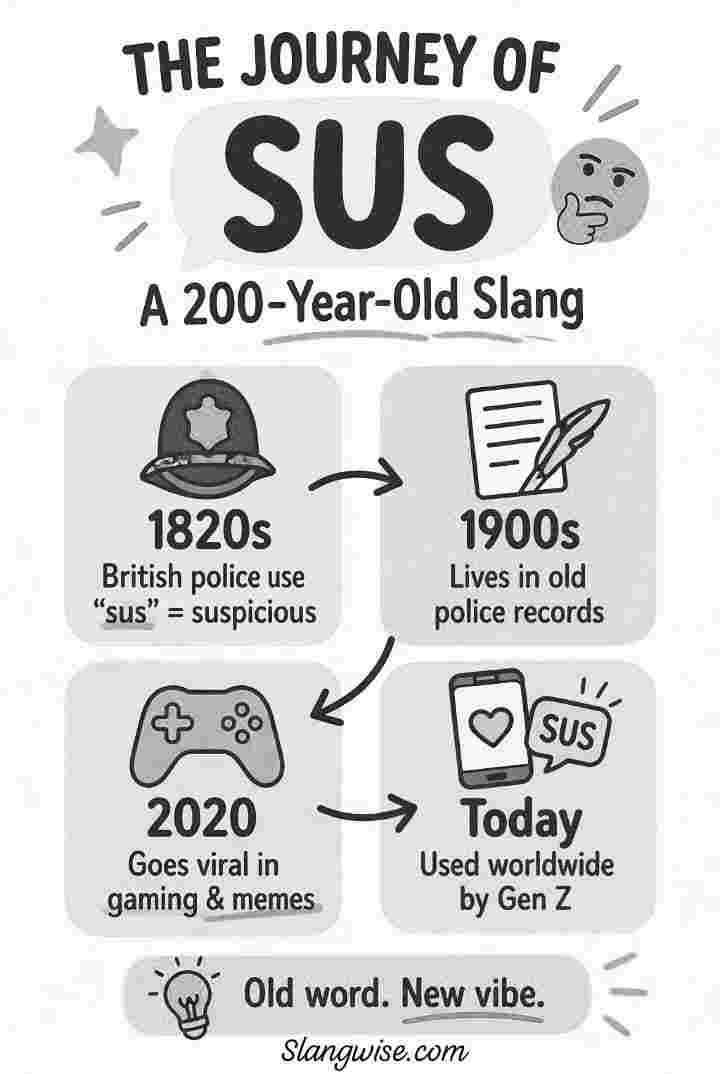
Every now and then, a slang word pops up that makes people do a double take. It sounds modern, it trends fast, and before long, everybody from teens to teachers seems to be using it. That is exactly what happened with sus.
At first glance, sus feels like the kind of word that was born on the internet. It has the same fast, clipped energy as gaming talk, meme captions, and quick-fire group chat messages. But here is the twist. This word is not as new as it seems. In fact, its history stretches back nearly 200 years.
That is what makes this story so interesting. A word that feels deeply Gen Z somehow has roots in old police language, disappeared for a long stretch, and then came back through gaming and social media like it had never left. Language really does love a comeback.
Table of Contents
In a Nutshell
- Sus is a short form of suspicious.
- The word has an old history that goes back to 19th century British police records.
- It later resurfaced in modern speech, especially through gaming and internet culture.
- Its return shows how old words can suddenly feel brand new again.
SlangWise Thought: A word does not need to be new to feel current. Sometimes, all it takes is the right generation to bring it back.
So, What Exactly Is Sus?
If you have seen someone call a person, a situation, or even a message sus, they are usually saying it seems suspicious, shady, or just a little off. It is one of those words that works because it is short, sharp, and easy to throw into everyday conversation.
Since I already have a separate post about the slang meaning of sus, let us focus on the part people usually do not expect, the history behind it. That is where things get really fun.
Most people assume sus began with gaming or TikTok. That assumption is understandable, because that is where many people discovered it. But the older story tells us something more surprising. The slang word had already been around long before the internet made it famous again.
A Word With Two Lives
The history of sus is really a story of two different moments in time.
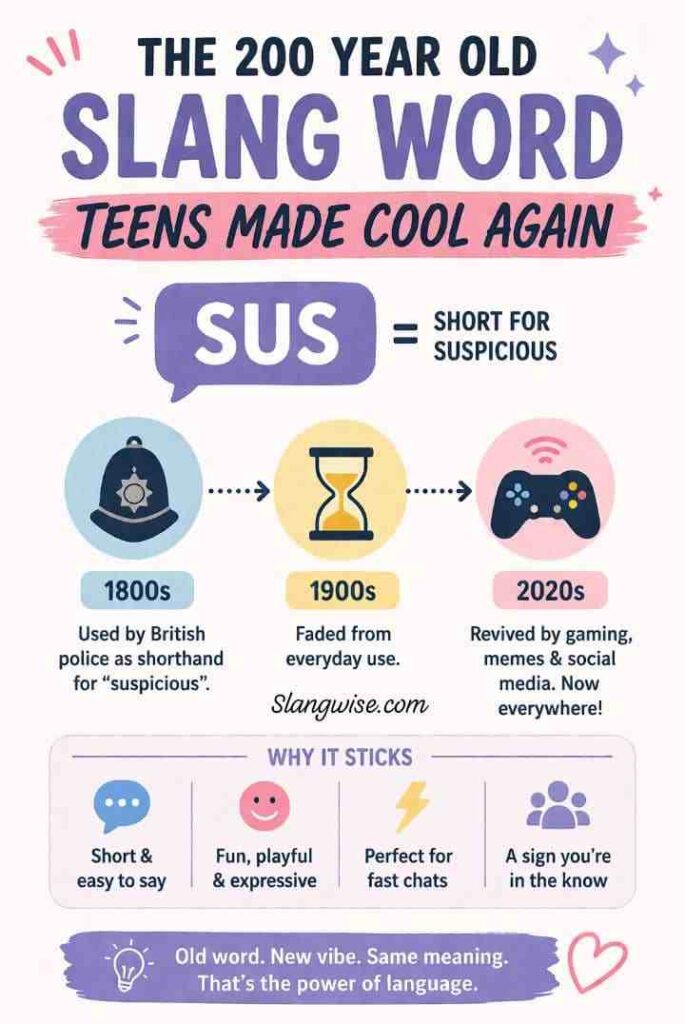
The first moment goes back to the early 1800s. Historical records show that British police officers were already using sus as shorthand for suspicious. In other words, this was not some new internet invention. It was already useful in written notes, reports, and police records long before social media ever existed.
Then, for a long time, the word mostly stayed out of the spotlight. It was not exactly a common everyday slang term for most people. It sat quietly in the background, waiting for a new generation to pick it up and give it a fresh life.
That second life came much later, especially through modern online culture. Young people, gamers, meme makers, and social media users helped push sus back into the mainstream. Suddenly, a word that once lived in old police shorthand was everywhere again.
How Sus Made Its Comeback
If you are wondering how a word can sit around for so long and then come roaring back, the answer is pretty simple. It found the perfect environment.
Online gaming helped give sus a huge boost. In games where players have to figure out who can be trusted, the word fits perfectly. It is short enough to type quickly, easy enough to say in a heated moment, and expressive enough to carry a whole accusation in just three letters.
Then came the social media effect. Once a word starts showing up in clips, comments, jokes, captions, and reaction posts, it spreads fast. People do not just learn the word. They start performing it. They use it for laughs, for drama, and for that playful little moment when they want to question something without sounding too serious.
That is a big part of why sus worked so well. It did not need a long explanation. It carried attitude instantly. You could use it in a joke, in a callout, or in a side eye kind of moment, and everyone would get the point.
Before long, the word moved beyond games and memes. It started showing up in music, online conversation, and casual speech. That is usually the sign that a slang word has crossed over from niche internet talk to something much bigger.
Why Sus Feels So Current Even Though It Is Old
This is the part that makes language so interesting. A word does not have to be newly invented to feel fresh. It only needs the right moment to shine again.
Sus works so well because it checks a lot of boxes at once:
- It is short and easy to say.
- It works in jokes and serious situations alike.
- It sounds casual, modern, and a little playful.
- It fits perfectly into fast online communication.
That mix is powerful. People love words that feel light, flexible, and quick. In chat messages especially, nobody wants to type a long explanation when a tiny word can do the job. Sus gives you that efficiency without losing personality.
There is also a social side to it. Using a word like sus signals that you understand the language of the moment. It tells people you are familiar with the trend, the joke, or the tone of the conversation. Slang often works that way. It is not just about meaning. It is also about belonging.
READ ALSO: 15 Gen Z Slang Words for Confidence That Sound Cool, Casual, and Effortless
What Sus Tells Us About Language
The story of sus is bigger than one slang word. It shows how language keeps moving in circles, not just straight lines. Words can disappear, rest for a while, and then return when a new generation finds them useful again.
That is one reason slang is so exciting to study. It is not fixed. It is alive. It changes with music, games, apps, memes, and the way people talk to each other every day. A word that once belonged to old records can end up in a viral clip seen by millions.
That kind of transformation tells us something important. Language is not only about dictionaries and rules. It is also about culture, timing, and creativity. People remix old words the same way they remix songs, fashion, or jokes. They take something familiar and make it feel new again.
In that sense, sus is a perfect example of linguistic recycling. It reminds us that old words do not always fade away. Sometimes they wait patiently until the internet gives them a second chance.
Why People Still Keep Using It
Even though slang trends come and go fast, some words stick around because they are simply too useful to drop. Sus is one of those words.
It can describe a person who seems untrustworthy. It can be used for a strange situation. It can even be used jokingly when something just feels a bit off. That flexibility gives it staying power.
Another reason it lingers is because it is fun to say. There is a certain comic energy in it. It sounds casual, almost teasing, which makes it ideal for internet culture. People are always looking for words that can carry tone, and sus does that with very little effort.
And honestly, that is part of its charm. It feels light, but it still makes a point.
Will Sus Stick Around?
That is the big question, is it not? Some slang words burn bright for a season and then vanish. Others stay in circulation much longer, especially when they become part of everyday online speech.
Sus has a good chance of lasting because it is simple, adaptable, and already deeply tied to internet culture. Even if it eventually becomes less trendy, it will probably not disappear completely. Words with this kind of history often stay nearby, ready to pop up again when the mood is right.
That is the cool part about language. A term can go from obscure to iconic, then quietly settle into the background until the next wave brings it back into the spotlight.
READ ALSO: 25 Words That Started as Slang and Later Became Normal English (You Use Them All the Time)
Final Thought
Sus is more than just a trendy teen word. It is a reminder that language has memory. What feels modern today may actually have roots in a much older world. From Victorian police notes to gaming chats and viral posts, this tiny word has had one surprisingly long journey.
And that is what makes slang so fascinating. It keeps proving that old words can come back wearing new clothes. When that happens, they do not just survive. They thrive.