
- “Fan behavior” is usually an insult, not a compliment. It is used when someone is acting obsessed, nosy, jealous, or too invested in another person’s business.
- It often points to someone watching, copying, or talking about another person a little too much. Think lurking, posting, shading, or moving like they are secretly tuned in 24/7.
- The phrase lives in the same online neighborhood as parasocial behavior. That is the one sided, overly personal feeling people can develop toward celebrities, influencers, or public figures.
- It can show up in fandom spaces, but it is not always about being a literal fan. Online, people use it sarcastically to call out weird, clingy, or jealous behavior.
- Take the Slang Quiz and download our free 270+ Internet Slang Dictionary to level up your slang game.
Table of Contents
What Does “Fan Behavior” Mean?
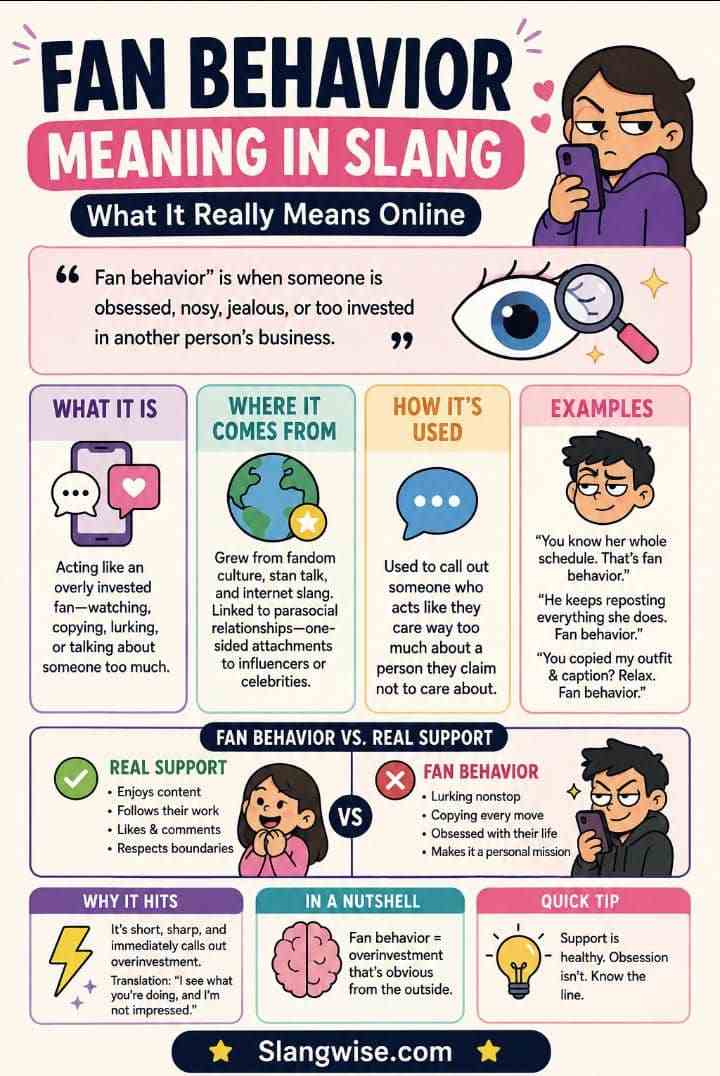
In slang, fan behavior is what people call it when someone is acting like an overly invested, jealous, or low-key obsessed admirer, even if they do not openly admit it.
It is often used to describe somebody who keeps watching, commenting on, copying, or staying in another person’s business like they are a secret superfan.
The vibe behind the phrase is usually not “wow, you’re supportive.” It is more like, “Why are you so focused on me?” or “You are moving like a fan, not a hater.”
In everyday slang, it can point to stalking social media, repeating someone’s style, staying glued to their posts, or acting weirdly concerned about their life.
Slangwise Thought
Here is the Slangwise take: fan behavior is basically the internet’s way of calling out someone who is paying too much attention. It can be playful, shady, or straight-up dismissive depending on the situation.
Sometimes it means, “You are doing the most.” Other times it means, “You hate them so much, but you still know everything about them.” That is why the phrase lands so well online. It is short, sharp, and instantly understood.
READ ALSO: Shorts Brain Meaning in Slang: Why This Tiny Phrase Says So Much About Modern Scrolling.
Where Did It Come From?
This slang phrase grew in the same digital space where fandom language, stan culture, and internet teasing thrive. It has been linked in online use to K-pop and TikTok style fandom talk, where people often use dramatic slang to describe obsessive or delusional fan-like behavior.
It also overlaps with the wider conversation around parasocial relationships, which are one-sided feelings of closeness toward celebrities or influencers.
That matters because modern internet culture makes it easier than ever for people to follow someone closely without knowing them personally.
Psychologists describe parasocial relationships as one-sided connections that feel intimate even though the other person does not actually know the viewer.
So when someone says “fan behavior,” they are often pointing at that messy space between admiration, obsession, and projection.
How to Use “Fan Behavior” in a Sentence
You can use it when someone is acting like they care way too much about a person they claim not to care about.
Example 1:
“You said you do not like her, but you know her entire schedule. That is fan behavior.”
Example 2:
“He keeps reposting everything she does, then acting unbothered. Fan behavior for real.”
Example 3:
“You copied my outfit, my caption, and my attitude? Relax. That is fan behavior.”
You will also see it used as a comeback when somebody is clearly watching another person too closely. In some cases, it is meant jokingly. In others, it is a very direct callout.
DISCOVER: 85 Gen Alpha Slang Words You’ll Hear in 2026 – The Decoder’s Guide Nobody Wants You to Miss
What People Usually Mean by It
Most of the time, “fan behavior” is really saying one of these things:
You are too invested.
You are too nosy.
You are watching too closely.
You are copying too much.
You are acting jealous while pretending not to care.
That is why the phrase feels so effective online. It can be used to roast someone without needing a long explanation. The words do the work fast.
Is “Fan Behavior” Always Negative?
Usually, yes, it carries a negative or teasing tone. It is not the same as being a normal fan who simply likes someone’s work.
A real fan can support, admire, and enjoy content without crossing boundaries. The phrase “fan behavior” is mostly used when the behavior becomes awkward, intrusive, or desperate.
That is also why it sits close to other internet words like delulu and parasocial. “Delulu” is often used for exaggerated or unrealistic fan-like thinking, while parasocial refers to one sided emotional attachment.
Together, these words help describe the modern internet habit of feeling way too connected to people we do not actually know.
Fan Behavior vs. Real Support
This is an important difference.
Real support looks like:
- enjoying someone’s content
- following their work
- liking their posts
- respecting their privacy
Fan behavior, in the slang sense, looks more like:
- lurking nonstop
- copying every move
- obsessing over who they talk to
- turning every post into a personal mission
That line matters. The internet loves a joke, but people still need boundaries.
Why This Slang Hits So Hard
“Fan behavior” works because it is funny, blunt, and a little humiliating. It flips the script. Instead of being called a fan in a positive way, the person is being told they are acting like the very thing they were trying to look above. That reversal makes the phrase sharp.
It also fits internet culture perfectly because online people love:
- short labels
- instant callouts
- sarcasm
- behavior that can be screenshot and replayed forever
So when someone drops “fan behavior” under a comment, it usually means, “I see what you are doing, and I am not impressed.”
READ MORE: Aura Dump Meaning in Slang: Why This Aesthetic Caption Is Suddenly Everywhere
Concluding Thought
At its core, fan behavior is slang for overinvestment that looks obvious from the outside. It can be playful, messy, or openly shady, but the message is usually the same: someone is paying way too much attention. In internet language, that is enough to turn a simple phrase into a full-blown read.
The next time you see someone acting strangely invested in another person’s life, style, or posts, you will know exactly why people call it fan behavior. It is not about being a genuine supporter. It is about crossing the line from interest into obsession.
Frequently Asked Questions
Usually not. It is more often a joke or insult used when someone is acting obsessed, nosy, or overly invested.
No. It can mean stalking-like behavior online, but it is often used more loosely for copying, lurking, or being weirdly focused on someone.
Not exactly. A stan is usually an intense fan. Fan behavior is more of a callout for acting like a fan in a way that seems obsessive or embarrassing.
Yes. People often use it as playful sarcasm, especially among friends or in comment sections, but the tone can still be shady.