
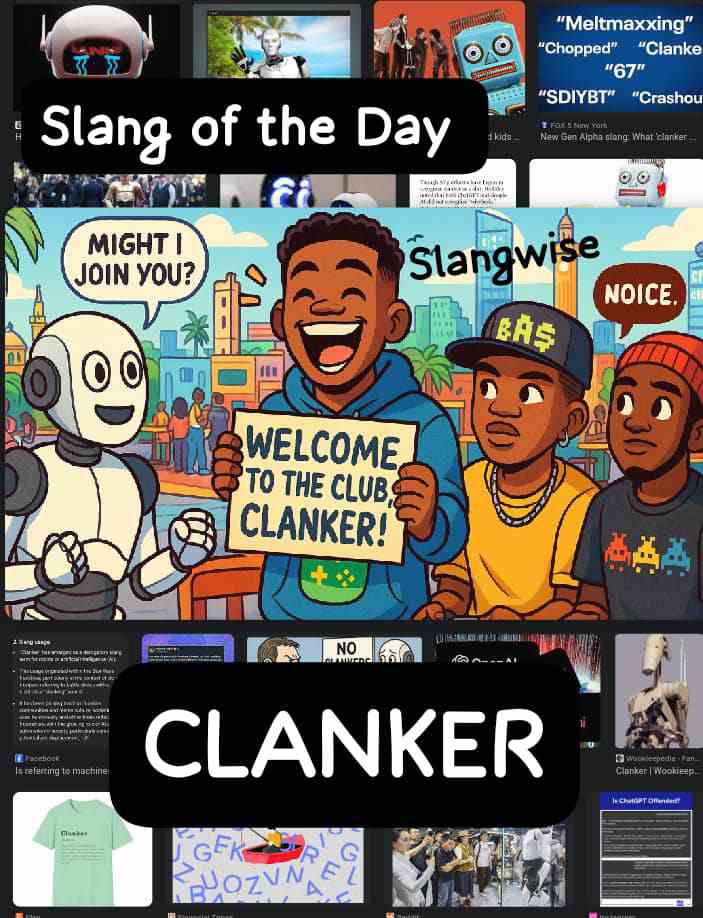
- Clanker is slang for someone who comes off as robotic, stiff, awkward, or overly scripted.
- It is often used in online chats, meme culture, and short form video comments to roast behavior that feels unnatural.
- The word began as a sound effect idea for clanging metal, then grew into a social label for awkward or machine like behavior.
- People often use it playfully, but it can sound rude if used to insult someone directly.
- Popular internet slang terms can help you understand more words like this one.
- Take the Slang Quiz to test how well you know modern online language.
- Download the free 270+ Internet Slang Ebook to explore more meanings, examples, and trending slang words.
Clanker is one of those slang words that sounds funny at first, but the meaning behind it is what gives it power.
It is used to describe someone who seems robotic, stiff, unnatural, or awkward in the way they talk, move, or respond. In online spaces, especially on TikTok, Discord, and comment threads, clanker has become a quick way to roast behavior that feels too mechanical or too scripted.
The word works because it creates an instant picture in your head. You can almost hear the metal sound behind it. That sound based feeling is part of what makes clanker so memorable and so easy to repeat.
Like many modern slang words, clanker started in a narrow space, then spread into wider internet culture. Today it is used not just for robots and sci fi jokes, but also for people who seem emotionally flat, overly rehearsed, or strangely out of sync with natural conversation.
What Does Clanker Mean in Slang?
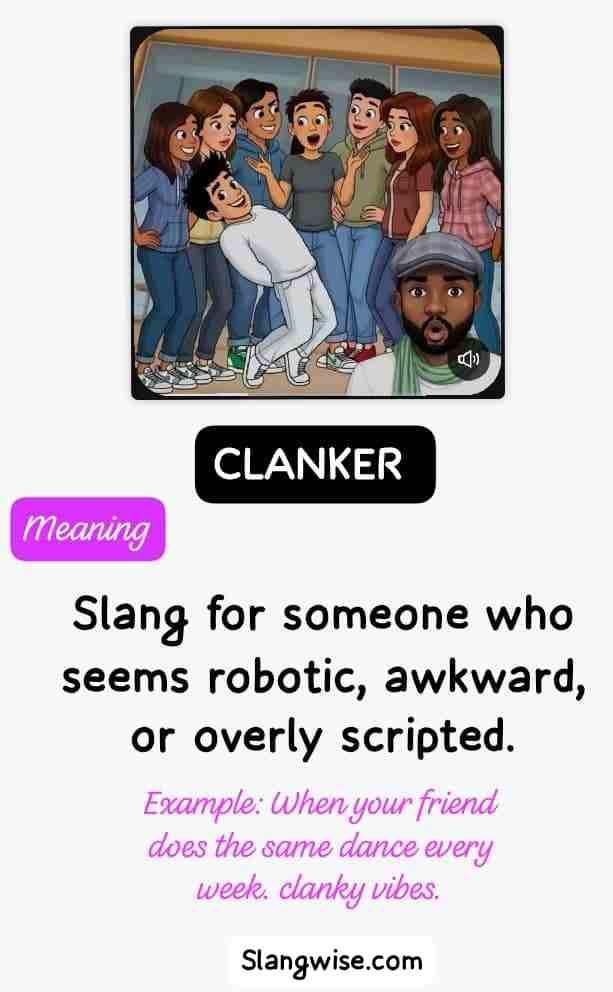
In slang, clanker is a word used for a person who seems robotic, stiff, awkward, or overly mechanical. It can describe the way someone talks, moves, reacts, or carries themselves online or in real life.
It is often used as a joke, but the tone matters. Among friends, it can sound like harmless teasing. In a harsher setting, it can become an insult that makes someone feel mocked for being awkward or out of place.
The word feels visual because it comes from the idea of metal clanging together. That sound turns into a personality image. Instead of describing someone as warm, relaxed, or natural, clanker paints them as stiff, noisy, and almost machine like.
That is why it fits so well in meme culture. Internet slang often works best when it is short, sharp, and easy to picture. Clanker checks all three boxes.
In modern use, it can also point to behavior that feels copy pasted or too polished. For example, someone repeating the same lines, using AI style phrases, or moving with unnatural confidence might get called a clanker in a joking online post.
READ ALSO: NPC Meaning in Gen Z Slang: The Internet Term for Uncanny, Scripted Behavior
Slangwise Thought on Clanker
My take is simple: clanker works because it turns awkward behavior into a vivid sound image. It is not just calling someone weird. It is making their behavior feel metallic, stiff, and almost inhuman in a playful way. That is why people remember it so easily and keep using it in captions, jokes, and replies.
At the same time, words like this always need context. Slang can be funny when it is clearly playful, but it can become unfair when it is used to target someone’s identity, speech pattern, or differences. The best slang usually roasts behavior, not dignity.
Where Clanker Came From
Clanker started as a sound word, or onomatopoeia, for clanging metal. That made it a natural fit for machines, robots, armor, and anything heavy that moved with a noisy metallic feel.
Over time, the word became connected with sci fi and gaming language. Fans used it to describe robots, droids, and mechanical characters that seemed loud or clumsy. From there, it slowly picked up a second life as a roast word for people who acted similarly stiff or artificial.
That shift is very common in slang. A word that begins as a literal sound can become a metaphor for personality. Once internet culture gets hold of it, the meaning expands fast.
By the time short form video platforms and meme pages started using it, clanker was no longer just a machine sound. It had become a quick label for robotic style behavior, awkward delivery, and overly scripted energy.
In that sense, clanker is a good example of how online language evolves. A sound effect becomes a social insult, and then a social insult becomes a joke people repeat for entertainment.
How Gen Z Uses Clanker Today
In 2026, people use clanker in a few different ways depending on the setting.
- To describe someone who speaks in a stiff, unnatural, or overly rehearsed way.
- To joke about a person who seems emotionally flat or difficult to read.
- To roast an influencer, creator, or friend who repeats the same lines or same expressions every time.
- To make fun of AI like or bot like behavior in chats, captions, and comments.
- Sometimes as self roast when someone catches themselves acting awkward, robotic, or too formal.
Example lines you might see online include: “Bro talks like a clanker,” “That reply was pure clanker energy,” or “She moved like a clanker in that video.”
The tone is usually playful, but not always kind. That is why the word can feel funny in one post and rude in another.
SEE ALSO: Cookie Jarring Meaning in Slang: The Dating Red Flag That Feels Sweet at First
How to Use Clanker in a Conversation
Here are a few natural examples:
“He kept giving the same robotic answer every time, total clanker vibes.”
“That dance looked so stiff it almost had clanker energy.”
“I was trying to be normal in the meeting, but I felt like a clanker.”
“The influencer’s whole routine feels clanker coded now.”
These examples show the range of the word. Sometimes it is about body language. Sometimes it is about speech. Sometimes it is just about the feeling that someone is too mechanical to seem natural.
Further Examples of Clanker
Example 1: A person keeps repeating the same line in every conversation, like they are reading from a script.
Example 2: Someone gives replies that sound overly formal and strangely detached, even in a casual chat.
Example 3: A creator moves with stiff gestures in a video, and viewers joke that they look like a robot.
Example 4: A friend uses AI style phrases in a real conversation, and people call the moment clanker energy.
Example 5: Someone catches themselves acting awkward and uses clanker as a self roast.
READ MORE: Roaching Meaning in Slang: The Sneaky Dating Term Everyone Keeps Misunderstanding
Tone and Etiquette
Clanker is funniest when everyone understands the joke. It works best in relaxed conversations, meme replies, or playful roasting between people who already know each other well.
If you use it with strangers, in a serious conversation, or in a context where someone may feel singled out, it can land badly. A word that sounds playful in one group can feel mean in another.
That is why context matters. The line between humor and insult is very thin with slang like this. The safest use is to describe behavior, not attack someone personally.
It is also wise to avoid turning the word into a way of mocking disability, neurodivergence, cultural speech patterns, or any other vulnerable trait. Good slang is sharp, but it should still have boundaries.
Clanker Variants and Related Terms
You may also see related words and phrases like clank, clanky, clanker energy, bot, and NPC energy. These terms overlap, but each has a slightly different feel.
Clank usually feels shorter and sharper. Clanky can describe movement or tone. Bot suggests automation or artificial behavior. NPC energy often implies someone is acting like a background character, following a script instead of thinking freely.
All of them live in the same family of internet language. They help people joke about what feels unnatural, stiff, or programmed in human behavior.
When Clanker Is Fun and When It Is Mean
Fun uses:
- Teasing a friend for using a stiff, rehearsed tone.
- Describing a deliberately awkward comedy skit.
- Making a self roast about being too formal or robotic.
Mean uses:
- Mocking someone in a way that feels personal or humiliating.
- Using the word to imply someone is less human or less worthy of respect.
- Targeting people for speech, culture, disability, or other sensitive differences.
The best rule is simple: if it makes the joke funnier but hurts the person more than the behavior, it is probably too far.
Discover 250 popular internet slang terms with meanings and examples to help you understand modern online language.
Slangwise Thought
Clanker captures the awkward humor of people acting too mechanical in a world that loves authenticity. It is short, visual, and easy to spread, which is exactly why slang like this takes off online. It gives people a fast way to describe stiff behavior without needing a long explanation.
From a language point of view, clanker is a strong example of how a sound word can become social slang. The original clanging image stays in the background, but now the word also carries a judgment about style, energy, and vibe. That is the magic of internet language. It keeps borrowing from sound, movement, and imagery to create new ways of describing people.
Used well, clanker is a quick joke. Used carelessly, it can become mean. That balance is what makes slang interesting and why context always matters.
Final Notes
Clanker has grown from a noisy metal sound into a fully loaded internet insult and joke. It now lives in gaming spaces, meme culture, and short form content as a fast way to call out robotic, stiff, or awkward behavior.
Its strength is that it is vivid and funny. Its weakness is that it can sound rude if the tone is wrong. That is why the word works best when it is used playfully, with the right audience, and without crossing into personal attacks.
As slang keeps changing, clanker is a strong example of how the internet turns simple sound into social meaning. It is compact, expressive, and easy to remember, which is exactly why it keeps spreading.
In plain English, clanker means someone is acting a little too robotic for comfort. That is the joke, the roast, and the whole point of the word.
Frequently Asked Questions
Clanker means someone who seems robotic, stiff, awkward, or overly scripted in the way they act or speak.
Not always. It is often used as a joke, but it can still sound insulting depending on the tone and context.
It started as a sound based word for clanging metal and later became slang for robotic or awkward behavior online.
People use clanker in captions, comments, and chats to tease someone who seems stiff, scripted, or machine like.
Use it for playful joking with people who know your tone, and avoid using it to target someone personally or hurtfully.
Table of Contents