October 16, 2025 by Slangwise — updated 2026
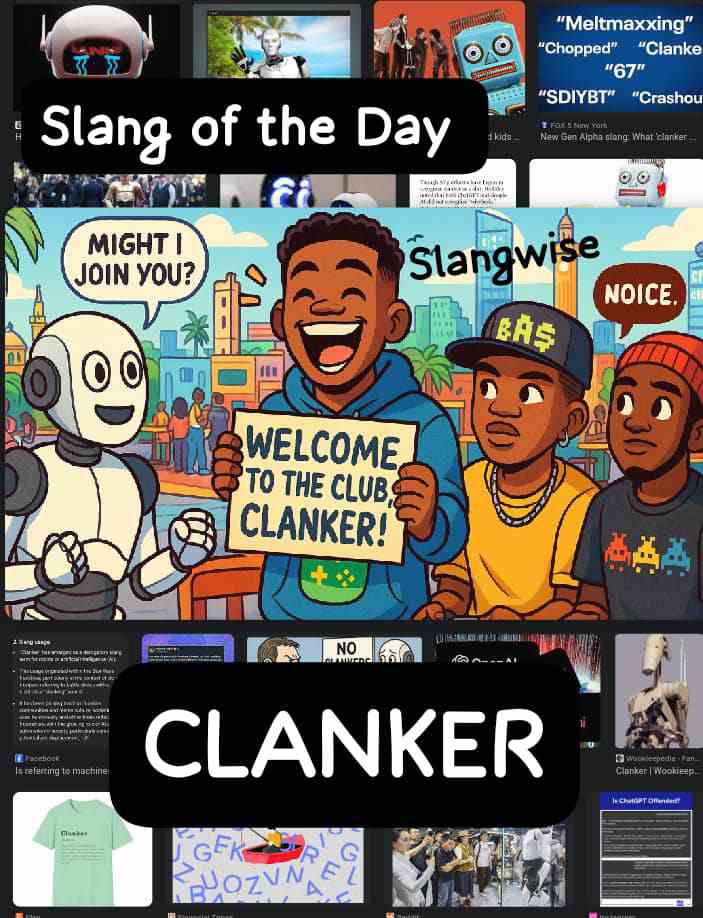
Clanker has moved from niche gaming rooms into everyday banter, evolving into one of the sharper pieces of Gen Z slang for calling someone robotic or awkward.
Once a sound effect image for metal armor or clanging machinery, clanker now labels people who come off as stiff, overly scripted, or strangely out of sync with the natural flow of a conversation.
In my observation, this word works because it balances roast and affection. Used playfully it makes friends laugh. Used harshly it stings.
This expanded guide walks through where clanker came from, how people use it in 2026, useful examples, cautionary notes, and the shades of meaning it carries across platforms like TikTok, Discord, and YouTube content.
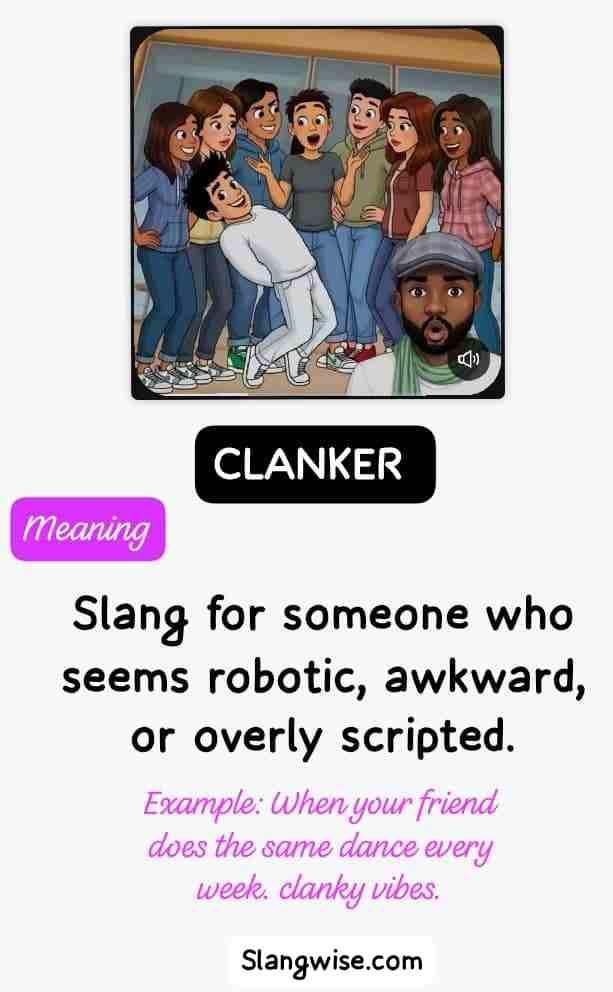
Table of Contents
In a Nutshell
- Definition: A noun for someone who seems robotic, awkward, or overly scripted.
- Tone: Usually playful roast but can be mean if used seriously.
- Origins: Gaming and meme culture with later spread to short video skits and reaction threads.
- Use Cases: Group chat jabs, comedic TikTok content, commentary about fake vibes or AI like behavior.
- Clanker pronounced /ˈklæŋkər/
- Part of speech: noun
- Cringe score: 4 out of 10 when playful.
- Emoji shorthand: 🤖
- Similar words: bot, NPC, try hard, awkward
Clanker Origin and Cultural Path
Clanker started as onomatopoeia in gaming and sci fi circles describing metal on metal. Fans of vintage sci fi and mech games used it to evoke clumsy robotic motion.
Some traces of the word also appear among fans referencing old school space opera and machine terms, stretching back to fandom jokes about hulking droids in franchises such as Star Wars.
By the early 2020s clanker was circulating in Discord servers and comment threads as shorthand for mechanical movement or sound. When meme culture embraced NPC energy and bot jokes, clanker fit right in and then migrated into short video culture where acting choices and gestures are easy to lampoon.
How Gen Z Uses Clanker Today
In 2026 people use clanker in several overlapping ways
- To mock someone whose gestures and phrasing are unusually stiff, such as an influencer repeating the same lines in every video.
- To point out a person who seems emotionally flat or scripted, for example someone leaning too heavily on AI generated phrases in a real conversation.
- Jokingly as self label when you catch yourself doing something mechanical like reciting a quote without feeling it.
- As part of meme language around AI culture, where people compare awkward behavior to a robot still learning human nuance.
Example lines you might see in chat or captions: “Dude kept using the same joke template. Clanker energy.”
“She said thanks in the same robotic way five times. Total clanker move.”
“Bro tried to flirt using AI pickup lines, total clanker moment.”
“Unlock the secrets of modern slang and speak like a true insider! Download your FREE eBook packed with the latest slang terms and their meanings, plus challenge yourself with our addictive slang quiz to see how hip you really are. Don’t wait.
Viral Examples and Formats
Clanker moments often become short form comedy. Popular formats include reaction duets where a creator imitates a stiff gesture or monotone line, then labels it with text reading clanker. Another trend places a clanking sound effect over awkward attempts at viral dances.
Creators sometimes pair the word with the emoji 🤖 and a “cringe score” tag to signal playful roasting. Based on what I’ve seen so far these formats work because they quickly show the behavior and then give viewers an instant label they can repeat in replies.
Tone and Etiquette
Clanker performs best as low stake teasing among peers who understand meme culture. Use it with friends who get your tone. If you drop it on strangers or in formal contexts it can read as rude and confusing. In my view it is always safer to gauge familiarity before using slang that labels someone’s behavior.
Clanker Variants and Related Terms
Merged variants you will encounter include clank, clanky, clankers, clanker energy, NPC energy, and bot. Each carries a slightly different shade.
For example clanky can be an adjective for movement while clanker as a noun names the person. NPC energy suggests a lack of spontaneity where someone follows social scripts. Bot usually emphasizes automation or artificial responses.
When Clanker is Fun and When It Is Mean
Fun
- Teasing a friend about a rehearsed delivery.
- Describing a deliberately awkward bit in a comedy skit.
- Self deprecating use when you do something mechanical.
Mean
- Calling out someone for being different in a way that targets identity or ability.
- Using clanker to silence someone by implying they are less human or less deserving of empathy.
Always avoid using slang to mock neurological differences, speech patterns tied to culture, or anything that targets vulnerability.
Discover 250 popular internet slang terms with meanings and examples to help you understand and speak modern online language.
Slangwise Thought
Clanker captures the awkward humor of acting robotic in a world obsessed with authenticity. From my experience it gives speakers a quick and vivid metaphor that maps metal like sounds to social stiffness. It lets people roast behavior rather than personality, when used carefully.
Language changes by repurposing sensory words into social labels. Clanker is a textbook example of onomatopoeia turned into social shorthand. Linguists studying meme driven lexicon would point out how a sound based word becomes a social evaluation tool because it is sensory, compact, and visually evocative.
Examples You Can Use
- Chat: “He kept saying corporate lines in the party. Clanker hours.”
- Caption for duet: “When your friend does the same dance every week. clanky vibes.”
- Self roast: “Oops I said that exact phrase yesterday. Low key clanker.”
Final Notes
Clanker is a lively addition to the modern slang toolkit. It bridges gaming roots and short video culture, and it thrives because it is concise and image rich. Use it for quick playful roasts, not for cruel commentary.
As slang it will continue to mutate, and in my view the most lasting words are those that let users laugh at behavior while leaving dignity intact.
Related Slangs