
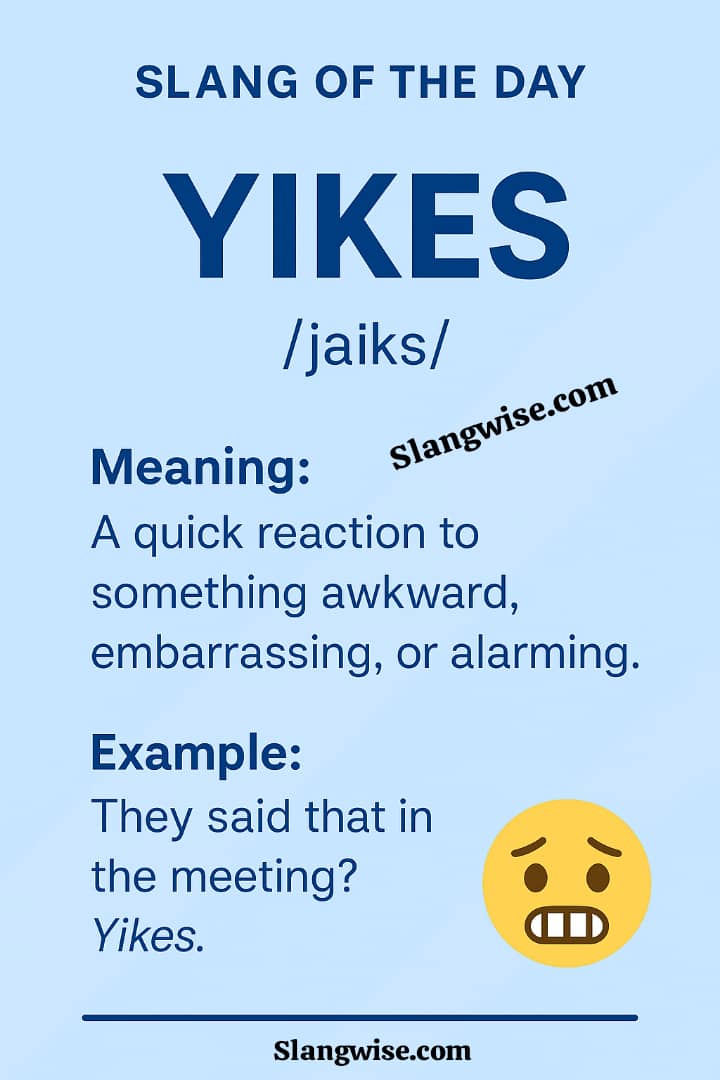
- Yikes is a quick reaction word used to show surprise, alarm, discomfort, or embarrassment.
- Big yikes is the stronger version, used when something feels even more awkward, shocking, or cringe-worthy.
- It works as an interjection, which means it is a short exclamation that shows emotion rather than making a full grammatical statement.
- People use it a lot in texts, comments, captions, memes, and reaction posts because it is fast, casual, and easy to understand.
- Trendiest Internet Catchphrases can help you explore more modern reaction words like this one.
- Take the Slang Quiz to test how well you know today’s internet slang and reaction phrases.
- Download the free 270+ Internet Slang Ebook to explore more meanings, examples, and popular slang terms.
Yikes is one of those tiny words that carries a surprisingly big reaction. It shows up when something feels awkward, awkwardly funny, slightly alarming, or just plain uncomfortable.
It is short, sharp, and instantly recognizable. That is part of why it has stayed popular online, where people often need a fast way to react without writing a long reply.
When someone says yikes, they are usually signaling that something feels off, surprising, embarrassing, or a little scary. The word is simple, but the tone can change depending on the situation.
Table of Contents
What Does Yikes Mean in Slang?
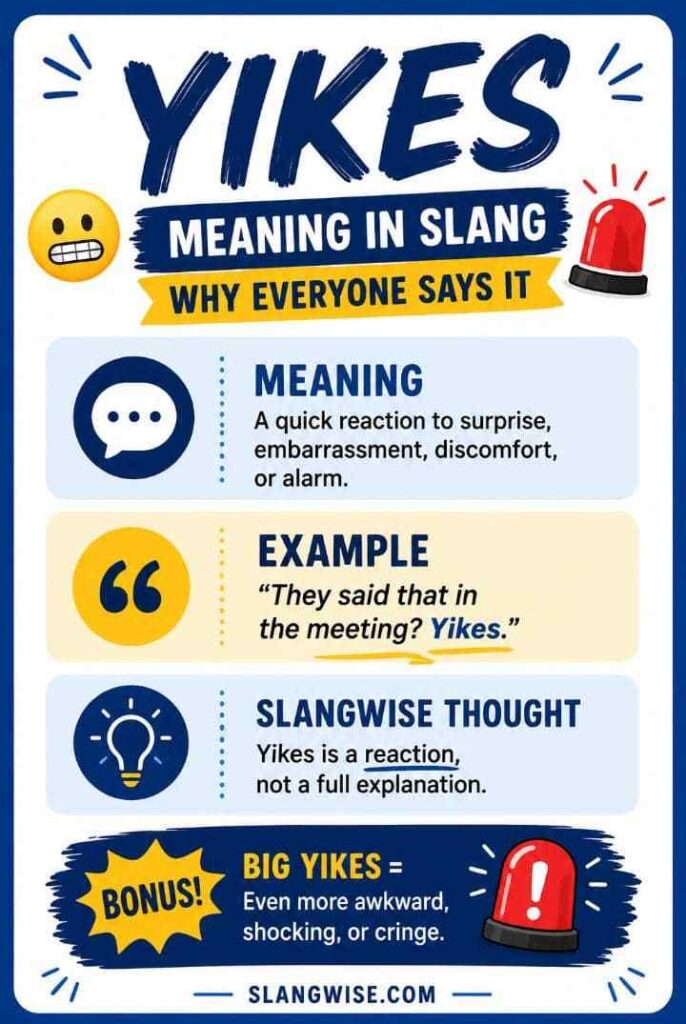
In slang and everyday online speech, yikes is a reaction word used when something makes you feel uneasy, shocked, embarrassed, or alarmed. Dictionaries define it as an interjection used to express fear, astonishment, surprise, or alarm.
It is not usually meant to be deep or complicated. It is the kind of word people drop into a comment, DM, or caption when they want to react fast and make their feeling clear right away.
The phrase big yikes works as an amplified version. It says the situation is not just awkward, but especially cringey, uncomfortable, or alarming. That stronger use fits how the word evolved in casual internet language.
What makes yikes so useful is that it can stand on its own. You do not need a full sentence to show your reaction. One word is enough.
READ ALSO: Soft Ghosting Meaning: The Sneaky Dating Move That Leaves You Confused
Slangwise Thought on Yikes
My take is simple: yikes is a reaction, not a full explanation. It works best when you need a fast response to something awkward or startling, but it should not replace a thoughtful reply when the moment is serious.
Why People Use Yikes
People use yikes because it is quick, expressive, and easy to read. It lets someone react to awkward news, a cringe post, a bad joke, or a surprising mistake without typing out a long explanation.
It also fits internet culture very well. Social platforms reward short, punchy reactions, and yikes does exactly that. It can sound playful among friends, sharper in public comments, or quietly judgmental depending on how it is used.
That flexibility is one reason it became so common in captions, replies, meme pages, and reaction posts. It is casual enough for everyday chat, but strong enough to show real discomfort.
At the same time, yikes can sound dismissive if someone is sharing something serious or vulnerable. In those moments, a more caring response is usually better.
How to Spot Yikes in Conversation
You will usually see yikes when somebody is reacting to something awkward, embarrassing, or alarming. It often appears by itself or as a short comment after bad news, a cringey post, or an unexpected mistake.
Sometimes the tone is light and funny. Other times it sounds more judgmental. That depends on the relationship, the platform, and the situation being discussed.
Here is the easiest way to think about it: yikes = mild shock or discomfort, while big yikes = stronger shock, stronger cringe, or a bigger red flag feeling.
SEE ALSO: Cookie Jarring Meaning in Slang: The Dating Red Flag That Feels Sweet at First
How to Use Yikes in a Sentence
Here are a few natural examples:
“They said that in the meeting? Yikes.”
“He posted that selfie with the weird filter. Big yikes.”
“Yikes, I did not see that coming.”
“That comment was a little yikes.”
The word works best when you want to react quickly and clearly. It is casual, punchy, and usually easy for other people to understand immediately.
Further Examples of Yikes
Example 1: Someone sends a message that is awkward or badly timed, and the reply is simply, “Yikes.”
Example 2: A post shows a very embarrassing mistake, and the comments fill up with “big yikes.”
Example 3: A joke misses the mark completely, and the reaction is “Yikes, that did not land.”
Example 4: A friend tells you about a cringey situation, and you answer with “Yikes, that sounds rough.”
Example 5: A public post feels tone-deaf or awkward, so someone leaves a short “big yikes” in the replies.
Origin, Context & Popularity
Yikes is not brand new internet slang. Major dictionaries show it as a long-standing interjection, with the first known use recorded in the early 1940s, and Merriam-Webster notes that it is probably an alteration of yoicks.
That older history matters because it shows how a classic exclamation found new life online. Social media helped turn yikes into a quick reaction for cringe, shock, and awkwardness across comments, chats, and memes.
Today, people use it in casual speech, reaction videos, and comment threads because it is short, expressive, and easy to understand at a glance.
Where it is used: social media comments, TikTok captions, group chats, meme pages, reaction posts, and everyday casual conversation.
Caution/Tip: Yikes can sound funny, but it can also sound blunt or dismissive. If someone shares something painful or serious, empathy matters more than a quick reaction word.
Tone and variations:
- Playful: used among friends to react to something silly or awkward.
- Judgmental: used to call out cringe, bad choices, or awkward behavior.
- Concerned: used for mild shock or worry, especially in casual chat.
Cringe Score: 5/10 — it can feel funny and light in private chats, but sharper and more cutting in public replies.
Yikes and Big Yikes Emoji:
😬 (yikes), 😳 (embarrassed surprise), 🚨 (big yikes, red-flag energy)
Conclusion
Yikes is small, but it does a lot of work. It signals surprise, discomfort, embarrassment, or alarm in one quick burst, which is why it fits so well in fast-moving online conversations.
Big yikes makes the reaction stronger, but the idea stays the same: something feels off enough to deserve an immediate response. That is what keeps the word useful in texts, memes, captions, and everyday speech.
In plain English, yikes is your fast way of saying, “That is awkward,” “That is alarming,” or “That just made me cringe.”
Frequently Asked Questions
Yes. It is a casual reaction word used in everyday speech and online conversation to show surprise, alarm, or discomfort.
Big yikes is a stronger version of yikes. It usually means something feels more awkward, shocking, or cringe-worthy than usual.
Not always, but it can sound blunt or judgmental depending on the situation and tone.
It is better to avoid yikes in formal writing because it is informal and conversational.
Yikes is an interjection, which means it is a short exclamation used to express emotion.