

- PFP means “Profile Picture” or “Profile Photo,” the image that represents an account online.
- It can communicate much more than identity, including personality, mood, interests, professionalism, or community membership.
- PFP is common across social media, messaging apps, forums, gaming communities, and online platforms.
- In crypto culture, PFP can also refer to NFT avatar projects where the image represents digital ownership and community status.
- The best PFP is easy to recognize, fits the platform, and says something about the account without needing a long explanation.
What Does PFP Mean in Slang?
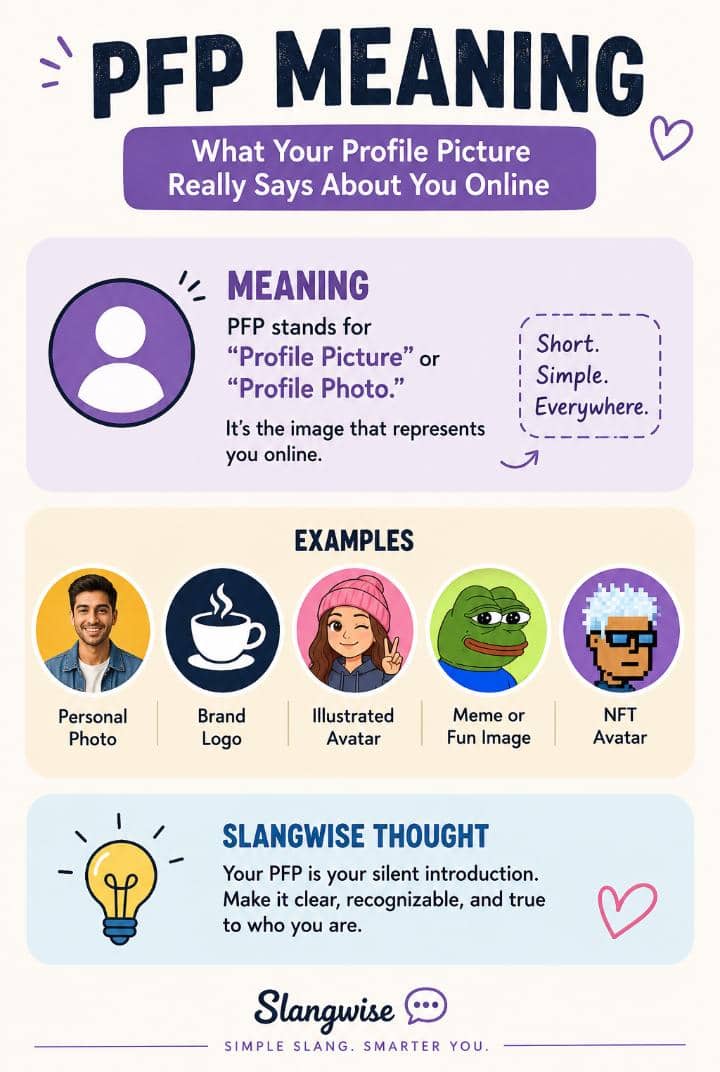
PFP stands for “Profile Picture,” although “Profile Photo” is also commonly used.
This is one of those internet abbreviations that became so normal that you may see it in a message and barely think about it. Someone might ask, “Why did you change your PFP?” or say, “Your new PFP goes hard.”
In everyday online language, PFP simply means the picture displayed beside your username or account name.
But there is more to it than that.
After spending time around online communities, social platforms, and internet slang, one thing becomes obvious: a PFP is rarely just a random picture. People use it to express personality, establish recognition, show what they like, and sometimes signal which online community they belong to.
READ ALSO: GRWM Meaning in Slang: What It Really Means and Why Everyone Is Saying It
Why Is a PFP So Important?
Your PFP is often one of the first things people notice about your account.
Think about what happens when you scroll through comments. You probably recognize familiar accounts by their little circular image before you even read the username. That is the power of a good PFP.
A profile picture can help create:
Recognition: A consistent image makes an account easier to identify.
Personality: A funny avatar can make an account feel casual, while a polished portrait can create a more professional impression.
Brand identity: Creators and businesses often use the same PFP across multiple platforms.
Community identity: Certain images can show that someone belongs to a fandom, movement, gaming group, or online community.
Common PFP styles include personal photos, logos, illustrations, cartoon avatars, memes, artwork, and themed images.
PFP Meaning on Social Media and Messaging Apps
You will see PFP almost everywhere online, although the way people use profile pictures can vary from platform to platform.
On Instagram, a PFP is often selected to complement the visual style of the account. Creators may use a portrait, logo, or recognizable illustration.
On X (formerly Twitter), PFPs can be highly personal. Some users use real photographs, while others choose memes, characters, artwork, or abstract avatars.
On Facebook, people commonly use personal photos, family-related images, business logos, or other recognizable pictures.
On Discord and Reddit, avatars can be especially expressive. Because many users value privacy or anonymity, custom illustrations and fictional characters are common.
On WhatsApp and Telegram, the PFP has a more practical role too. A recognizable image can make it easier to identify someone quickly in a crowded chat list.
So when someone says, “Change your PFP,” they simply mean, “Change your profile picture.”
PFP in Internet Slang
The interesting part about PFP is that it sits somewhere between ordinary technology language and internet slang.
Technically, it is an abbreviation. But online, people use it so casually that it feels like everyday digital vocabulary.
For example:
- “That PFP is hilarious.”
- “Who made your PFP?”
- “I haven’t changed my PFP in years.”
- “Your new PFP matches your bio perfectly.”
You do not need to write out “profile picture” every time. PFP is faster, shorter, and instantly understood by most internet users.
It fits the same broader pattern as abbreviations such as text abbreviations that make online communication quicker and more conversational.
What Does PFP Mean in NFT Culture?
This is where the term gets especially interesting.
In crypto and Web3 communities, PFP can refer to an NFT avatar or an entire NFT collection designed to be used as profile pictures.
Instead of simply choosing a picture, someone may own a particular digital collectible and use that artwork as their online identity.
These collections often feature characters with different visual traits, accessories, backgrounds, or characteristics. Owners may display their NFT PFP on social platforms as a way of showing ownership and identifying with a particular community.
That gave “PFP project” a much more specific meaning in NFT culture.
A PFP project can combine digital artwork, collecting, community identity, and online status. In some communities, the image becomes more than an avatar; it becomes part of the owner’s digital identity.
That is one reason PFP became such a recognizable term in Web3 conversations.
What Does Your PFP Say About You?
Your PFP can send a surprisingly strong message before you type a single word.
A professional headshot may suggest credibility. A cartoon character may suggest humor or creativity. A sports logo may reveal an interest. A meme may signal that the account is there primarily for entertainment.
Then there are temporary PFP trends.
People may change their images for holidays, fandom events, campaigns, causes, new releases, or internet trends. In those situations, the PFP becomes a quick visual statement.
That is why two people with identical usernames can feel completely different online—their PFPs establish very different identities.
New Examples of PFP Use
Imagine a gaming creator using a custom illustrated character as their PFP. Followers may recognize that image instantly across YouTube, Discord, and social media.
A student might use a favorite fictional character temporarily and then switch back to a personal photo.
A small business could use its logo as a PFP so customers can identify the official account quickly.
A meme-page owner might regularly change the PFP to match the latest trend.
A digital artist could use their own artwork, turning the PFP into a miniature preview of their creative style.
In each case, the PFP is doing more than filling an empty circle. It is helping define the account.
Read Also: The ultimate list of 250 Most Popularly used text abbreviations and acronyms across the internet today.
Slangwise Tip
When someone says “nice PFP,” they are simply complimenting your profile picture.
When they ask “What’s your PFP?”, they may be asking which image you are currently using.
And when someone says “I love your new PFP,” they are commenting on your updated profile image.
The meaning is simple, but the social signal behind the picture can be surprisingly powerful.
Final Thoughts
PFP meaning is simple: Profile Picture or Profile Photo. But like many popular internet terms, its everyday use has expanded beyond the basic definition.
Your PFP can represent your personality, brand, interests, humor, community, or even digital ownership. From WhatsApp chats and Reddit threads to social media timelines and NFT communities, those three letters have become a normal part of online vocabulary.
So the next time someone asks, “What’s your PFP?”, there is no mystery behind the slang. They are simply asking about the image you chose to represent yourself online.
Frequently Asked Questions
PFP usually stands for Profile Picture. Some people also use it to mean Profile Photo.
PFP is shorter, quicker to type, and widely understood in online conversations. Like many internet abbreviations, it saves time and fits naturally into casual messaging.
An NFT PFP is a blockchain-based digital collectible commonly used as a profile picture. In some Web3 communities, owning one can also represent membership, identity, or status.
Using the same PFP across multiple platforms can make you easier to recognize. However, changing it can also be useful when you want to reflect a new theme, campaign, interest, or stage of your online identity.
Table of Contents