
- In slang, core is usually used as a suffix to describe a vibe, aesthetic, or identity.
- It grew popular through internet culture, especially online style trends and TikTok-era aesthetics.
- It can also suggest that something feels very central, defining, or true to a person or scene.
- People use it to name everything from fashion moods to internet microtrends, and the list keeps growing.
- Take the Slang Quiz and download our free 270+ Internet Slang Dictionary after you finish reading.
You’ve probably seen words like cottagecore, barbiecore, goblincore, or corecore floating around everywhere online. That is because core has become one of the internet’s favorite slang building blocks. It is short, flexible, and very good at packaging a whole mood into one neat little word.
At its simplest, core in slang means a style, vibe, or aesthetic that represents the heart of something. It can describe the most defining part of a trend, a personality, or a visual identity. Online, people use it to say, “This is the essence of that thing.”
Table of Contents
What Does “Core” Mean in Slang?
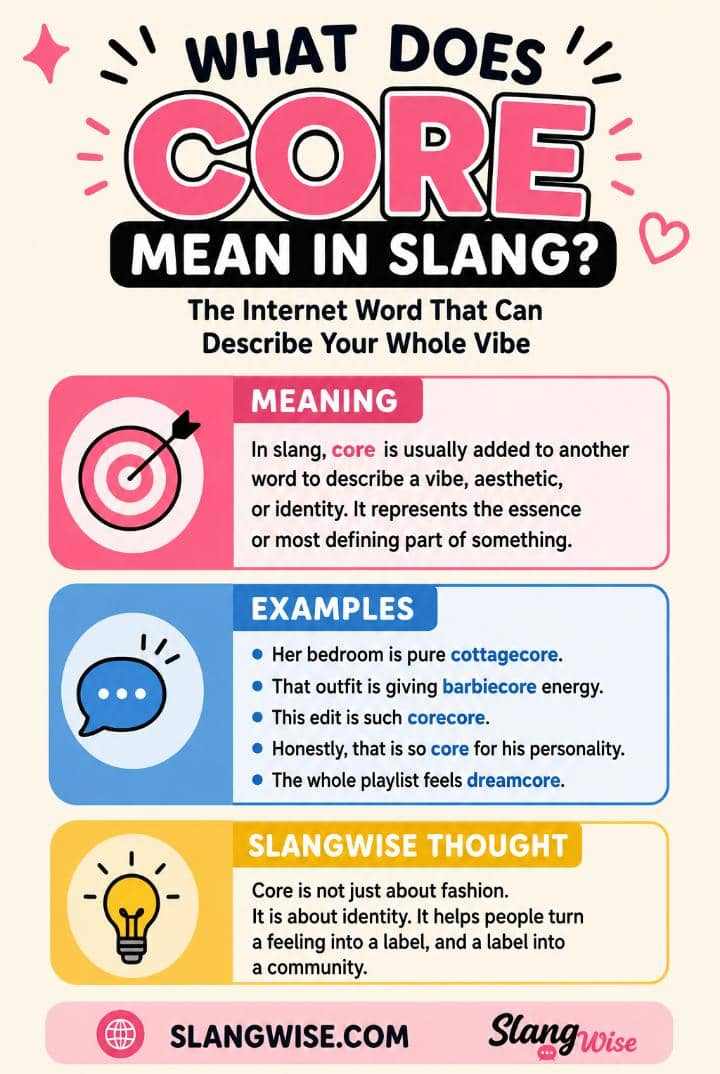
In modern slang, core most often works as a suffix. You attach it to a word, and suddenly that word becomes a full aesthetic or cultural category. That’s why we get terms like cottagecore, normcore, barbiecore, and corecore.
The internet loves this pattern because it is quick, catchy, and instantly understandable to people who are already fluent in online culture.
The reason it works so well is that the word core already suggests something central or essential. In slang, that idea gets stretched into something more playful: not just the center of a thing, but the whole mood that makes the thing feel complete.
That’s the reason someone might say an outfit, room, or playlist is “so core” to a certain aesthetic.
READ ALSO: No Bones Day Meaning in Slang – The Viral Noodle Slang Explained
Where Did It Come From?
The suffix form of -core grew out of earlier uses of the word in music and subculture, especially from hardcore and related scene labels. Over time, it expanded beyond music and started showing up as a way to name visual styles and internet trends.
Fashion coverage traces the modern boom in these labels back to the rise of normcore in the early 2010s.
From there, the internet did what it does best: it multiplied the pattern. Soon, people were using -core to name everything from cozy rural style to loud, maximalist fashion to irony-heavy internet art.
TikTok especially helped push the trend into the mainstream, with corecore becoming a recognizable example of the label in action.
Slangwise Thought
Here is the interesting part: core is not just about fashion. It is about identity. When people use it online, they are often trying to say, “This is not random.
This is the most recognizable version of this vibe.” That’s what makes the word feels so powerful. It lets people turn a feeling into a label, and a label into a community.
How People Use “Core” Online
The most common usage is simple: add core to something to describe its aesthetic. For example, a soft, dreamy, vintage-looking style might be called cottagecore.
A minimal, everyday, plain but intentional look might be called normcore. A collage-like emotional TikTok edit may get called corecore.
People also use it more loosely in conversation. Someone may say, “That is so core,” meaning it feels perfectly matched to a personality, fandom, or vibe. In that sense, core can mean “this is deeply on-brand” or “this is exactly the essence of it.”
READ MORE: Algo Farmer Meaning: The New Internet Slang for People Who Chase the Algorithm
Examples of “Core” in Slang
- “Her bedroom is pure cottagecore.”
- “That outfit is giving barbiecore energy.”
- “This edit is such corecore.”
- “Honestly, that is so core for his personality.”
- “The whole playlist feels dreamcore.”
These examples show how flexible the word is. It can describe fashion, mood, music, edits, decor, or even a person’s whole online presence.
Why It Became So Popular
Part of the appeal is that core makes style easier to name. The internet loves labels because labels help people find others with the same taste.
They also make trends easier to share, remix, and search. That is one reason the suffix spread so quickly across TikTok, Instagram, Pinterest, and fashion commentary.
Another reason is that the word feels fun and a little dramatic. It makes an aesthetic sound complete, like it has a soul. That is powerful in an online world where people are constantly building identities out of visuals, captions, and short-form content.
Some writers have also pointed out that the trend can feel overused or commercially exhausting, but that has not slowed it down much.
Conclusion
So, what does core mean in slang? It is basically the internet’s way of saying “this is the essence of the vibe.” It is a word that turned into a style engine, helping people name aesthetics, moods, and identities in just a few letters.
Whether it appears in a fashion trend, a meme edit, or a personality label, core usually points to the heart of what something feels like.
And that is why it is still everywhere. It is short, expressive, and incredibly useful when you want to describe a whole world with one tiny word.
DISCOVER: 270 Most Popular Internet Slang Words of 2026: The Ultimate Gen Z & Gen Alpha Dictionary
FAQs
Usually, yes. It is mostly used to describe a vibe, aesthetic, or identity in a playful or approving way.
No. It started strongly in fashion and aesthetics, but people now use it for edits, moods, decor, playlists, and even personality descriptions.
An aesthetic is the broader style or vibe, while core is the label people often attach to it online. In practice, the two overlap a lot.
Because it is catchy, searchable, and instantly descriptive. It helps people package a trend into a single word that feels recognizable and community-friendly.