
Table of Contents
Barmy Meaning
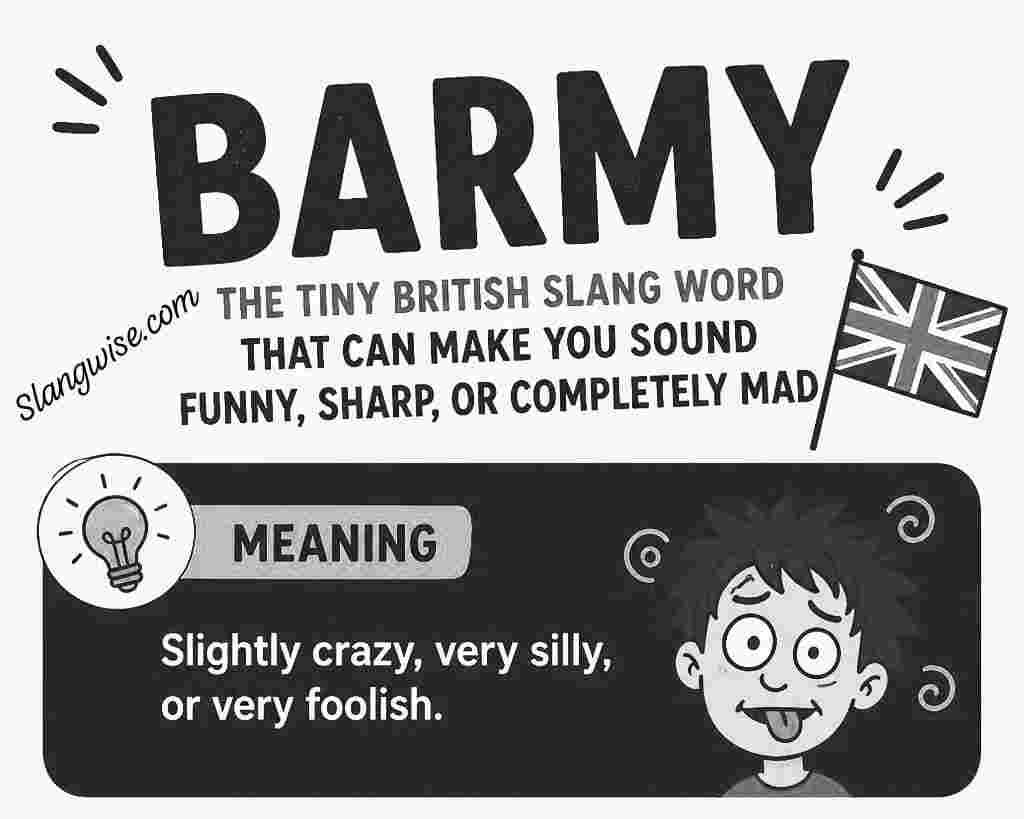
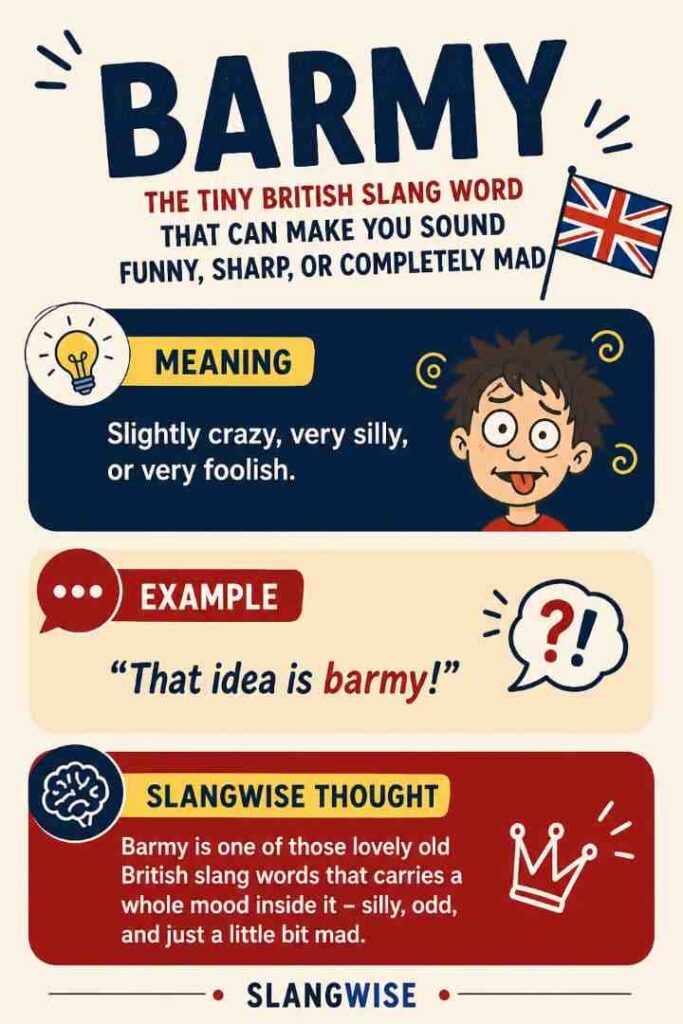
Some slang words sound dramatic before you even know what they mean. Barmy is one of them. It sounds a little old fashioned, a little playful, and a little strange, which is exactly why it sticks in your head. In British informal English, barmy usually means slightly crazy, very silly, or very foolish.
That is the simple version. In real conversation, though, barmy can do more than just describe something odd. It can sound teasing, sharp, amused, or mildly disapproving depending on the sentence and the tone. That is what makes it such a useful little word.
So in this post, I will walk you through what barmy means in slang, how people use it, where it comes from, and how it feels in everyday British speech.
In a Nutshell
- Barmy is informal British slang.
- It usually means slightly crazy, very silly, or very foolish.
- It can be teasing, critical, or mildly disapproving.
- It often describes ideas, plans, behavior, or situations.
- It has a long history and is still common in British speech.
What Does Barmy Mean?
If someone says, “That idea is barmy,” they usually mean it is silly, strange, unrealistic, or just plain ridiculous. The word can also describe a person who is acting in a bizarre or foolish way. It is not the strongest insult, but it definitely carries a bit of attitude.
That is what makes it different from a word like silly. Silly sounds lighter. Barmy sounds like the speaker thinks something is a little off, a little mad, or not very sensible. Sometimes it is used jokingly. Sometimes it sounds more critical.
In other words, barmy does not just describe oddness. It also gives you the speaker’s reaction to that oddness.
SEE ALSO: 50 Popular British Slang Words That Will Make Your UK Chats Sound Local
Where the Word Comes From
Barmy has a surprisingly old origin. It is linked to barm, an old word for the froth on fermenting malt liquor. Over time, the word moved away from that physical meaning and became associated with ideas like frothy, lively, excitable, flighty, and eventually foolish or strange.
That kind of word journey is common in English. A word can start with one concrete image and slowly grow into a social or emotional meaning. With barmy, the shift makes sense because the word now feels airy, unstable, and slightly chaotic, just like the behavior it describes.
Slangwise Thought
One thing I like about barmy is that it feels like a word with personality. It does not just say something is wrong. It says it in a way that sounds British, expressive, and just a little cheeky.
That is part of its charm. It lets people show disbelief or disapproval without sounding too formal or too harsh. In everyday conversation, that balance is gold.
READ ALSO: American Slang vs British Slang in 2026: 55 Words That Sound Similar Until You Cross the Pond
How Barmy Feels in Real Conversation
Here are a few natural ways it might show up:
“His plan was barmy, but somehow it worked.”
“Are you barmy? There is no way that will fit.”
“The music is driving me barmy.”
“That sounds like a barmy idea to me.”
“She is a bit barmy, but everyone likes her.”
Each example shows a slightly different feeling, but the core idea stays the same. Something is strange, silly, impractical, or mentally tiring. That is the heart of the slang meaning.
What Barmy Is Used For
Barmy can describe a person, an idea, a plan, a rule, a policy, or even a whole situation. That flexibility is one reason people still use it. You do not need a long explanation. If something feels absurd, barmy fits. If something feels foolish, barmy fits. If something makes no sense at all, barmy fits again.
It can also describe the way something is affecting you. For example, “The noise is driving me barmy” means the noise is irritating, exhausting, or making you feel frazzled. In that sense, the word is not just about madness. It is also about frustration.
READ ALSO: Why Gobby Sounds So Funny, Rude, and Perfectly British All at Once
Why It Sounds British and Cheeky
Barmy is strongly associated with British English. It feels informal, conversational, and a little old school in a good way. It is the kind of word that sounds natural in everyday speech, especially when someone wants to sound witty or lightly annoyed.
Because it is informal, it usually sounds softer than a direct insult. At the same time, it is not overly polite either. That middle ground is part of the charm. It can poke fun without turning nasty.
Further Examples
“His plan was barmy, but it was brave.”
This means the plan was silly or unrealistic, but maybe still admirable in some way.
“Do not be barmy, that will never work.”
This means the idea is foolish or unrealistic.
“That policy is absolutely barmy.”
This means the policy seems ridiculous or badly thought out.
“The chaos in the room was driving me barmy.”
This means the chaos was making the speaker feel annoyed or overwhelmed.
“She had a barmy idea, but it got people talking.”
This means the idea was strange or silly, but still memorable.
What It Is Not
Barmy is not just the same as crazy. In everyday British use, it often feels softer and more playful than the harshest meanings of crazy. It can suggest eccentric, odd, foolish, or impractical rather than something serious or clinical.
It is also not a formal word. You would not usually use it in professional writing or serious discussion. It belongs to casual British speech, where tone matters as much as definition.
FIND OUT: What Does Innit Really Mean? The British Slang Word Everyone Uses but Few People Fully Understand
Why People Still Use It
Some slang words disappear quickly, but barmy has stayed around because it is vivid and memorable. It packs a lot of meaning into a short word. It is also fun to say, which helps. Good slang often survives because it sounds good and lands quickly.
Another reason it lasts is that it fills a useful gap. Sometimes you want a word that is stronger than silly but not as heavy as a serious insult. Barmy sits right in that sweet spot.
Conclusion
Barmy is one of those British slang words that sounds as interesting as it means. It can describe something silly, foolish, strange, unrealistic, or just a bit mad. It is informal, expressive, and often carries a playful or mildly critical tone.
Because the word has history, rhythm, and attitude, it still feels natural in conversation today. So when you hear someone call something barmy, think of a moment that is odd, absurd, or a little too much for common sense.
FIND OUT: Why Everyone Keeps Saying Fit Check and Fit Testing and What They Actually Mean
Frequently Asked Questions
It usually means slightly crazy, very silly, or foolish.
Yes, it is mainly used in British informal English.
Yes. It can describe ideas, plans, behavior, policies, and situations.
Usually not strongly offensive. It can sound teasing or mildly disapproving.
It comes from barm, an old word connected to froth on fermenting liquor.