
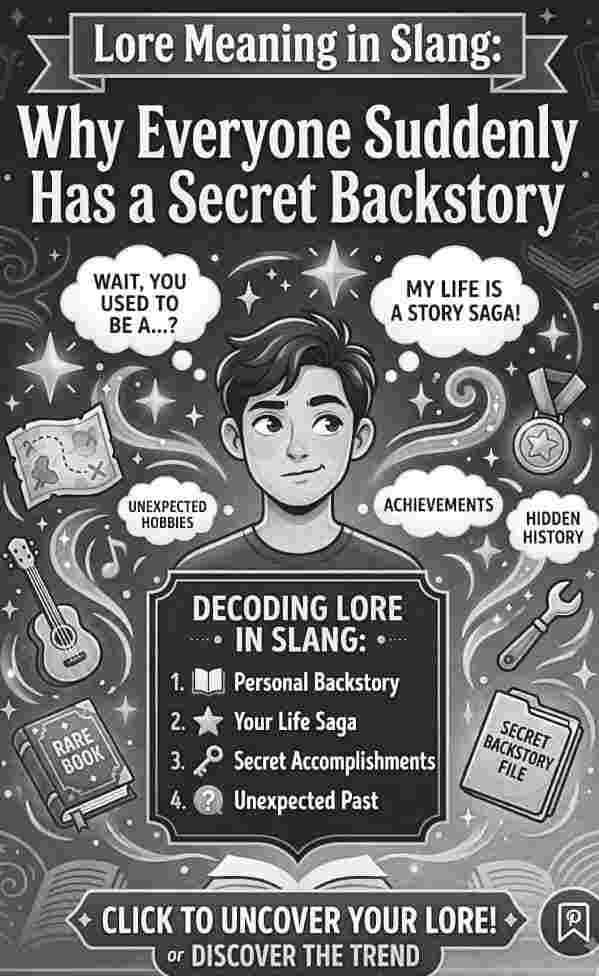
- “Lore” in slang usually means personal backstory or hidden history. It is the kind of detail that makes someone feel more interesting, mysterious, or iconic.
- It can also mean the long running details around a person, fandom, relationship, or even a random event. In online culture, “lore” often turns everyday life into a mini story universe.
- People use it for jokes, teasing, and curiosity. That is why you will see phrases like “girlfriend lore,” “dad lore,” or “share your lore.”
- The word sounds dramatic on purpose. Calling something “lore” makes it feel bigger than a normal fact, even when it is just a funny little detail.
- Take the Slang Quiz and download our free 270+ Internet Slang Dictionary. It is the easiest way to keep up with words like this without feeling lost online.
What Does “Lore” Mean in Slang?
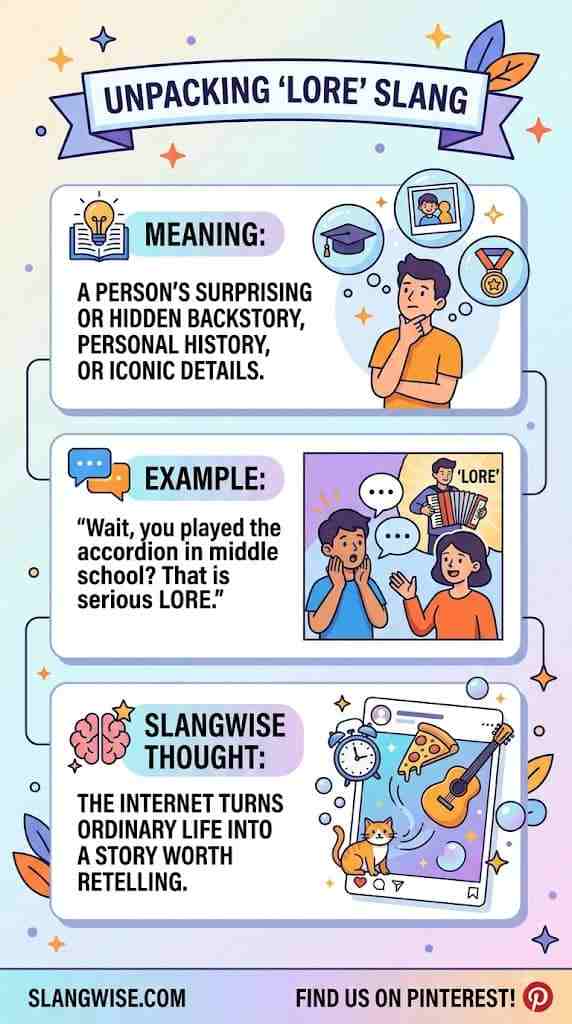
In slang, lore is basically the juicy backstory behind a person, a relationship, a fandom, or a moment that people keep talking about. It is not just a simple fact.
It is the kind of detail that gives context, personality, and sometimes a little drama. Think of it as the “behind the scenes” version of someone’s life or online identity.
The funny part is that the word already had a serious meaning before internet users made it playful. Traditionally, “lore” refers to a body of knowledge, tradition, or learned wisdom..
Internet slang took that older meaning and gave it a more chaotic, meme friendly twist. Now, instead of ancient stories or cultural knowledge, it can mean the strange and memorable facts that make a person feel like they have their own mini universe.
Slangwise Thought
Here is the real secret: “lore” is what happens when the internet turns ordinary life into a story worth retelling.
A random childhood habit, a weird habit at school, a dramatic relationship detail, or one embarrassing incident can all become lore once people start talking about it like it matters. And honestly, that is why the word works so well. It makes small things feel legendary.
How People Use “Lore” Online
You will most often see “lore” when people are joking about someone’s hidden history or asking for the story behind a person’s behavior. It is common in memes and social posts where people want the “full story,” not just the surface version.
There are even popular internet jokes like “boyfriend lore” and “girlfriend lore,” where someone learns a surprising part of a partner’s past and treats it like a dramatic reveal.
Another big internet pattern is “share a piece of lore about yourself,” which became a meme format across social media. That trend shows how flexible the word has become: it can mean a personal fact, an odd memory, or any detail that adds flavor to your identity.
So when someone says, “That is lore,” they usually mean one of these things: the detail is interesting, the detail is a little strange, the detail explains a lot, or the detail deserves to be remembered forever.
READ MORE: 75 Viral TikTok Slang Words of 2026 That Explain the Internet Faster Than
Examples of Lore in Slang
Example 1:
“Wait, you played the accordion in middle school? That is serious lore.”
Example 2:
“Her childhood lore is actually wild. No wonder she is so confident now.”
Example 3:
“Tell me your boyfriend lore, because there is no way that was the full story.”
Example 4:
“That random camping trip is now part of our friend group lore.”
Why the Word Became So Popular
People love words that make conversation feel more vivid, and lore does exactly that. Instead of saying “background,” people say “lore” because it feels more internet native, more expressive, and more fun.
It also fits modern online culture, where users love turning personal history into content, memes, and inside jokes.
Another reason it caught on is that it works for almost anything. You can have family lore, school lore, relationship lore, fandom lore, gaming lore, celebrity lore, and even “that one awkward moment” lore. Once a detail becomes memorable enough to retell, the internet can call it lore.
How to Know When Someone Is Using It Right
A good rule is this: if the word is being used to describe a meaningful, funny, weird, or memorable backstory, it is probably being used correctly. If the speaker is trying to make a small detail sound legendary or entertaining, they are almost certainly using slang “lore.”
That is why you will often hear it in a sentence like:
“Your lore is actually insane.”
That does not mean the person is telling a fantasy tale. It means their story, history, or details are so interesting that people want to hear more.
READ MORE: Passenger Princess Meaning in Gen Z Slang: Why Everyone Wants to Be One Right Now
Final Takeaway
“Lore” in slang is one of those words that feels simple at first, but gets richer the more you see it in real conversation. It is a word for backstory, hidden context, and the memorable details that make people and moments feel bigger than they first appear.
It can be funny, dramatic, affectionate, or teasing, depending on how it is used. And that is exactly why it has become such a powerful internet word.
FAQs on Lore
Most of the time, yes, but it can also be exaggerated for humor. Online, people often use it to make a small detail sound more dramatic than it really is.
Usually, yes. It is often playful or affectionate. But depending on the tone, it can also be teasing or a little suspicious, especially when someone says the lore is “wild” or “messy.”
A story is usually a full narrative. Lore is more like the important background details, recurring facts, or legendary bits that people keep referencing.
Absolutely. It works well when you are joking with friends, talking about someone’s past, or asking for the backstory behind something interesting. Just keep it casual and natural.
Table of Contents