
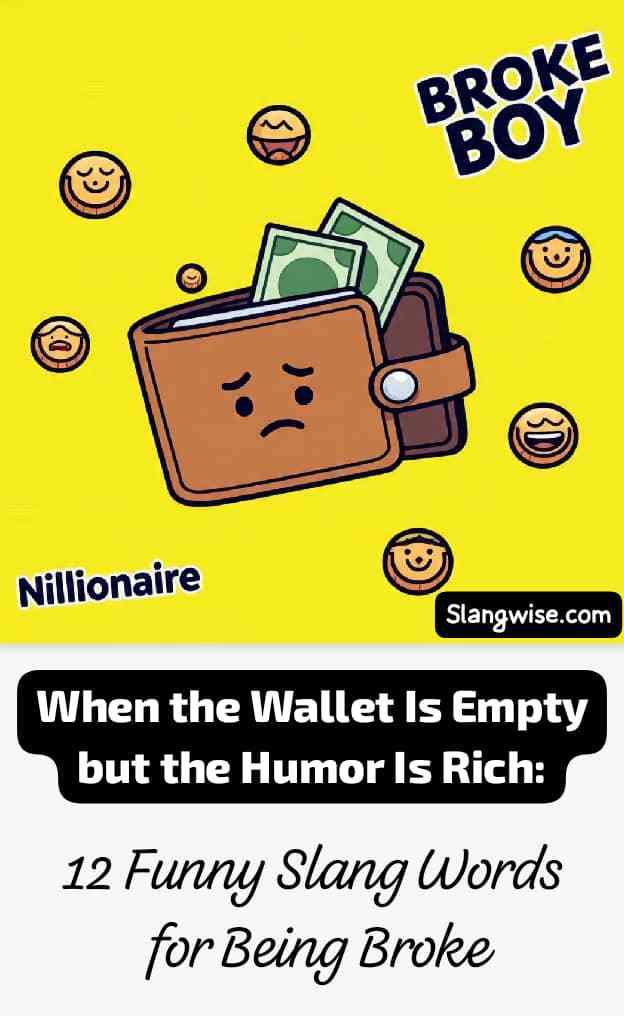
Being broke is one of those experiences almost everybody understands, even if they do not always talk about it openly. Some days your wallet is looking so empty it feels personal.
Other days, your bank account is giving dramatic silence, your card gets declined, and somehow your only real asset is your ability to laugh through the pain.
That is where slang comes in.
People have always found creative ways to describe money struggles, and the internet has made that even more fun. Instead of just saying “I have no money,” people now say they are in their broke girl era, living that nillionaire life, or suffering through a full blown debt era.
It is part joke, part coping mechanism, and part social media language that makes financial stress feel a little less heavy.
In this post, we are diving into 12 funny, relatable, and modern slangs for being broke, plus a few classic favorites that still hit hard. Some are playful and trendy. Some are old school and vivid. All of them help you say, in a much more entertaining way, that the budget is not budgeting.
In a Nutshell
- Modern slang like brokie, bougie broke, and nillionaire turns money struggle into a joke.
- Social media phrases like girl math and debt era make financial life feel trendy, even when it is stressful.
- Classic expressions like skint, plumb broke, and didn’t have two nickels to rub together still work because they are so vivid.
- These phrases are useful in captions, texts, tweets, memes, and everyday conversation when you want to be funny instead of flatly saying “I am broke.”
Why People Use These Broke Slang
Money stress is real, but humor makes it easier to talk about. That is probably why broke slang is so popular. It gives people a way to admit they are strapped for cash without sounding too serious or too embarrassed.
There is also something deeply relatable about financial self awareness. Saying “I am broke” is honest. Saying “I am in my debt era” is honest, but with style. That extra bit of style matters, especially online, where people like language that feels clever, current, and easy to share.
And to be honest, being broke has inspired some of the funniest commentary ever. People joke about putting a meal on “financial layaway,” calling a coffee “a luxury item,” or acting like a refund is a personal win. That kind of humor turns everyday struggle into something people can laugh at together.
Now let us get into the actual Broke Slang Words.
1. Broke Boy, Broke Girl, Brokie
This is one of the most recognizable modern ways to describe someone with no money, or at least someone moving through a very broke season.
Broke boy, broke girl, and brokie are playful, self aware labels. They can be used seriously, but they are often used with a wink. The tone is usually teasing, not tragic. It is the kind of phrase people use when they want to acknowledge they are not spending freely right now, but they are still keeping their sense of humor.
Examples:
- “I am in my broke girl era, so that brunch is a no from me.”
- “Brokie behavior is saying yes to takeout and then checking my balance.”
- “He wants first class energy on a broke boy budget.”
What makes this phrase so popular is that it works both as self description and as social commentary. People use it when they are joking about themselves, but they also use it to roast friends in a playful way.
Slangwise Note: This phrase is strongest when the tone is light and self aware. It works best when nobody is trying to be cruel.
2. Bougie Broke
This one is for the person with champagne taste and instant noodle finances.
Bougie broke describes someone who likes nice things, stylish things, or premium vibes, but does not actually have the budget to match that taste. It is a beautiful contradiction. Someone might want the expensive candle, the fancy brunch, the designer look, or the luxury hotel experience, while their actual account balance says otherwise.
Examples:
- “I am bougie broke, so I window shop like I am rich.”
- “She ordered the cheapest thing on the menu but still wanted the aesthetic.”
- “Bougie broke is when your vision board is expensive and your wallet is in witness protection.”
This phrase is funny because so many people can relate to it. A person may love luxury but still need to choose the discount version. That tension is exactly what makes the phrase land.
Slangwise Note: It is also one of the most social media friendly terms on this list because it sounds stylish while describing financial struggle. That contrast is the joke.
DISCOVER: 40 Most Popular Internet Catchphrases of 2026 (Updated)
3. Nillionaire
A nillionaire is someone who has millionaire dreams but not millionaire money. In other words, the bank account is sitting at zero, but the imagination is doing fine.
This word is especially funny because it sounds like a real financial status, even though it is clearly a joke. It gives the idea of abundance while actually meaning the opposite.
Examples:
- “I am a nillionaire, but I manifest like a billionaire.”
- “Living like a nillionaire until payday.”
- “He talks like a mogul, but his account says nillionaire.”
The charm of nillionaire is that it lets people laugh at the gap between ambition and reality. It is not about giving up. It is about admitting that your finances and your dreams are currently on different planets.
Slangwise Note: That is why the word works so well in captions, bios, and memes. It is short, catchy, and instantly understandable.
4. Girl Math
Girl math is one of the most famous internet expressions of recent years, and it is not strictly about being broke, but it definitely lives in the same universe.
The phrase refers to the funny mental gymnastics people use to justify spending. It is the art of turning a purchase into something that feels smart, clever, or practically free, at least in your own head.
Examples:
- “If I return these shoes, the refund basically means I made money.”
- “I paid with cash, so it feels free.”
- “My concert ticket was expensive, but since I will think about it forever, it was actually cheap.”
Girl math is hilarious because it is exaggerated but familiar. Lots of people do their own version of it, regardless of gender. It is a way of making spending feel less painful by re framing it.
Slangwise: The phrase took off because it is funny, highly shareable, and very internet coded. It is also perfect for those moments when your wallet is not happy, but your logic is doing cartwheels.
READ ALSO: Girl Math vs Boy Math vs Human Math: Why Everyone Suddenly Thinks Their Spending Makes Sense
5. In My Debt Era
This phrase is dramatic in the best way.
In my debt era is a playful, modern way to admit that your financial life is currently centered around bills, loans, credit card balances, or any other money stress you are carrying. It sounds almost glamorous, which is exactly why people love it.
Examples:
- “Student loans really put me in my debt era.”
- “I am not being dramatic, I am just deep in my debt era.”
- “This month is giving debt era and there is no escape.”
What makes this phrase powerful is that it takes something stressful and gives it a trendy label. That does not solve the debt, of course, but it does make talking about it feel a little lighter.
Slangwise Thought: It is often used with a sense of resigned humor. The speaker knows the situation is not ideal, but they are also refusing to let the situation define their entire mood.
6. Skint
Skint is a classic British English term that means completely out of money or nearly so. It is casual, natural, and still widely understood in the UK.
Examples:
- “I cannot go out tonight, I am skint.”
- “I am pretty skint until payday.”
- “He is always skint by the end of the month.”
Compared with some of the flashier internet slang on this list, skint feels straightforward and grounded. It does not need a joke built into it because the word itself already carries that everyday money struggle energy.
Slangwise Thought: It is one of those words that sounds so normal in British conversation that it almost does not register as slang anymore. Still, it remains one of the cleanest and most useful terms for being broke.
7. Out of Pocket
This phrase has a few different uses in modern slang, but in money talk it often means having less cash than expected or being financially stretched.
Examples:
- “I want to come, but I am a little out of pocket right now.”
- “After travel and rent, I am out of pocket for the rest of the month.”
- “That surprise bill had me out of pocket fast.”
This phrase works because it sounds flexible. It can mean you are broke, short on cash, or just financially off balance. It is less dramatic than some other expressions, which makes it useful in everyday conversation when you do not want to sound too intense.
Slangwise: It is a good phrase for polite excuses too. If someone invites you somewhere expensive, saying you are out of pocket is a softer way to explain that your budget is not cooperating.
READ ALSO: 18 Slang Words That Are Now Official Dictionary Words
8. My Wallet Is on a Diet
Now we are getting into the creative image based phrases.
My wallet is on a diet is a funny metaphor that treats having no money like a deliberate health choice. It is a playful way to say your wallet is slim, empty, or not eating much these days.
Examples:
- “I cannot chip in right now, my wallet is on a diet.”
- “Dinner out? My wallet is on a strict diet.”
- “This month my wallet is getting very little exercise and even less food.”
Slangwise Thought: This one is great because it sounds cheerful even though it is describing a problem. It is also flexible enough to use in texts, captions, or casual conversation. It does not sound too formal, and it definitely sounds more amusing than just saying “I am broke.”
The phrase works especially well when you want to make a financial excuse sound less awkward.
9. Didn’t Have Two Nickels to Rub Together
This is a wonderfully old fashioned phrase that still makes people smile.
It comes from an earlier era and paints a picture of extreme poverty or having absolutely no money at all. The image is so vivid that you can practically hear the old time storytelling in it.
Examples:
- “After all those bills, I do not have two nickels to rub together.”
- “When I was younger, we were so broke we did not have two nickels to rub together.”
- “I am not exaggerating, I do not have two nickels to rub together right now.”
Part of the charm is how specific and visual it is. It sounds like something from a different time, but people still understand it immediately. That makes it perfect for dramatic humor.
Slangwise Thought: If you like phrases that feel a little nostalgic, this one is a gem.
10. Broke as a Joke
This is one of the easiest and most memorable expressions on the list.
Broke as a joke is a rhyming, self deprecating way to say you are very broke. It is light, catchy, and easy to use in everyday speech.
Examples:
- “I am broke as a joke, so today we are doing free activities.”
- “That repair bill left me broke as a joke.”
- “She is broke as a joke but still somehow buying iced coffee.”
Rhyming slang tends to stick in people’s heads, which is part of why this phrase is so effective. It sounds funny even before you finish the sentence.
Slangwise: This is one of those expressions that can make a serious situation feel less heavy without pretending the problem is not real.
DISCOVER: 27 Friendship Slang Words That Quietly Run Every Group Chat
11. Plumb Broke
Plumb broke is a Southern and Appalachian style phrase that uses plumb as an intensifier, meaning completely or utterly. So plumb broke means totally out of money.
Examples:
- “After that car repair, I am plumb broke.”
- “He got paid and was plumb broke by Monday.”
- “I cannot help this week, I am plumb broke.”
This phrase has a strong regional flavor and feels warm, direct, and unmistakably homespun. It is not flashy, but it is memorable.
Slangwise Note: What makes it stand out is its simple honesty. There is no extra decoration. It just tells the truth in a way that sounds rooted and expressive.
12. Brassic Lint
This one comes from UK rhyming slang, and it is a clever one.
Brassic lint is derived from boracic lint, which is associated with the word brassic, a slang term meaning skint or broke. It is one of those expressions that feels very specifically British and very delightfully old school.
Examples:
- “Can we do dinner next week? I am brassic lint right now.”
- “After the bills, I am proper brassic.”
- “He said he would come out, but he is brassic lint until payday.”
This phrase may not be as universally known as some of the others, but that is part of its appeal. It sounds smart, regional, and a little bit old fashioned in a fun way.
Slangwise: If you enjoy slang with history and character, this one is a standout.
How to Use These Terms Naturally
The best slang is the kind that sounds effortless. You do not want to force these phrases into every sentence like you are trying too hard. The magic is in using them where they fit naturally.
Here are a few easy ways to make them work:
Use broke girl, brokie, or broke boy when joking about your current money situation. Use bougie broke when you want to describe expensive taste on a limited budget. Use nillionaire when you want to sound funny and dramatic about having no money.
Use girl math when talking about spending logic that only makes sense in the moment. Use debt era when you want to be playfully honest about bills or loans. Use skint, plumb broke, or brassic lint when you want a more regional or classic vibe.
Use my wallet is on a diet or didn’t have two nickels to rub together when you want a more creative, descriptive tone.
A good rule of thumb is this: match the phrase to the mood. If you are joking with friends, go for the funnier terms. If you are speaking more broadly, a simpler phrase may land better.
READ MORE: 23 Gen Z Reactions Slangs: Why Everyone Keeps Saying I’m Dead, Big Mood, No Cap etc.
Some Funny Examples of Broke Slangs
Sometimes it helps to hear these in action. Here are a few extra examples that show how the phrases can be used in a real, playful way:
- I would love to go, but my wallet is on a diet and the fridge is emotionally unavailable.
- This is not a spending problem, this is a girl math situation.
- I am not broke, I am just temporarily living in my nillionaire era.
- After rent, groceries, and subscriptions I forgot existed, I am plumb broke.
- That purchase was bougie broke behavior and I do not regret it.
- I am skint, so this hangout needs to be low budget and high fun.
- Two nickels? I would settle for one at this point.
- My debt era is not cute, but at least I am self aware.
That mix of honesty and humor is exactly why these phrases work so well. They say what is true, but with style.
Why These Broke Expressions Catch On
Slang spreads when it feels useful, funny, and easy to repeat. These broke terms check all three boxes.
They are useful because money stress is common. They are funny because they turn a frustrating reality into a punchline. And they are easy to repeat because they sound vivid and memorable.
Another reason they catch on is that they help people feel less alone. When someone says, “I am in my debt era,” other people immediately know the vibe. The phrase creates a tiny moment of shared understanding.
That is the real power of slang. It is not just about being clever. It is about making ordinary life feel more expressive.
Conclusion
Being broke is rarely fun, but the language around it can be very entertaining. From brokie and bougie broke to skint, plumb broke, and didn’t have two nickels to rub together, these phrases give people a way to laugh at financial struggle instead of letting it win every conversation.
Some of the terms are modern and social media friendly. Some are old and wonderfully expressive. Some are just plain funny. Together, they show how creative people can be when they need to talk about money without sounding too heavy.
So the next time your wallet is empty but your sense of humor is doing just fine, you will have plenty of ways to say it.
DISCOVER: The Ultimate List of 250 Most Popular Internet Slang Words of 2026
FAQs
Broke slang is informal language people use to describe being low on money, out of money, or financially stretched. It often adds humor or personality to the situation.
It can be playful or rude depending on the context. Among friends, it is often used jokingly. Directed at someone meanly, it can sound insulting.
Both mean having little or no money, but skint is especially common in British English, while broke is more universal.
No. Even though the phrase started as a trend with a gendered label, people of all genders use it to joke about spending logic.
That depends on the vibe, but my wallet is on a diet, broke as a joke, and didn’t have two nickels to rub together are especially funny because they are so visual.
Table of Contents