

If a phrase sounds like a secret emergency code, a spy mission, and the title of a movie Michael Scott would absolutely make, you are probably looking at Threat Level Midnight.
At first, the name sounds serious. Then you discover that it is the title of Michael Scott’s homemade spy movie in The Office, starring him as Agent Michael Scarn. That contrast is the joke.
But there is also a useful language lesson here. As I study slang and internet expressions, I notice that a phrase does not have to begin as slang to start behaving like slang. Threat Level Midnight is a great example.
So let’s decode it: where it came from, what people mean by it, how it works in casual conversation, and why three dramatic words from a sitcom became such a memorable reference.
Slangwise Tip: When a phrase sounds far more serious than the situation deserves, the contrast is usually where the joke lives.
Threat Level Midnight is the perfect phrase for a situation that has absolutely no business being this dramatic.
What Is Threat Level Midnight Really?
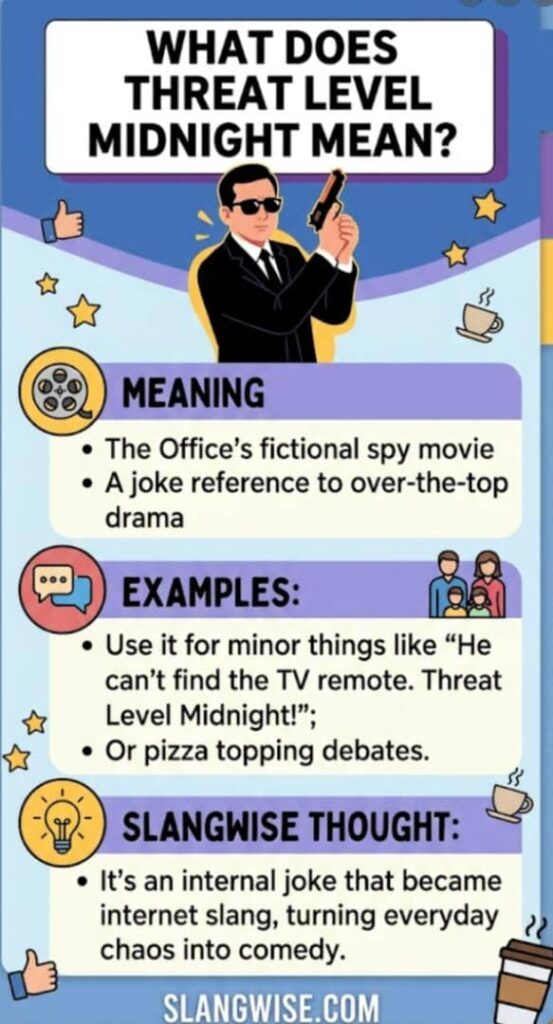
In The Office, Threat Level Midnight is a fictional action movie written, filmed, edited, and starred in by Michael Scott. His character is Agent Michael Scarn, a larger than life secret agent who treats every situation like the fate of the world depends on him.
The joke comes from the gap between Michael’s ambition and the movie itself. He sees it as a serious action masterpiece, while viewers see homemade sets, exaggerated acting, strange plot choices, and familiar coworkers playing absurd roles.
That contrast is the heart of the reference.
When I decode a phrase like this, I look beyond the literal words and ask what social meaning people attach to them. Threat Level Midnight does not simply mean “danger.” In a fan or meme context, it can suggest, “This has become ridiculously dramatic, and we all know it.”
READ ALSO: Nepo Baby Meaning in Slang: What It Really Means, Why People Use It, and How the Term Gets Used Online
Where Did Threat Level Midnight Come From?
The Office planted the idea much earlier than the episode that carries the title.
Threat Level Midnight is first mentioned in the season two episode The Client, when Michael’s movie script becomes part of the story. The seventh season gives viewers the payoff. In season seven, episode seventeen, also titled Threat Level Midnight, Michael finally screens the completed movie for his coworkers.
The episode originally aired on February 17, 2011. The film features Michael as Agent Michael Scarn, Dwight as his unusual sidekick, and Jim as the villain Goldenface.
That long setup matters. The show plants the joke, keeps bringing it back, and eventually lets viewers see Michael’s ridiculous masterpiece.
Why the Name Is So Funny
Think about the phrase itself: Threat Level Midnight. It sounds official, urgent, and far more serious than most everyday situations.
That is exactly why it suits Michael Scott. He loves turning ordinary events into major productions, and the title gives his movie instant importance.
Internet humor uses the same trick. A minor argument becomes a “crisis,” or losing a charger becomes a “disaster.” Threat Level Midnight adds that exaggeration while also carrying a specific The Office reference.
How People Use Threat Level Midnight Today
People do not usually use Threat Level Midnight as a simple replacement for one everyday word. They use it as a reference that carries a whole mood with it: Michael Scarn, fake spy seriousness, unnecessary drama, and The Office fandom.
Here are fresh examples:
Group chat: “We are debating pizza toppings like national security is involved. Threat Level Midnight.”
Class project: “The presentation is tomorrow and suddenly everyone is acting like we are leading a rescue mission. Threat Level Midnight.”
Family moment: “My cousin lost the TV remote and started interviewing everybody. We have reached Threat Level Midnight.”
Social caption: “When a tiny problem turns into a full emergency meeting. Threat Level Midnight.”
Notice the pattern. The situation is not genuinely dangerous. The phrase works because the speaker is pretending it is far more serious than it really is.
Is Threat Level Midnight Actually Slang?
Here is the distinction I would make as a slang decoder.
Cambridge English Dictionary defines slang as very informal language associated especially with particular groups of people. You can read Cambridge’s explanation of slang here.
Threat Level Midnight can behave like a slang expression when fans use it casually within a shared community. But its origin is different. It began as a fictional movie title, not as everyday informal vocabulary.
So I would describe it as a pop culture expression, fandom reference, or meme style phrase that can function in a slang like way.
Not every viral expression is technically slang. Some are catchphrases, memes, or character references that become shorthand among people who know the source.
Slangwise Tip: When a pop culture phrase leaves its original show and becomes useful in everyday conversation, the shared reference becomes part of its meaning.
Why Fans Still Love the Reference
Threat Level Midnight packs Michael’s personality into three words. It lets fans exaggerate a small problem without sounding genuinely serious, so it fits easily into texts, captions, comments, and jokes.
Read Also: The hottest internet catchphrases of 2026, from TikTok memes to global viral phrases. Get meanings, origins, and usage examples to stay ahead of the trends.
Slangwise Thought
One thing I have learned from studying online language is that the most interesting expressions are not always the newest. Threat Level Midnight sticks because it captures a familiar feeling: a tiny issue suddenly becoming a full blown drama. The absurd movie reference makes that feeling funnier.
That is why the phrase still works years after the episode aired. It is specific enough to trigger the reference, but flexible enough to fit new situations.
Conclusion
So, what does Threat Level Midnight mean?
At its core, it is the title of Michael Scott’s fictional spy movie in The Office. In fan and internet culture, it can also work as a playful way to describe a situation that has become absurdly dramatic, intense, chaotic, or cinematic.
It is not classic slang in the traditional sense. It is better described as a pop culture expression that can behave like slang because people use it casually to communicate a shared joke.
And that is what makes it such a useful example of how language changes through fandom and the internet. A made up movie title became a reusable expression because people understood the feeling behind the joke.
Threat Level Midnight Meaning in a Nutshell
- It comes from The Office: Threat Level Midnight is Michael Scott’s fictional spy movie.
- Michael Scarn is the star: Michael plays the exaggerated secret agent at the center of the film.
- The humor is exaggeration: The title sounds extremely serious while the movie is deliberately ridiculous.
- Fans use it as shorthand: It can describe harmless situations that feel unnecessarily dramatic or chaotic.
- It is a pop culture expression: It can function like slang in casual use, but its origin is a fictional TV reference.
FAQs
Threat Level Midnight is Michael Scott’s fictional spy movie in The Office. The title later became a humorous reference for situations that feel dramatically over the top.
Threat Level Midnight is first mentioned in the season two episode The Client, before the completed movie is eventually screened in season seven.
Michael Scarn is Michael Scott’s fictional secret agent and the hero of Threat Level Midnight. Michael plays the character in his homemade action movie.
People use it to make a harmless situation sound much more serious, dramatic, or cinematic than it really is, while also referencing The Office.
It is more accurately a pop culture expression or fandom reference, although people can use it in a slang like way when describing an overdramatic situation.
Table of Contents