
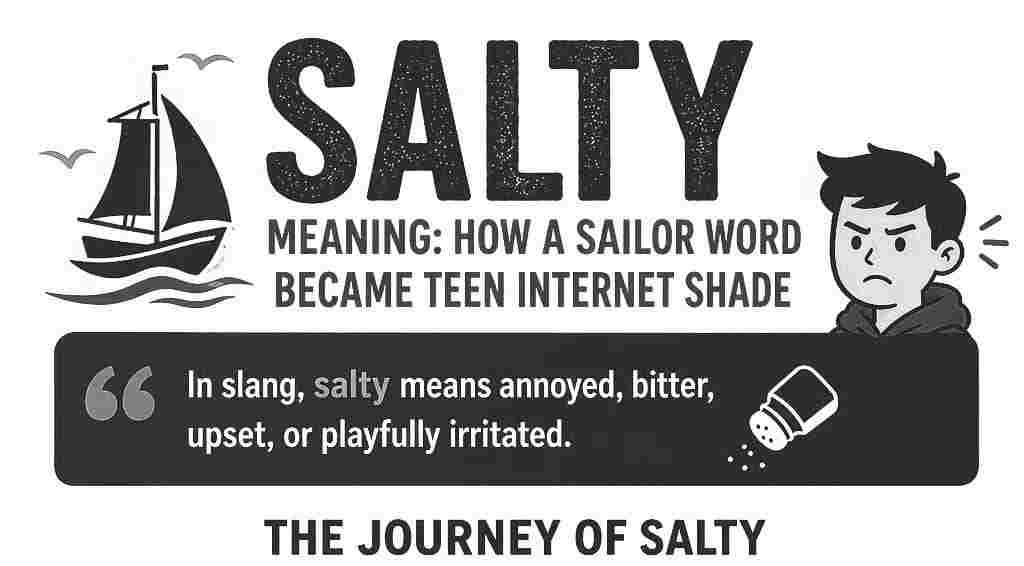
In a Nutshell
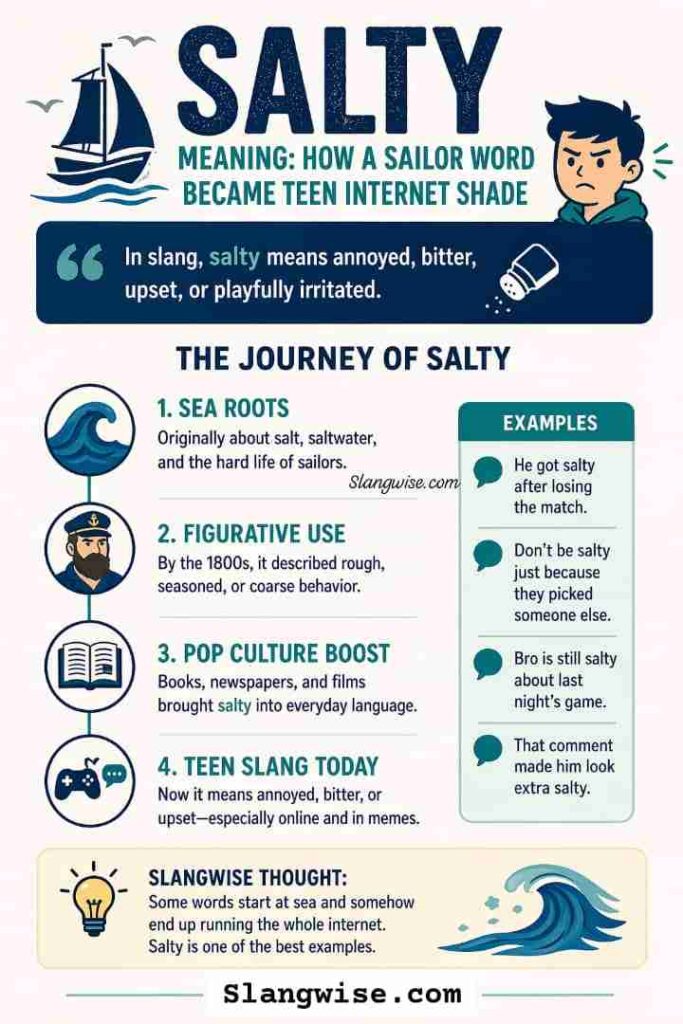
- Sea roots: Salty started out as a word tied to sailors, salt spray, and the hard life at sea.
- Old figurative use: By the 1800s, people were already using salty to describe rough, seasoned, or coarse behavior.
- Pop culture boost: Books, newspapers, and films helped the word move from ship talk into everyday language.
- Teen slang today: Now salty usually means annoyed, bitter, or playfully upset, especially online and in memes.
Slangwise Thought: Some words start at sea and somehow end up running the whole internet, and salty is one of the best examples.
What Does Salty Mean in Slang?
In slang, salty usually means someone is annoyed, bitter, upset, or acting like a loss hit them a little too hard. It can be used seriously, but more often it is playful. A friend who keeps complaining after losing a game, missing out, or getting teased might be called salty.
That is what makes the word so fun in modern use. It can sound like a light roast, a friendly tease, or a quick way to point out that somebody is taking things too personally. In online spaces, especially gaming and meme culture, salty has become one of those words people understand almost instantly.
But salty did not begin as internet shade. Its story starts much earlier, on ships, in salt air, and in the rough language of sailors.
Where Did Salty Come From?
The original meaning of salty was very literal. It referred to salt, saltwater, or things covered with salt. That makes sense when you think about old sailing life. Sailors spent long stretches at sea, surrounded by salt spray, salt cured food, and clothing that absorbed the ocean air.
Over time, salty began to pick up a more figurative meaning. By the nineteenth century, it could describe someone who seemed rough, hardened, or seasoned by experience. In seafaring language, a salty old sailor was not just someone who had spent a lot of time at sea. He was also somebody who had been shaped by that life.
That older meaning still gives the word its flavor today. Even now, salty carries a little edge to it. It feels sharp, plainspoken, and slightly rough around the edges, which is probably one reason it survived for so long.
One thing I’ve always found interesting is how many slang words start as simple descriptions before becoming personality labels. Salty is a perfect example of that shift.
Read Also: Victorian Slang 23 Terms That Will Transport You to the 19th Century
How Salty Moved From Sailors to Everyday Speech
As writing about sailors, ships, and naval life became more common, salty slowly moved beyond the sea. Novelists, journalists, and storytellers used it to describe people who sounded blunt, hard, or a little coarse. Once that happened, the word no longer belonged only to sailors.
People who were not sailors still understood what salty suggested. It could point to someone with a rough personality, sharp manners, or an attitude that felt a bit too bold. That broader use helped the word survive long after sailing became less central to daily life for most people.
Then popular culture gave it another push. Sea stories, books, films, and newspaper language all helped salty feel familiar to ordinary speakers. By the time mass media started shaping everyday speech, the word had already left the dock.
The Internet Gave Salty a New Life
The biggest modern shift came with gaming, memes, and social media. Online players began using salty to describe someone who was annoyed after losing, embarrassed after getting called out, or just too emotionally invested in a small setback.
That usage spread fast because it fits internet culture so well. It is short, funny, and easy to use in comments, captions, and reactions. If someone is whining after a loss, acting offended, or trying too hard to save face, calling them salty gets the message across quickly.
Today, the word often appears in phrases like “salty tears,” “salty because they lost,” or “stop being salty.” It can still be teasing, but it is usually not deeply serious. The tone depends on the context, the relationship, and how dramatic the person seems in the moment.
In my view, that is exactly why the word works so well online. It sounds casual, a little funny, and just sharp enough to land without needing a long explanation.
Examples of Salty in a Sentence
- He got salty after losing the match.
- Do not be salty just because they picked someone else.
- She was acting salty all afternoon.
- Bro is still salty about last night’s game.
- That comment made him look extra salty.
READ ALSO: What Does Drip Mean In Gen Z Slang – A Brief Review Gen Zs’ Aesthetic
When You Can Use Salty
Salty works best when the moment is clearly about irritation, jealousy, disappointment, or playful bitterness. It is especially common when someone is reacting too strongly to a small issue, or when they are clearly struggling to hide their frustration.
You can use it with friends, online comments, group chats, gaming talk, and casual teasing. It is not the best word for serious situations, though. If someone is genuinely upset, hurt, or going through something important, salty may sound dismissive.
So the real trick is knowing the vibe. If the mood is playful, salty fits. If the moment is serious, it is better to choose a kinder word.
Why Teenagers Love the Word Salty
Teenagers and young internet users tend to love words that are short, expressive, and easy to turn into jokes. Salty checks every box. It sounds funny, it is easy to repeat, and it can describe a whole attitude in one word.
It also feels flexible. Someone can be salty after a game, salty after an argument, salty after being left on read, or salty after seeing someone else get attention. The word works because it captures a very human reaction in a compact way.
That flexibility is a huge part of why salty still feels fresh. Even though the word is old, the way people use it keeps changing. That is how slang stays alive. It travels, adapts, and picks up new meanings without losing its old character.
Salty vs Similar Slang Words
Salty is close to words like bitter, pressed, annoyed, or mad, but it is not exactly the same as any of them. Bitter can feel more emotional or long lasting. Annoyed is more neutral. Mad is more direct. Salty usually feels more playful, more teasing, and sometimes more about pride than anger.
That difference matters. When someone is salty, they are often not just upset. They are upset in a way that is noticeable, a little funny, and maybe even a little dramatic.
READ ALSO: What the Sigma meaning in 2026: a friendly Gen Z guide you can actually use
The Bottom Line
Salty began as a word tied to salt, the sea, and the hard life of sailors. Over time, it grew into a description for rough or seasoned behavior, then later became a playful way to call someone annoyed or bitter. Today, it lives comfortably in teen slang, gaming talk, and social media banter.
That journey is a reminder that slang never really stays still. A word can start on a ship, pass through books and films, and end up as a joke in a group chat. Salty did exactly that, and it is still sailing strong.
FAQs
In slang, salty means annoyed, bitter, upset, or playfully irritated.
Not usually. It can sound teasing or dismissive depending on the situation, but it is not a harsh insult in most casual use.
Yes. The word originally connected to salt, saltwater, and seafaring life before evolving into modern slang.
People say that when someone seems frustrated, upset, or overly bothered by something small.
Table of Contents