
- Side quests in slang usually mean a smaller, extra, or unexpected activity that happens outside the main plan.
- The catchphrase comes from gaming language, where a side quest is optional and separate from the main storyline.
- In everyday speech, people use it for random detours, spontaneous mini adventures, or extra tasks that are not the main mission.
- It sounds playful, funny, and very Gen Z, especially when talking about plans, errands, or little life detours.
- Keep reading, then take the Slang Quiz and download our free 270+ Internet Slang Dictionary to level up your slang game.
Table of Contents
What Does Side Quests Mean in Slang?
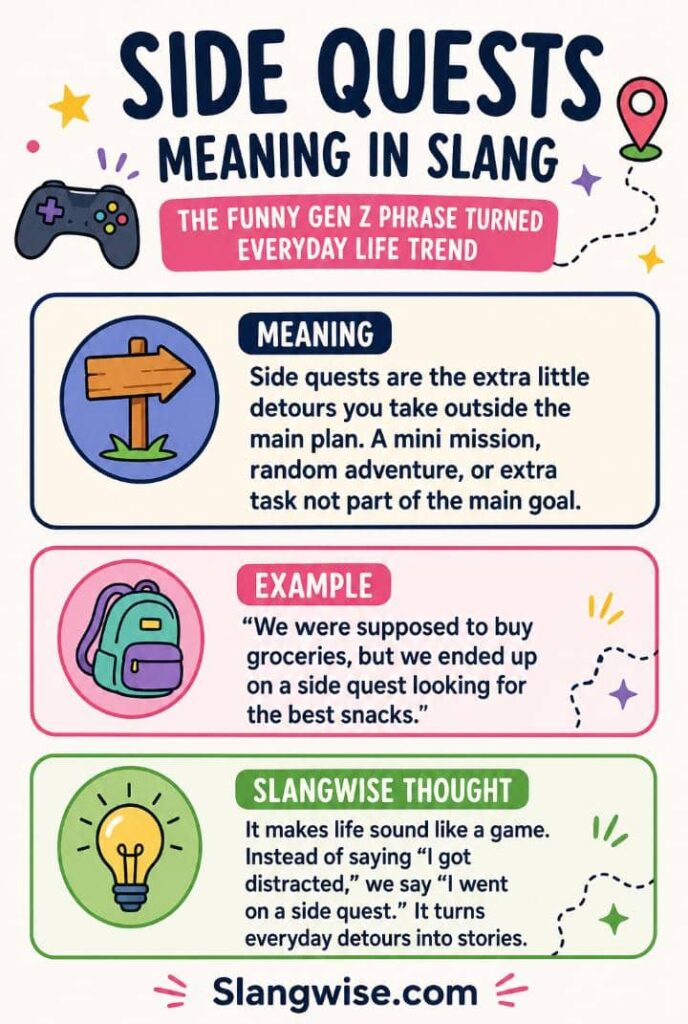
In slang, side quests usually means the extra little detours you take when you are not strictly following the main plan. Think of it as a mini mission that happens alongside your real goal.
The slang phrase grew from gaming, where a side quest is an optional task outside the main storyline, and then people started using it offline for spontaneous plans, random errands, and little adventures that are not part of the original agenda.
That is why the term feels so natural in conversation. It is flexible. It can mean a fun detour, a tiny distraction, a spontaneous trip, or even an extra task you did not expect to do.
Some newer slang use also treats it as a way to describe a secondary pursuit or activity that is separate from the main mission.
Slangwise Thought
The reason side quests caught on is simple: it sounds playful, visual, and instantly understandable. Instead of saying, “I got distracted and ended up doing something else,” people can say, “I went on a side quest.”
It makes life sound like a game, and honestly, that is part of the charm. It turns everyday detours into stories.
READ ALSO: From AFK to POGGERS – 50 Popular Gaming Slang Words and What They Mean
Where Did It Come From?
The original meaning comes from gaming culture. In video games, the main quest is the central story you need to complete, while a side quest is an extra mission that is related but not required. That gaming meaning is still the backbone of the slang useyuu today.
From there, the phrase spread into internet culture and everyday speech. Writers and online communities now use it for spontaneous detours, little adventures, and any activity that happens outside the main objective.
It has become especially popular in Gen Z style slang, where gaming language often gets repurposed for real life.
How People Use It in Real Life
You will hear side quests in a few different ways.
Sometimes it means a fun detour. For example, you are going to the mall, but you stop for ice cream, walk into a bookstore, and suddenly end up in a completely different part of town. That is a side quest.
Sometimes it means a spontaneous mini adventure. People use it for random late-night drives, unplanned hangouts, or a small outing that started with no serious purpose. Urban slang usage often describes this as going out without a set objective after the main hangout is over.
Sometimes it means a secondary task. That could be a quick errand, a second job, a hobby, or anything that is not your main focus but still takes up your attention.
Examples of “Side Quests” in Sentences
- “We were supposed to buy groceries, but we ended up on a side quest looking for the best snacks in the whole area.”
- “My afternoon turned into a side quest after I stopped for one thing and somehow visited three different places.”
- “He said he was running a quick errand, but it became a full side quest.”
- “That bookstore was not on the plan, but I happily accepted the side quest.”
Notice how the phrase makes the situation sound more fun and less annoying. That is a big reason people like it.
Why People Like the Phrase So Much
Part of the appeal is that side quests makes ordinary life sound more interesting. It gives a little gaming energy to boring or messy real-world moments.
Instead of calling something a distraction, people call it a side quest, which makes it feel lighter and more entertaining.
It also captures something very modern: the idea that life is not always a straight line. Sometimes your day has a main mission, but the most memorable part is the random detour you took along the way. That is exactly the kind of playful meaning this slang carries.
READ MORE: AFK Meaning: What Does AFK Mean in Text, Chats, and Gaming?
Side Quests vs Main Quest
This contrast is the easiest way to understand the slang.
The main quest is your primary goal. It is the thing you were originally trying to do.
The side quest is the extra thing that appears along the way.
For example, your main quest might be “go to the store and come back home.” But if you stop for food, browse a shop, and take a scenic route home, all of that becomes the side quest. The phrase works because it clearly shows the difference between the important mission and the unexpected detour.
When to Use It
Use side quest when you want to sound casual, playful, and current. It fits especially well in chats with friends, captions, voice notes, and posts about spontaneous plans.
It works best when the situation is:
- extra, but not serious
- unexpected, but fun
- separate from the main plan
- slightly chaotic in a cute or funny way
That is the sweet spot. If the detour was stressful or important, another word may fit better. But for playful everyday speech, side quest is a strong choice.
Conclusion
Side quests is one of those slang phrases that feels fresh because it mixes gaming culture with real life in a clever way.
Deeply, it means a secondary activity, spontaneous detour, or extra mini adventure that is not part of the main mission.
But the real magic is in the vibe: it makes everyday life sound more fun, more playful, and a little more story-driven.
So the next time your plan takes a random turn, do not just call it a distraction. Call it a side quest.
FAQs ON Side Quest
Use it when describing an unexpected or secondary activity. For example: “My quick errand turned into a side quest.”
Yes. People often use it for random errands, extra stops, or little tasks that happen outside the main plan.
Usually it is playful and positive. It often suggests something fun, spontaneous, or interesting rather than something bad.
No. It started in gaming, but people now use it in everyday slang for detours, mini adventures, and extra tasks.