
If you’ve spent any time on TikTok, X, Instagram, Reddit, or even in group chats, you’ve probably come across the acronym IDGAF. It’s short, bold, and impossible to ignore. But what does it actually mean, and why do people use it so often?
The simple answer is that IDGAF is a slang expression people use to show complete indifference toward a person, situation, or opinion. Depending on the context, it can sound funny, confident, rebellious, or even rude. Understanding the tone behind it is what makes all the difference.
In a Nutshell
- IDGAF stands for “I Don’t Give a F*.”**
- It expresses complete indifference or a lack of concern.
- It can sound confident, sarcastic, rebellious, or disrespectful depending on the situation.
- It is very common in texting, memes, social media, and online conversations.
- It is best used with friends or in casual settings, not in professional communication.
What Does IDGAF Mean?
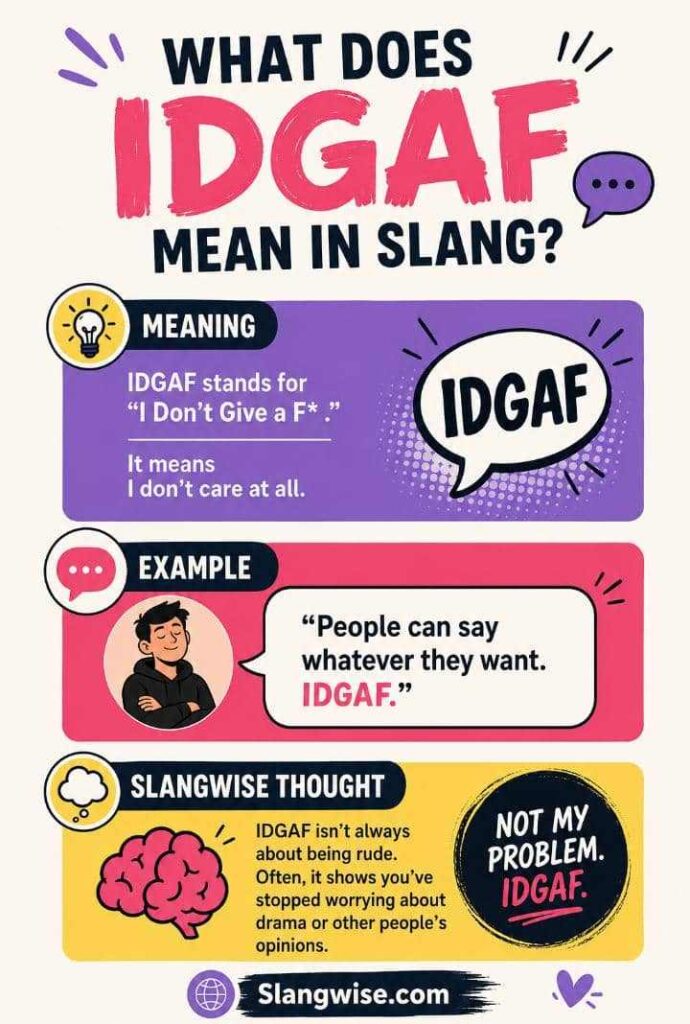
IDGAF is an internet slang acronym that means “I Don’t Give a F*.”** In everyday English, it simply means “I don’t care at all.”
People use it when they want to show that someone else’s opinion, criticism, or situation doesn’t affect them. Sometimes it’s a way of showing confidence and emotional independence.
Other times, it’s used to express frustration or complete exhaustion after dealing with something for too long.
The strength of the phrase comes from the swear word it contains, which makes it much stronger than simply saying, “I don’t care.”
EXPLORE: 250 Most Popular Internet Abbreviations of 2026 Explained for Easy Texting
Slangwise Thought
One thing I’ve noticed is that IDGAF isn’t always about being rude. In many conversations, people use it to show they’ve stopped worrying about unnecessary drama or other people’s opinions. The meaning often depends more on the speaker’s attitude than the words themselves.
Where Did IDGAF Come From?
Although the phrase “I don’t give a f***” has existed for decades in spoken English, the acronym IDGAF became popular with the rise of texting, internet forums, and social media.
As online conversations became faster, people started shortening common expressions into abbreviations. Just like LOL, BRB, and SMH, IDGAF became an easy way to express strong emotions without typing the full sentence.
Today, it’s widely used across TikTok captions, memes, gaming chats, music lyrics, and everyday online conversations.
How Is IDGAF Used?
The meaning changes slightly depending on the situation.
Sometimes it’s used to show confidence.
“People can say whatever they want. IDGAF.”
Sometimes it’s used after giving up on something.
“I studied all night and still failed. IDGAF anymore.”
It can also be playful among friends.
“Wear the weird outfit. IDGAF what anyone thinks.”
Or it may be used during an argument to show complete indifference.
“Say what you want. IDGAF.”
In each example, the common message is the same: the speaker has stopped caring about the outcome or another person’s opinion.
READ ALSO: Unc Meaning in Slang: The Tiny Word Gen Alpha Uses to Roast, Respect, and Call Out “Older Energy”
Examples of IDGAF in Conversations
Friend: “Everyone’s talking about your new haircut.”
You: “Honestly, IDGAF.”
Friend: “People might laugh if you post that.”
You: “IDGAF. I’m posting it anyway.”
Coworker: “The internet is criticizing your favorite team.”
Friend: “IDGAF. I still support them.”
Sibling: “Mom said your room is messy.”
You: “Yeah… IDGAF right now.”
Is IDGAF Always Rude?
Not necessarily.
Because it contains profanity, it is considered a strong expression. Whether it sounds offensive depends on who you’re talking to and the situation.
Among close friends, it may simply sound funny or relatable.
In serious conversations, workplaces, schools, or when speaking with someone you don’t know well, it can easily come across as disrespectful or aggressive.
That’s why context is everything.
When Should You Use IDGAF?
IDGAF works best in casual conversations such as:
- Text messages with friends
- Social media captions
- Memes
- Gaming chats
- Informal online discussions
You should generally avoid using it in:
- Job interviews
- Emails
- Workplace communication
- School assignments
- Conversations with teachers or clients
- Formal presentations
Choosing the right setting helps prevent misunderstandings.
READ ALSO: What Does GMFU Mean in Slang? The Viral Texting Acronym Everyone Keeps Using
Similar Slang Expressions
If you want to express the same idea with different levels of intensity, here are a few alternatives:
- IDC – I Don’t Care
- Whatever
- Not bothered
- Couldn’t care less
- So what?
- Zero cares given
These expressions range from polite to casual, while IDGAF sits at the stronger end of the spectrum.
Why Has IDGAF Become So Popular?
Modern internet culture encourages quick, emotional communication. Acronyms like IDGAF let people express strong feelings using just a few letters.
It’s also become popular because it represents a mindset that many people relate to: letting go of unnecessary opinions, ignoring online drama, and focusing on what truly matters.
Of course, there’s a difference between healthy confidence and simply dismissing everyone around you. The smartest communicators know when confidence is appropriate and when empathy matters more.
Conclusion
IDGAF is one of the internet’s boldest slang acronyms. It means “I Don’t Give a F*,”** and it’s used to express complete indifference or a refusal to let someone’s opinion affect you.
Like many slang terms, its meaning depends heavily on context. Used with friends, it can sound humorous, confident, or empowering. Used in professional or formal situations, however, it may seem disrespectful because of its strong language.
Understanding not just what IDGAF means, but also when to use it, will help you communicate more naturally while avoiding awkward situations online and offline.
Frequently Asked Questions
IDGAF stands for “I Don’t Give a F*.”** It means the speaker doesn’t care at all about something or someone.
It can be. Because it includes profanity, many people consider it a strong or offensive expression, especially in formal settings.
Not exactly. IDC simply means “I Don’t Care,” while IDGAF expresses the same idea much more strongly and emotionally.
It’s generally not recommended. Professional communication is usually better served with more respectful expressions like “I’m not concerned about that” or “It doesn’t matter to me.”
Table of Contents