
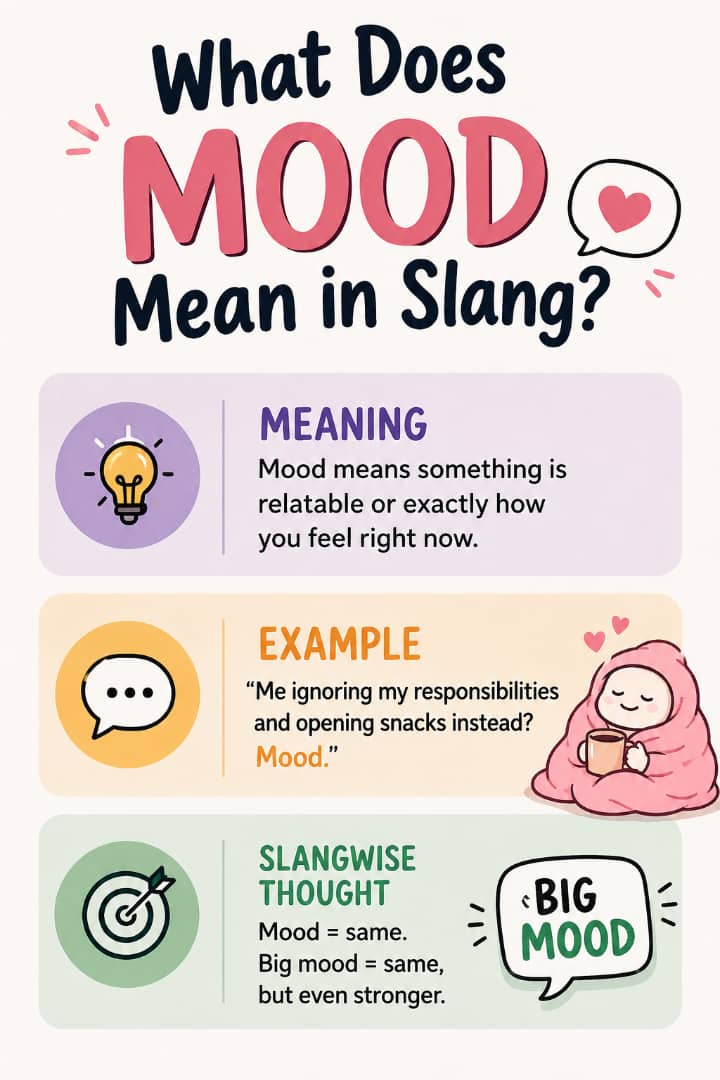
- Mood in slang usually means something is relatable or matches how you feel right now.
- People use it as a quick reaction to a meme, a post, a situation, or even a whole personality moment.
- The phrase big mood makes the feeling stronger and usually means “same” on an even deeper level.
- It is casual internet language, so it works best in texts, comments, captions, and relaxed conversations.
Mood Meaning in Slang
Have you ever seen someone reply to a meme, a photo, or a random everyday struggle with just one word, “mood”, and thought, “Okay… but what exactly does that mean?”
That reaction is very normal.
In slang, mood is a quick way of saying that something feels deeply relatable. It can mean “same,” “I feel that,” or “this is exactly me right now.” It is often used when a post, joke, attitude, or situation perfectly matches someone’s emotions or energy.
So if someone says, “That cat sleeping all day is such a mood,” they are not talking about a formal definition of mood. They are saying the image feels very relatable, maybe because they also want to lie around and do absolutely nothing.
In simple words, mood in slang means relatable energy. It is a tiny word with a surprisingly big personality.
READ ALSO: Dumb as a Brick Meaning in Slang: Why This Insult Sounds So Funny and So Brutal at the Same Time
Table of Contents
The Tiny Word That Means “Same” Without Saying It
When people use mood online, they are usually reacting to something that mirrors their own feelings or habits. It is one of those slang terms that works because it is short, easy, and emotionally precise. Instead of typing a full sentence, people can drop one word and let the vibe speak for itself.
For example, if someone posts a picture of themselves wrapped in a blanket with a tired face, another person might comment, “mood.” That means the picture captures a feeling the viewer knows very well. It is not just cute. It is emotionally spot on.
The interesting part is that mood can describe a specific feeling, a whole situation, or even a vibe that someone projects. That is why it shows up in so many different conversations.
It can also be used as a standalone reaction. On the internet, people often use it almost like a nod. No extra explanation needed. The word itself does the work.
Why Everyone Keeps Saying It
Mood became popular because it is expressive without being complicated. Online slang often spreads when a word can instantly capture a shared feeling, and this one does that really well. It is casual, flexible, and easy to repeat.
It also fits perfectly with meme culture. Memes often work by turning ordinary feelings into short reactions, and mood is basically the text version of a knowing look. It can be humorous, lazy, dramatic, or deeply relatable all at once.
Another reason it took off is that it feels emotionally honest. A lot of online language is about fast identification. People want to say, “I get this,” without writing a paragraph. Mood does exactly that.
And yes, it is often used by Gen Z, but it is not only for one age group. Anyone who spends time online can understand it once they see it in context.
If you have ever felt too tired, too hungry, too dramatic, or too emotionally aligned with a random meme, then you have already lived the mood lifestyle.
SEE ALSO: Niche Meaning in Slang: Why Everyone Is Suddenly Calling Things Weirdly Specific and Somehow Cool
When “Big Mood” Hits Even Harder
Once people started using mood, they also started saying big mood. That version raises the emotional volume. It usually means something is not just relatable, but extremely relatable. It can capture a moment, a feeling, or even a broader life sentiment.
For example, if someone says, “Wanting to cancel plans and stay in bed? Big mood.” they are saying that feeling is deeply shared and completely understandable. It is the internet’s way of saying, “I see you, and I am also you.”
What makes big mood so useful is that it can sound playful, sarcastic, tired, affectionate, or dramatic depending on the moment. That flexibility is a big part of why it became such a common reaction phrase.
So if mood is “same,” then big mood is basically “same, but emotionally louder.” That is the vibe in one sentence.
Mood in the Wild: Real Life Uses
You will usually see mood in posts, comments, captions, texts, and replies. It works especially well when someone wants to respond fast and keep the conversation casual.
Here are a few natural examples:
“Me ignoring my responsibilities and opening snacks instead? Mood.”
That means the person feels very seen by the situation.
“That rainy window picture is a mood.”
That means the image gives off a feeling that the speaker relates to.
“Honestly, wanting to sleep all day is my mood.”
That means the speaker is describing their own current emotional state in a playful way.
“This whole post is a mood.”
That means the post reflects a feeling or situation the speaker strongly connects with.
The key idea is simple. Mood is not really about the dictionary sense of atmosphere or emotional state. In slang, it is about resonance, identification, and instant recognition.
DISCOVER: 27 New Gen Alpha Slangs and Catchphrases That Blew Up in the Last 4 Months
How It Feels Different From Normal Mood
In standard English, mood can mean a person’s emotional state or the atmosphere of a place. In slang, though, the word becomes a reaction, a caption, or a shorthand for relatability. That difference is exactly what makes it so interesting online.
So when someone says “I am in a bad mood,” that is normal English. But when they say “mood” under a meme, that is internet language saying, “I relate to this deeply.”
This is one of the reasons slang can feel confusing at first. The same word can carry an ordinary meaning in one context and a totally different vibe in another. Once you know the context, though, it becomes much easier to read.
And honestly, that is part of the fun. Slang lets people say a lot with very little, and mood is one of the best examples of that.
When to Use Mood Without Overthinking It
Use mood when you want to respond to something relatable in a short, casual, modern way. It works best in texts, comments, DMs, captions, and other informal spaces where quick reactions make sense.
It is especially good when:
- you want to show agreement without typing a full sentence,
- you want to react to a meme or post that feels too real,
- you want to make a joke about your own feelings, or
- you want to sound current and conversational online.
If you want to say it in plain language, you could simply say “same” or “I relate to this.” But mood has a little more personality, which is why people keep using it.
That personality is the whole charm. It is short, expressive, and very easy to drop into a conversation without making it feel too serious.
EXPLORE: 68 Most Popular TikTok Slang Words of 2026 – Quick Meaning and Examples
Final Thoughts
Mood in slang is one of those tiny words that says a lot. It means something is relatable, emotionally accurate, or exactly how you feel in the moment. That is why it works so well on social media, in memes, and in everyday online conversation.
It can stand alone as a reaction, show agreement, or turn a random picture or moment into a shared feeling. And when people say big mood, they are making that connection even stronger.
So the next time you see someone reply with just one word, you will know what is happening. They are not talking about the weather, a room, or a formal emotional state. They are saying, quite simply, “I feel that.”
FAQs
Mood in slang means something is relatable or exactly how you feel. People use it to say “same” or “I feel that.”
Big mood is a stronger version of mood. It means something is extremely relatable or captures a feeling very well.
No. It is popular with Gen Z, but many people online use it in casual conversation once they understand the context.
Yes. It is very common in memes, captions, comments, and text messages because it is short and expressive.