
Internet slang keeps inventing creative ways to describe behaviors we all recognize but never had a proper name for. One of the funniest recent examples is hyperbole diet.
The phrase sounds intellectual at first, almost like a psychology term or a strange wellness routine. But once you understand it, you start seeing it everywhere online.
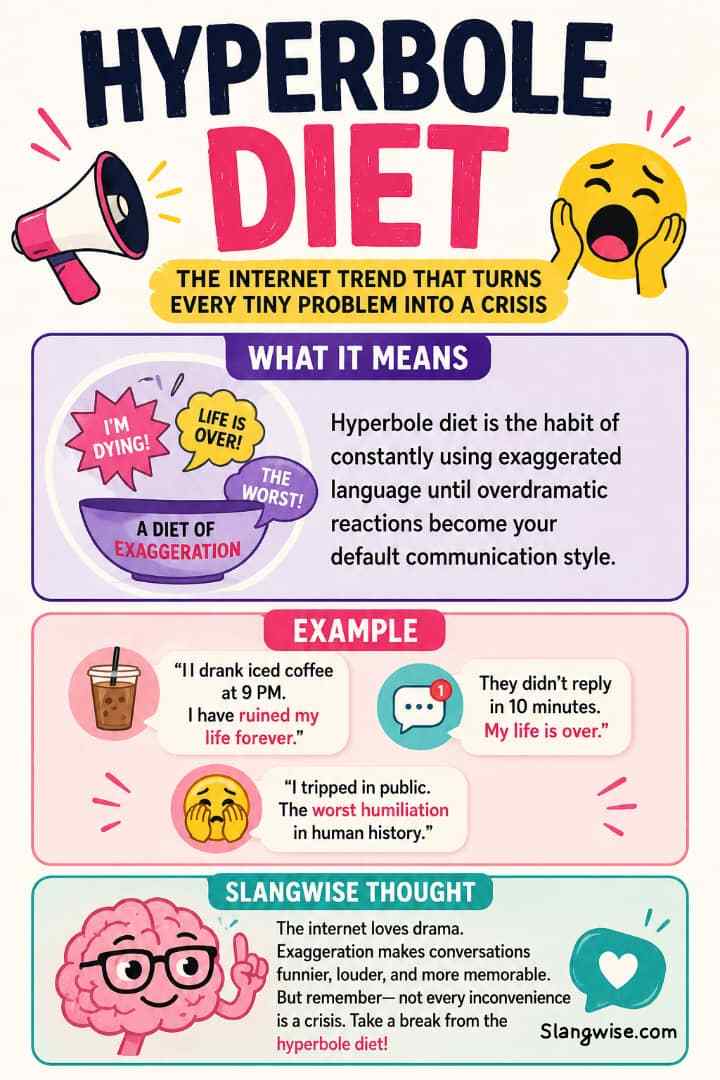
Someone misses one text and suddenly says their “life is literally over.”
A person drinks iced coffee at 9 PM and tweets, “I have destroyed my sleep schedule forever.”
A mildly embarrassing moment becomes “the worst humiliation in human history.”
That is hyperbole diet energy.
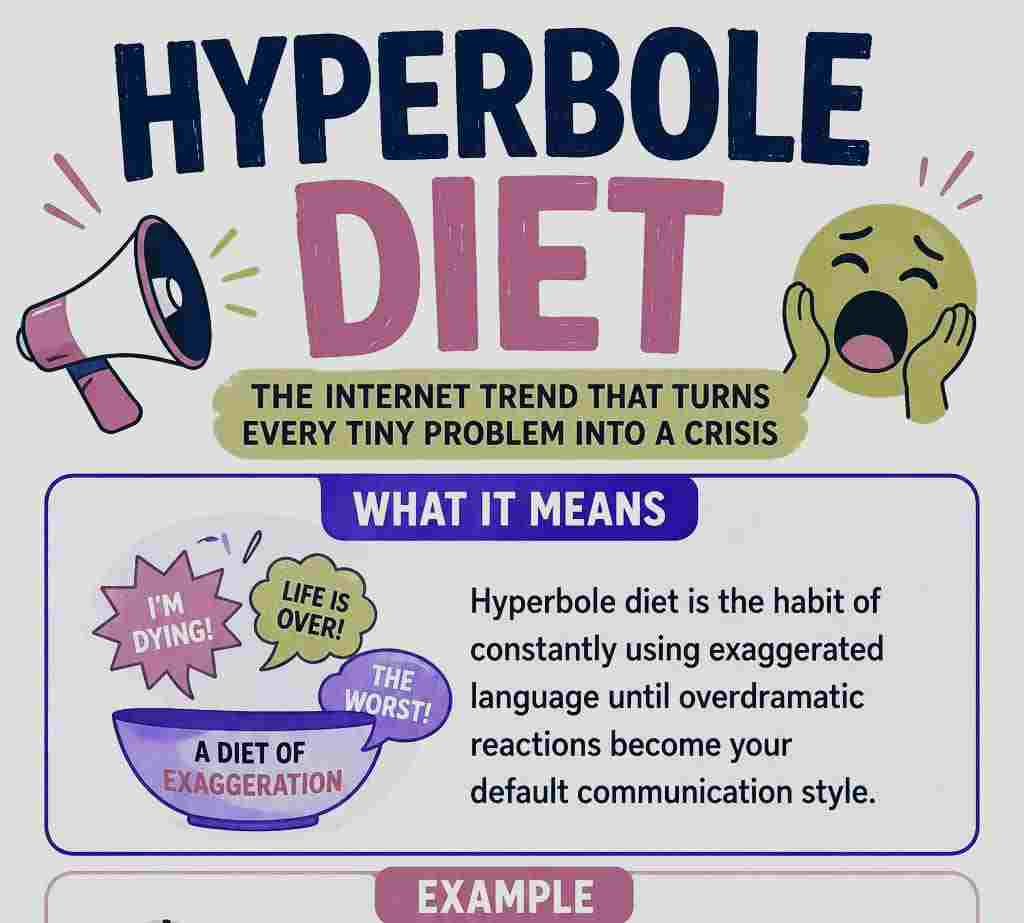
In slang, hyperbole diet describes the habit of constantly consuming, using, or speaking in exaggerated language until overdramatic reactions become your default communication style. It is basically living on a steady diet of exaggeration.
And honestly, once you notice it, you cannot unsee it.
Table of Contents
In a Nutshell
- Hyperbole diet means constantly using exaggerated language online or in conversations.
- It describes people who make everything sound bigger, deeper, worse, or more dramatic than it really is.
- The slang is usually used jokingly or sarcastically.
- It often appears in memes, TikTok captions, tweets, and group chats.
- Someone on a “hyperbole diet” may say things like “I am actually dying” over tiny inconveniences.
- The phrase pokes fun at internet culture’s obsession with dramatic reactions.
What Does Hyperbole Diet Mean in Slang?
In simple terms, a hyperbole diet is when someone has consumed so much exaggeration that they now communicate almost entirely through dramatic overstatements.
The word hyperbole means exaggeration that is not meant to be taken literally.
So when someone says:
“This homework assignment stole my soul.”
Nobody believes their soul was actually stolen.
It is just exaggerated expression.
Now combine that with the word “diet,” and the slang becomes a clever metaphor. The idea is that a person has been “feeding” on exaggerated internet language for so long that it affects the way they speak and react.
Think of it like emotional seasoning.
After enough exposure to dramatic tweets, TikTok storytelling, meme culture, stan culture, and viral reactions, ordinary situations start sounding cinematic.
A delayed food delivery becomes:
“This is my villain origin story.”
A bad haircut becomes:
“I will never recover from this.”
One thing I’ve noticed from watching internet culture evolve is that people are not always trying to deceive others with exaggeration. Most of the time, they are simply trying to make conversations funnier, more emotional, or more entertaining.
That is exactly where hyperbole diet comes in.
READ ALSO: Cuffing Season and Cuffing Lite Meaning: The Winter Dating Slang Everyone Is Whispering About
Slangwise Thought
Hyperbole diet is honestly one of the most accurate descriptions of modern internet communication.
People online rarely describe things normally anymore.
Everything is either:
- life changing
- traumatic
- iconic
- criminal
- devastating
- legendary
- the greatest thing ever created
The middle ground barely exists online anymore.
And the funny part is that most people fully understand the exaggeration. It becomes a shared performance where everyone knows the reaction is dramatic, but they join in anyway because it makes conversations more entertaining.
How Hyperbole Diet Is Used Online
The slang is usually used to call out someone who exaggerates constantly.
Sometimes it is playful. Sometimes it is self aware. Sometimes it is a light roast.
For example:
“You said the cafeteria pizza ruined your life. You are on a serious hyperbole diet.”
Or:
“TikTok has everybody on a hyperbole diet.”
You will also see people use it about themselves:
“I need to stop the hyperbole diet because why did I call a math quiz emotionally devastating?”
The phrase works because it captures something extremely modern about online speech.
The internet rewards intensity.
Extreme reactions get attention faster than calm ones.
Saying:
“This song is pretty good.”
does not hit as hard as:
“THIS SONG ASCENDED ME INTO ANOTHER DIMENSION.”
One sounds ordinary. The other sounds meme-worthy.
SEE ALSO: Double Tap Romance Meaning in Slang: The Tiny Instagram Habit That Can Feel Weirdly Personal
Why Internet Culture Loves Exaggeration
The real takeaway here is that exaggeration has become part of digital humor.
Online spaces move fast. People compete for reactions, engagement, and attention. Because of that, language becomes more dramatic over time.
A simple opinion turns into:
“I would defend this with my life.”
A minor inconvenience becomes:
“This is psychological warfare.”
A celebrity breakup becomes:
“Humanity may never recover.”
In my view, hyperbole diet became popular because people finally noticed how extreme internet language had become.
And honestly, it is not limited to Gen Z either.
Millennials, fandom communities, gamers, sports fans, TikTok creators, and even brands now speak in exaggerated online language constantly.
It is basically the internet’s native dialect at this point.
SEE ALSO: 40 Most Popular Internet Catchphrases of 2026 (Updated)
Signs Someone Is on a Hyperbole Diet
Here are some classic signs.
1. Every inconvenience becomes catastrophic
They lose WiFi for five minutes and act like civilization collapsed.
2. Every good experience becomes historic
A decent burger becomes:
“The greatest culinary experience of my lifetime.”
3. They use words like “literally” incorrectly
Example:
“I literally exploded from embarrassment.”
No you did not.
4. Their reactions sound like movie dialogue
Instead of:
“That was awkward.”
They say:
“I will carry this humiliation for generations.”
5. Calm descriptions feel boring to them
This is probably the biggest sign.
People on a hyperbole diet sometimes struggle to describe things normally because dramatic wording feels more expressive and entertaining.
Is Hyperbole Diet Negative?
Not always.
Most of the time, the phrase is used humorously rather than critically.
It is more of a playful observation about internet behavior.
Exaggeration can actually make conversations:
- funnier
- more creative
- more relatable
- more expressive
The problem only starts when everything becomes so exaggerated that genuine emotions lose meaning.
If every small annoyance is called “trauma,” then real serious experiences can start sounding watered down.
That is why some people use the phrase hyperbole diet as gentle criticism of online culture.
Still, most usage stays lighthearted.
READ ALSO: Big Anima Energy Meaning: The Niche Slang That Turns Softness Into Power
Examples of Hyperbole Diet in Conversations
Here are some realistic examples of how people use the slang.
Example 1
Friend 1:
“I failed one quiz. My academic career is finished.”
Friend 2:
“Please get off the hyperbole diet.”
Example 2
Post:
“Dropped my fries in the car. Worst day in recorded history.”
Comment:
“The hyperbole diet is getting dangerous.”
Example 3
Text:
“I waited ten minutes for a reply and started planning my funeral.”
This is peak hyperbole diet behavior.
Why the Phrase Feels So Relatable
What actually makes this slang work is that almost everybody participates in exaggeration online at some point.
Even people who claim they hate dramatic internet culture still say things like:
- “I am dead.”
- “This destroyed me.”
- “I cannot survive this.”
- “I am screaming.”
- “This cured my depression.”
Most people do not mean those phrases literally.
They are emotional shortcuts.
Hyperbole diet simply gives a name to the habit of constantly speaking that way.
And honestly, that is why the slang spread so quickly. It feels instantly recognizable.
DISCOVER: 80 Most Popular Gen Alpha Slang Words You’ll Hear In 2026 (updated)
Conclusion
Hyperbole diet is one of those internet slang terms that sounds oddly specific but becomes hilarious once you understand it.
It describes the modern habit of overusing exaggeration until every reaction sounds dramatic, cinematic, or emotionally explosive.
Whether someone is calling a sandwich “life changing” or acting like a missed bus ruined their destiny, hyperbole diet captures the internet’s love for theatrical communication perfectly.
The truth is, online culture thrives on exaggeration because it makes conversations more entertaining, expressive, and meme friendly.
So the next time somebody says:
“This minor inconvenience has permanently altered the course of my existence,”
you will know exactly what happened.
They have been consuming way too much hyperbole diet.
Frequently Asked Questions
Hyperbole diet is slang for constantly using exaggerated language and overdramatic reactions online or in conversations.
No. It is mostly a humorous internet slang phrase used jokingly or sarcastically.
People use it to describe someone who exaggerates everything for humor, attention, or dramatic effect.
Yes. The phrase fits perfectly with meme culture, TikTok humor, dramatic captions, and exaggerated online reactions.