
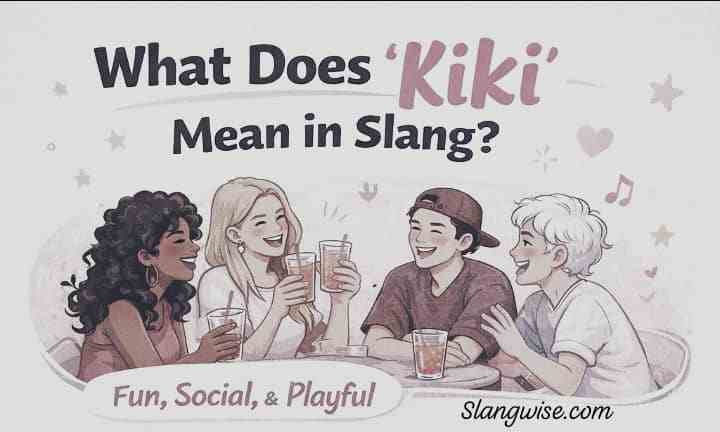
Have you ever seen the word kiki in a chat, on social media, or in a drag conversation and wondered why people use it like it means something bigger than just a cute little word? You are not imagining things. Kiki has personality. It has history. It has a playful energy that makes it stand out the moment you hear it.
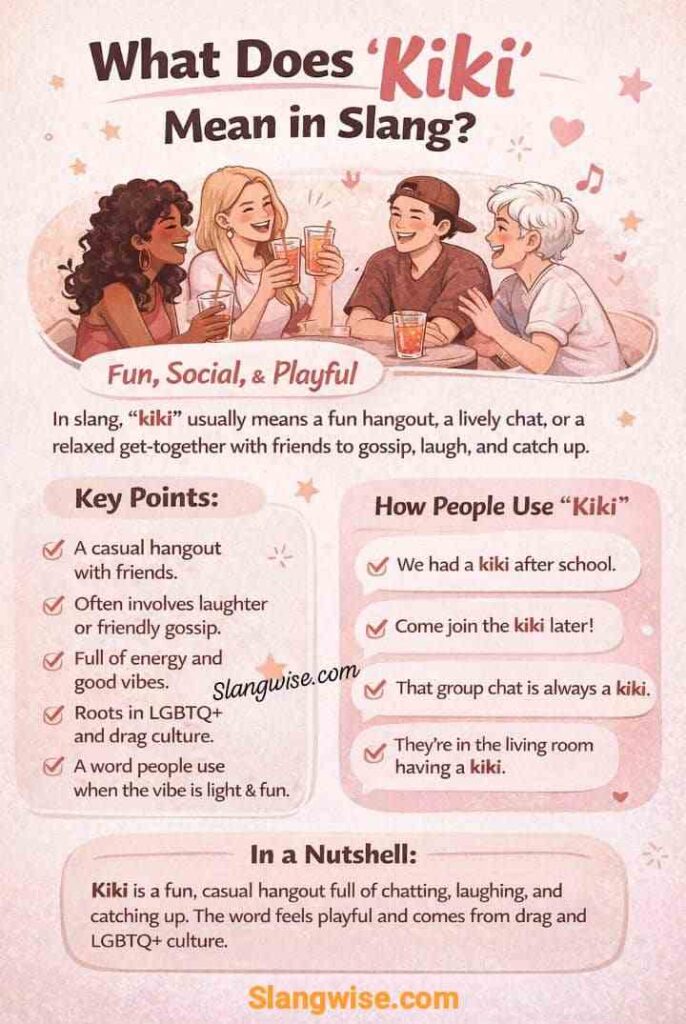
In everyday slang, kiki usually means a fun hangout, a lively chat, or a relaxed get together where people laugh, gossip, catch up, and enjoy each other’s company.
Depending on the setting, it can also carry a deeper connection to drag culture and LGBTQ+ communities, which is part of what gives the word its special flavor.
In a Nutshell
- Kiki usually means a fun, casual hangout or chat.
- It often involves laughter, gossip, tea, or friendly conversation.
- The word has strong roots in drag culture and LGBTQ+ communities.
- It feels playful, social, and a little dramatic in a fun way.
- People use it when they want to describe a moment that feels relaxed and full of personality.
What Does Kiki Mean?
The simplest way to understand kiki is to think of a casual social moment. It is the kind of word you use when people are talking, laughing, catching up, and enjoying the vibe. It is not stiff or formal. It feels light, warm, and chatty.
If someone says, “We had a kiki last night,” they are usually talking about a relaxed hangout with friends. Maybe they talked for hours. Maybe they shared stories. Maybe they exchanged a little gossip. The word gives the whole moment a fun, lively tone.
That is part of why people like it so much. It does not just describe an event. It paints a mood.
Where Did Kiki Come From?
Kiki has roots in queer and drag culture, especially in Black and Latinx LGBTQ+ communities. Over time, it moved beyond those spaces and started showing up more widely in pop culture and online slang.
That history matters because slang often grows inside communities first before the wider world catches on. In the case of kiki, the word picked up meaning through community, creativity, and performance culture. It became more than a random fun word. It became part of a larger language of identity and expression.
So when people use it today, they are not just using a trendy sound. They are using a word with a story behind it.
DISCOVER: 35 New Slang Words Taking Over the Internet Right Now (2026 Watchlist)
How People Use Kiki in Real Life
The most common way people use kiki is to describe a friendly hangout or a conversation that feels easy and fun. It often shows up in everyday speech when people are talking about catching up, joking around, or sharing tea.
Here are a few natural examples:
- We are having a kiki at my place tonight.
- That group chat is always a kiki.
- We did not do much, just had a kiki and caught up.
- Come join the kiki, everybody is outside talking.
In each case, the word adds a playful tone. It makes the moment sound social, relaxed, and full of energy. That is what makes it different from a plain word like chat or hangout.
Kiki vs. Regular Chat
A regular chat is just conversation. A kiki feels like conversation with extra spark. There is usually laughter, personality, and a little bit of light drama in the mix. It is not about seriousness. It is about connection, fun, and vibe.
Think of it this way. If two people are discussing schoolwork, that is a chat. If a group of friends are talking about life, joking about everything, and sharing all the latest tea, that is much more likely to be called a kiki.
That extra energy is what gives the word its charm.
DISCOVER: Flow State Meaning: The Strange Mental Zone That Makes Everything Feel Easy
Can Kiki Mean Gossip?
Yes, it can. Sometimes kiki does involve gossip or tea. But it does not always mean something messy or negative. In many cases, it simply refers to friendly conversation where people are laughing, talking freely, and sharing stories.
So if someone says, “We were just kikiing,” they might mean they were chatting about life, catching up with friends, or exchanging a little harmless gossip. The feeling is usually light, social, and fun.
The tone matters a lot. A kiki can be playful gossip, but it can also just be a warm, easygoing conversation.
Why Did Kiki Become So Popular?
Kiki became popular because it is catchy, colorful, and easy to use. Words like that spread quickly, especially when they appear in music, TV, drag performances, and online conversation. Once people hear a word that sounds fun, they start repeating it.
That is exactly what happened here. The word moved from specific communities into broader pop culture because it was memorable and full of personality. It did not just describe a hangout. It made the hangout sound cooler.
That kind of energy is what helps slang survive.
What Does Kiki Mean in Drag Culture?
In drag culture, kiki carries even more weight. It is not just a word for hanging out. It is tied to a community that values expression, identity, performance, and style. That gives the word a deeper cultural layer.
In that setting, kiki feels like part of a larger language of fun, identity, and connection. It belongs to a space where humor, confidence, and community all matter. That is why the word has lasted and spread so widely.
DISCOVER: Hunty Meaning in Slang: Why This Tiny Word Sounds So Bold
How to Know When Someone Means Kiki
The easiest way to tell is by looking at the context. If the sentence is about hanging out, chatting, laughing, or catching up, then kiki probably means a fun social moment. If the conversation is about drag, ballroom, or LGBTQ+ spaces, the word may also carry its cultural meaning from those communities.
A simple rule to remember is this: when kiki shows up in slang, think fun, social, chatty, and playful. It almost always brings a lively mood with it.
Should You Use Kiki?
Yes, but context matters. Because the word comes from communities with a strong cultural history, it is best used with awareness and respect. That does not mean you cannot use it. It just means you should understand where it comes from and when it fits naturally.
In casual conversation with friends who understand the word, kiki can sound fun and natural. In formal settings, though, it may feel out of place. So the safest move is to use it when the vibe is relaxed and the people around you are comfortable with that style of speech.
Slangwise Thought
One thing I have noticed about words like kiki is that they stick because they do more than name something. They create a feeling. When you say kiki, you are not just saying “hangout.” You are saying the moment has warmth, personality, and a little bit of sparkle.
That is what makes slang powerful. It gives language texture. It helps people describe a mood in a way that feels alive, not flat. And honestly, that is why a word like kiki keeps showing up again and again.
READ ALSO: So Real For That Meaning: The Tiny Slang Phrase That Says Way More Than You Think
Easy Examples of Kiki in Sentences
Here are some easy examples you can use to get the feel of it:
- We had a kiki after school.
- The girls are in the kitchen having a kiki.
- Come join the kiki, you are missing all the fun.
- That was not a meeting, that was a full kiki.
Notice how the word makes each sentence feel more colorful and relaxed. That playful tone is a big part of its appeal.
Conclusion
Kiki is more than just a cute slang word. It usually means a fun hangout, a lively chat, or a gossip filled get together with friends. It also has deep roots in drag and LGBTQ+ culture, which gives it even more meaning. When you hear it, think of a moment that is social, playful, and full of personality.
READ ALSO: 35 New Slang Words Taking Over the Internet Right Now (2026 Watchlist)
Frequently Asked Questions
Think of kiki as a fun, social moment filled with chatting, laughing, and catching up. If the vibe feels warm and playful, kiki probably fits.
Yes, you can use it in casual conversation when the tone is relaxed and playful. It works best with people who understand the word and the style behind it.
Kiki has roots in drag culture and LGBTQ+ communities, especially Black and Latinx queer spaces. It later became more widely known through pop culture and online use.
Not exactly. Kiki can include gossip, but it can also simply mean friendly conversation, catching up, or joking around with people you enjoy being with.
In slang, kiki usually means a fun hangout, a lively chat, or a casual get together with friends. It often includes laughter, gossip, or playful conversation.
Table of Contents