
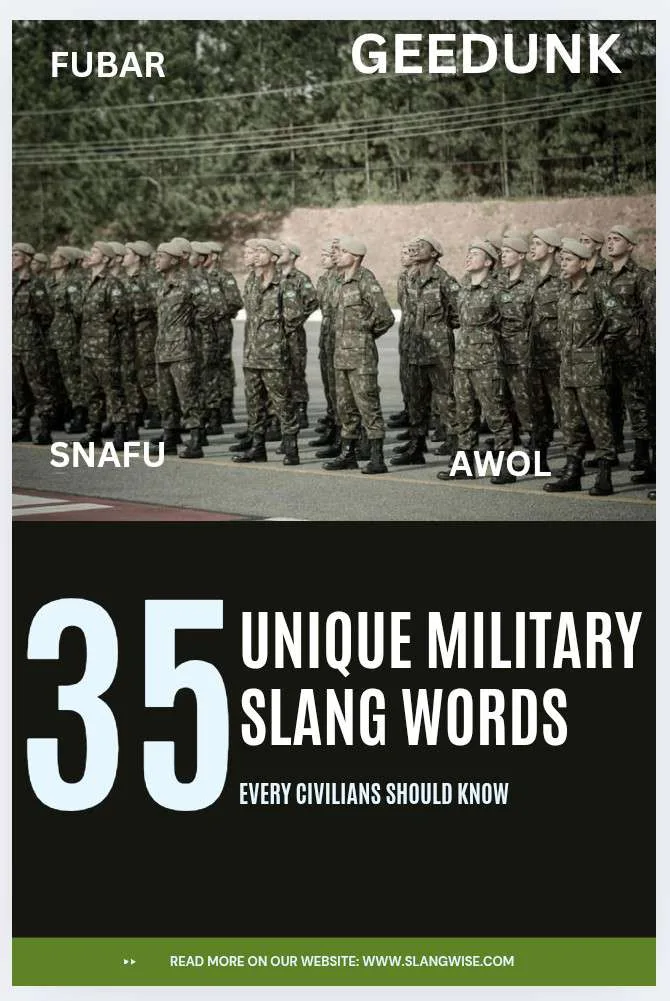
If there’s one thing I’ve learned about the military, it’s that its language is a world of its own. It’s creative, hilarious, and deeply reflective of the bond shared by service members.
Military slang isn’t just jargon, it’s a lifeline of wit and camaraderie that gets people through everything from mundane routines to the most stressful situations.
When I first heard some of these terms, I couldn’t help but marvel at their practicality and humor.
So, here’s my updated list of 37 military slang words that offer a raw, unfiltered glimpse into life in the armed forces. Some are funny, some are serious, but all of them tell a story.

Table of Contents
But First, what is military slang?
Think of it as the military’s unofficial playbook, part toolbox, part inside joke. It’s the shorthand troops invent to talk faster under pressure (“SITREP, stat!”), but also to laugh when things go sideways.
Need to vent about the “Chair Force” (Air Force teasing)? Or hype up a buddy with “Hooah!” (Armor-speak for heck yeah)? This slang’s the glue that turns strangers into a squad.
Some Military slangs, are proof that even in the toughest jobs, humor and creativity keep people going, one salty acronym at a time.
Perfect! Let’s make this post conversational, curiosity-driven, and interactive. I’ll update the title, rewrite the first 18 military slang explanations in 35–40 words each, and make it engaging. The additional 3 terms for the final list of 40 can be added afterward. Here’s the first part:
What are these 40 Military Slangs
1. FUBAR
Short for “Fouled Up Beyond All Recognition,” FUBAR perfectly sums up situations gone completely sideways. Troops use it with a mix of frustration and dark humor, acknowledging that some chaos is just beyond fixing, no matter how hard you try.
2. SNAFU
“Situation Normal: All Fouled Up” is the military’s way of shrugging at predictable disorder. It’s humor and reality rolled into one, capturing moments when nothing works as planned, yet everyone keeps moving because this is just “how things are.”
3. AWOL
Absent Without Leave is serious business. If someone goes AWOL, they’ve skipped their post without permission, risking consequences. Outside the military, it’s entered everyday language to describe anyone who disappears unexpectedly or flakes out on commitments.
4. Geedunk
The snack bar or the junk food you grab between shifts is called geedunk. It’s the little reward that keeps spirits up during monotonous or stressful days. In the field, even candy or chips can feel like a morale booster.
5. Blue Falcon
Nobody wants this title. A Blue Falcon, or “Buddy F***er,” is the colleague who betrays the squad—skips duty, tattles, or leaves others in the lurch. It’s a blunt, funny way to call out anyone who breaks trust in the ranks.
6. Whiskey Tango Foxtrot (WTF)
Instead of swearing openly, troops use the phonetic alphabet: Whiskey Tango Foxtrot. It’s the military-safe way to express shock, disbelief, or confusion. Perfect for those moments when you just stare at a situation and think, “Seriously, what now?”
7. Hooah / Oorah / Hooyah
Every branch has its battle cry. Army says Hooah, Marines shout Oorah, Navy SEALs yell Hooyah. It’s more than enthusiasm; it’s solidarity, energy, and mutual motivation, letting comrades know you’re ready, alert, and fully committed.
8. Ground Pounder
Infantry troops spend most of their time on foot, moving through rough terrain with heavy gear. “Ground Pounder” is a nickname that acknowledges the grit and endurance of these soldiers, literally pounding the earth to accomplish the mission.
9. Chairborne Ranger
The desk warriors get their own playful label: Chairborne Ranger. While they might not see the front lines, their work keeps operations smooth. It’s teasing with respect, highlighting that not all heroes carry rifles: some carry paperwork.
Discover the coolest slang words that made it from streets to dictionaries, evolving language and culture. Learn the origins and meanings!
10. Mandatory Fun
When morale activities are required, they’re ironically called “Mandatory Fun.” From team-building events to awkwardly cheerful gatherings, the term captures that blend of forced participation and lighthearted acknowledgment that even fun sometimes has rules.
11. Boot
Fresh recruits are “boots.” It’s not an insult, but a rite of passage. Newbies wear this label as they learn the ropes, showing that everyone starts at the beginning, struggling, fumbling, and slowly earning respect in the ranks.
12. Dustoff
Dustoff refers to medical evacuation by helicopter. It’s a high-stakes mission, but the term captures the urgency and action with brevity. When lives are on the line, a dustoff isn’t just transport, it’s hope arriving fast.
13. Pogey Bait
Snacks or small treats are called pogey bait. Sharing candy or a favorite snack during deployment instantly elevates your status. It’s comfort, a morale boost, and a reminder that even tiny pleasures can matter greatly in tough circumstances.
14. Soup Sandwich
A total disaster gets nicknamed a “soup sandwich.” It’s a visual metaphor: trying to put soup between bread and failing spectacularly. The term combines humor with honesty, admitting when something is utterly chaotic and hopelessly messy.
15. Pop Smoke
“Pop smoke” means signaling a quick exit or calling for extraction, originally via smoke grenades. Outside combat, it’s slang for leaving a situation fast. It conveys urgency and adaptability, turning a literal military tactic into casual language.
16. Bravo Zulu (BZ)
In the Navy, “Bravo Zulu” is the universal way to say “well done.” From a precise job to extraordinary effort, it’s praise in shorthand, a morale booster, and a reminder that recognition fuels performance and camaraderie alike.
Master 55 essential business terms every professional must know. Upgrade your communication, boost confidence, and speak the language of success with ease.
17. Scuttlebutt
Originally a water fountain, scuttlebutt now means gossip or rumor. It’s where the latest news circulates, mixing fact, fiction, and humor. Troops share information, bond, and vent, making scuttlebutt both informative and entertaining in daily life.
18. Big Green Weenie
The “Big Green Weenie” represents bureaucracy that feels deliberately obstructive. When policies, paperwork, or red tape seem designed to frustrate, troops vent with this term. It’s a way to laugh at systemic challenges while keeping morale intact.
19. No Joy
Pilots use “no joy” when they can’t spot the target or complete a mission. Outside aviation, it’s shorthand for “nothing worked” or “no luck.” It’s a quick, honest admission that sometimes, even the best efforts fall short.
20. Snake Eater
A hardcore nickname for special forces operatives, “Snake Eater” highlights extreme survival skills and resilience. These soldiers endure jungle training, eat what they find, and face tough conditions. The term conveys respect for anyone who can thrive in the wild.
21. Deadstick
Landing a plane without engine power is called a “deadstick” landing. It’s tense, nerve-wracking, and demands total skill. Pilots use it to signal that the situation is critical, requiring calm precision and complete focus under pressure.
22. Kill Hat
In Marine boot camp, the Kill Hat is the drill instructor who pushes recruits to the edge. Intimidating but respected, they’re the ones forging toughness, discipline, and mental resilience, earning fear, obedience, and grudging admiration in equal measure.
23. Light the Candle
“Light the candle” means launching a mission, often aerial. It’s a dynamic, action-packed phrase that conveys readiness and initiative. Troops say it to signal, “We’re moving,” capturing both anticipation and the start of something serious.
24. Chow
Food is life, and in the military, it’s simply “chow.” Whether it’s breakfast, lunch, or dinner, calling out “chow time” brings energy, relief, and unity. Even the most mundane meals can feel like a high point in a grueling day.
25. Battle Rattle
Fully geared up for combat: helmet, vest, weapons; is “battle rattle.” The clanking, rustling, and overall presence of gear defines it. It’s a phrase that signals readiness, preparation, and the serious business of going into a high-stakes environment.
26. Turret Monkey
The soldier manning a vehicle’s turret earns this playful nickname. It’s a tough, critical role requiring vigilance and dexterity. The humor in the term lightens the intense responsibility, acknowledging skill while keeping morale high.
27. Cluster
When everything goes wrong at once, it’s a “cluster.” Disorder, confusion, and chaos merge into one term. It’s a blunt, humorous way for troops to vent frustration, accept the mess, and mentally prepare to untangle whatever just happened.
28. Mickey Mouse Gear
Equipment that’s poorly designed, outdated, or overly complicated is “Mickey Mouse Gear.” Troops use it to laugh at frustrations, complain without drama, and bond over shared experiences with tools that just don’t work as intended.
80 Most Popular Gen Alpha Slang Words You’ll Hear In 2026 (updated)
29. Green Side / Blue Side
Navy Corpsmen use this to distinguish their duties: “green side” for working with Marines, “blue side” for hospital or ship duty. It’s practical shorthand that highlights drastically different work environments while keeping communication simple and precise.
30. Zero Dark Thirty
Any absurdly early morning hour earns this nickname. From pre-dawn wake-ups to operations that seem almost cruelly timed, it conveys exhaustion and determination. The phrase dramatizes mornings that test patience, resolve, and caffeine intake.
31. BOHICA
“Bend Over, Here It Comes Again” perfectly summarizes recurring nonsense. Whether it’s endless paperwork, unexpected orders, or frustrating routines, BOHICA mixes humor with resignation, letting troops brace for repetitive challenges without losing morale.
32. Fobbit
A “Fobbit” is someone who never leaves the forward operating base. Safe, cautious, or just cautious, they stick close to comfort zones while others venture out. It’s a playful jab highlighting the difference between risk-takers and base-bound personnel.
33. High Speed, Low Drag
This term describes anything or anyone streamlined and efficient. Whether it’s gear that works flawlessly or a teammate always ahead of the curve, “high speed, low drag” praises precision, readiness, and competence with a dash of admiration.
34. Squared Away
Soldiers who are organized, disciplined, and always on point are “squared away.” From crisp uniforms to meticulous barracks, the term conveys professionalism, pride, and reliability, signaling that this person or team is fully prepared for anything.
35. Rack
The ultimate relief after grueling duty is hitting the “rack.” Military slang for bed, it represents rest, recovery, and reprieve. No matter how exhausting the day, collapsing onto your rack is one of the simplest and sweetest victories.
36. Latrine Queen
The troop who spends suspiciously long periods in the latrine earns this humorous title. It’s a light-hearted way to poke fun at habits while acknowledging that sometimes, everyone needs their little private break from the chaos.
37. G.I. Party
When morale needs a spark, someone calls a G.I. Party. It’s impromptu fun: storytelling, drinks, laughs, and camaraderie. These spontaneous events are a reminder that even in strict routines, soldiers find moments to celebrate and connect.
38. POG
“Person Other than Grunt” is a playful jab at non-combat personnel. Medics, clerks, or admin staff earn the label, which carries teasing but respect. After all, support roles keep the mission running, and POGs often save the front-line troops indirectly.
39. Jody
Jody is the mythical guy back home who “steals” your partner while you’re deployed. Troops sing cadence songs about him to vent and joke, turning frustration into laughter and bonding through shared dark humor about long deployments.
40. Thumper
The M79 grenade launcher is nicknamed the “thumper” for the loud, distinctive sound it makes. It’s simple, effective, and memorable. The term conveys respect for the weapon and its operator while keeping military communication punchy and clear.
The Ultimate List of 250 Most Popular Internet Slang Words of 2026: Decode 250 of the most popular internet slang words in one easy guide. Perfect for TikTok, chats, memes, and everyday texting. Boost your online fluency fast.
Concluding Thought
Military slang underscores bonds formed under pressure, turning chaos into shared humor and streamlined action. Each term reflects a distinct facet of service life, from the urgent call of a “Dustoff” to the spontaneous relief of a “G.I. Party.”
These 37 Military slangs offers civilians a window into the unique culture of the armed forces and gives veterans a moment of recognition.
Additional submissions of favorite terms are welcome in the comments.
Sources:
- Glossary – Military Jargon My Future
- Military cold Words for writers at nairaland.
FAQs: Military Slang Decoded
A “thumper” is the M79 grenade launcher, a single-shot weapon loved (or cursed) for its distinctive thump when fired. The name’s as straightforward as the tool: no fancy tech, just brute effectiveness.
“Roger” or “Roger that.” Borrowed from the phonetic alphabet (where “R” = “Roger”), it’s the universal shorthand for “got it” or “message received.” No frills, no confusion, just clarity, even in chaos.
Jody’s the imaginary guy stealing your partner back home while you’re deployed. He’s the star of cadence songs during marches, embodying the dark humor troops use to cope with missing their lives outside the wire.
POG = “Person Other than Grunt.” It’s a playful dig at non-combat roles (like medics or clerks), but don’t mistake it for disrespect. Even POGs wear it as a badge of honor, after all, someone’s gotta keep the machine running.
“Boot” refers to fresh-out-of-training recruits, still gleaming with that new-uniform polish. It’s not a slur, just a nod to the humbling journey every soldier, sailor, or Marine starts with.
Sort of! A military “landline” is a secure, hardwired comms system, think old-school telephones but way more encrypted. When radios fail or ops go silent, the landline’s your lifeline.
It’s a marching chant that turns sore legs into laughter. Troops belt out rhythmic verses about Jody stealing their girl, their car, or their Netflix password. The beat keeps everyone in step; the jokes keep morale from cratering.