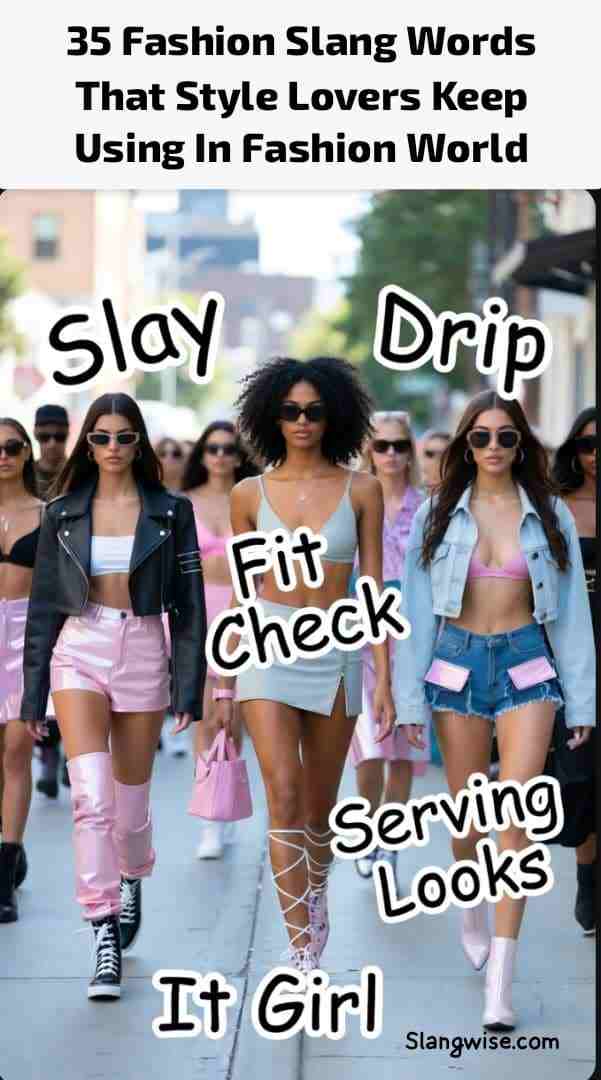
Fashion slang is one of those internet languages that sneaks up on you. One day someone is saying “nice outfit,” and the next day they are saying “your fit ate,” “the drip is 100,” or “it is giving Y2K with a clean girl twist.”
This kind of language lives everywhere now, especially in captions, outfit videos, shopping hauls, style comments, and fashion TikToks. Current slang glossaries and fashion trend explainers show that these words are still very active in 2025 and 2026, not just leftover internet noise from a few years ago.
What makes fashion slang so fun is that it is both practical and playful. It helps people describe an outfit quickly, but it also gives the outfit personality.
A plain sentence like “that jacket looks good” becomes much more memorable when someone says “that jacket is fire” or “that coat is serving.” Social media language guides and fashion references keep showing the same pattern: style talk is now part vibe, part identity, and part community code.
And honestly, that is why this language spreads so fast. Fashion is visual, social media is fast, and slang is built for speed. Put all three together, and you get a style vocabulary that can say a lot in just one or two words.
Table of Contents
In a nutshell
- Fashion slang is the short, expressive language style lovers use to praise, describe, or judge outfits, aesthetics, and style identities.
- Some words focus on the outfit itself, like drip, fit, fit check, OOTD, and statement piece, while others focus on the reaction, like slay, ate, fire, snatched, and gagged.
- A second group describes aesthetics and fashion identities, such as Y2K, clean girl aesthetic, cottagecore, preppy, grunge, minimalist, maximalist, and monochrome.
- The last group is more about social position and culture, like it girl, hypebeast, main character energy, mid, basic, and glow up. Those words tell you not just what someone is wearing, but how the outfit feels in the larger style conversation.
Slangwise Thought
The real charm of fashion slang is that it makes style feel conversational. It takes clothing out of the “fashion expert only” zone and turns it into something everyone can talk about.
You do not need to be at Fashion Week to say a look is serving, or to call a simple outfit clean, or to say someone’s glow up is undeniable. That is why these words travel so easily across age groups, platforms, and fashion levels.
From a language point of view, fashion slang works because it compresses meaning. One word can carry style, mood, confidence, and social approval all at the same time.
From a culture point of view, it also reflects how fashion now lives online. Aesthetic language, trend language, and creator language keep blending together, so the words people use to describe clothes are also the words they use to describe status, energy, and belonging.
35 fashion slangs style lovers keep using
1. Drip
Drip is one of the most common ways to talk about style right now. In fashion slang, it means your outfit, shoes, accessories, and overall look are stylish, eye catching, and on point.
It is slang for a look or style that is extremely fashionable, and recent teen slang guides still use it in exactly that way. So when someone says, “Love the drip today,” they are not talking about water at all. They are complimenting your whole look.
2. Fit
Fit is short for outfit, and it is one of the easiest style words to understand once you hear it in context. People say, “Check the fit,” “Your fit is cute,” or “That fit is clean,” all meaning the same thing, which is that the outfit looks good. The slang use has turned it into a fast fashion shorthand.
3. Fit check
Fit check is the social media version of “show me the outfit.” It usually means someone is filming or posting a head to toe look so people can see the full styling moment. If you have ever watched a mirror video before someone leaves the house, you already know the vibe.
4. OOTD
OOTD stands for Outfit of the Day. It is still everywhere because it is simple, visual, and useful for fashion posts, daily styling content, and outfit inspiration. Even though it is older internet shorthand, it has not gone out of style because fashion creators still use it to label the look they are wearing right now.
5. Dripped out
Dripped out usually means fully styled and looking extra fashionable from head to toe. It is basically drip turned up louder. If drip means the style is strong, dripped out means there is no missing piece in the outfit and the whole look is working hard for the camera.
6. Slay
Slay is one of the most positive words in fashion slang. It means to look amazing, pull off a look confidently, or succeed in a way that gets attention. In a fashion context, “You slayed that look” is basically a stylish standing ovation.
7. Ate
Ate means someone did something so well that the result feels flawless. In fashion talk, people use it for an outfit that looks perfect, a styling choice that works, or a photo that lands exactly right. “She ate” says a lot in very little space.
8. Devoured
Devoured is a louder, more dramatic cousin of ate. It suggests that the outfit was not just good, it completely dominated the moment. In style conversations, creators often use it when someone’s look feels polished, confident, and impossible to ignore.
9. Served
Served means delivered a look with power, confidence, or iconic energy. Fashion language has long liked the idea of “serving” a look, and current style writing still treats fashion as something that can be delivered with intention. When someone says “She served,” they are saying the outfit did exactly what it needed to do and possibly more.
10. It is giving
It is giving is one of the best fashion slang tools ever invented, because it describes the vibe of a look instead of just the object itself. A dress can be “giving rich auntie,” “giving Y2K,” or “giving office chic,” which makes the phrase very flexible. It works because fashion is not only about what is worn, but also about what the outfit suggests.
11. Fire
Fire is a quick way to say something looks excellent. In fashion slang it can describe a shoe drop, a jacket, a fit, or even an entire mood board. Because the word already carries heat, energy, and intensity in standard English, it slides naturally into style praise.
12. Clean
Clean in fashion slang means neat, sharp, simple, and well put together. A clean fit is not messy or overcomplicated, and that is exactly why people use the word when they want to praise an outfit that feels balanced. The idea fits the broader fashion sense of style as something polished and attractive.
13. Snatched
Snatched usually means the look is so good it feels sharp, fitted, or impossibly polished. In fashion and beauty circles, it often points to a silhouette or styling choice that looks especially intentional. It is about the style looking so good that people react instantly.
14. Gagged
Gagged means shocked in a good way, usually because the look is so strong that it leaves people speechless. Fashion creators use it when an outfit or reveal is dramatic enough to feel like a moment. It is less about logic and more about reaction, which is exactly why it fits social media styling culture so well.
15. Aesthetic
Aesthetic is one of the biggest fashion words of the whole internet era. It means the particular style of appearance that something or someone has, and fashion people use it constantly to describe the overall visual vibe of a look, profile, or brand. That is why people talk about a cottagecore aesthetic, a clean girl aesthetic, a grunge aesthetic, or a Y2K aesthetic. It is a very small word that carries a very big visual idea.
16. Core
Core is the ending that turns a style into a whole identity. When people say cottagecore, preppy core, or clean girl core, they are naming a style universe, not just a single outfit. These style identities have become recognized cultural shorthand, especially when social media turns clothing into a named aesthetic.
17. Clean girl aesthetic
Clean girl aesthetic is a major example of how fashion slang and visual culture blend together. It is a trend centered on self care, minimalist fashion, natural makeup, and organized lifestyle, which is why people use the phrase to describe polished, low effort looking style. It usually suggests smooth hair, neat basics, soft colors, and an overall put together vibe.
18. Y2K
Y2K started as a term for the Year 2000 computer issue, but in fashion it now means the early 2000s look that has come back into style. In fashion slang, Y2K usually means shiny fabrics, baby tees, low rise silhouettes, and that early internet era mood.
19. Vintage
Vintage is not new, but it is still a huge style word. In fashion talk it usually refers to older clothing, older influences, or pieces that look like they came from another era. Because trend cycles keep recycling old looks, vintage remains one of the easiest ways to signal taste, nostalgia, and style knowledge all at once.
20. Grunge
Grunge describes a darker, messier, more rebellious style mood. In fashion slang it can mean plaid, boots, layered basics, distressed textures, and a slightly undone look that feels cool on purpose. Style writing still uses it as a recognizable aesthetic label, which is why it keeps showing up in outfit descriptions and trend roundups.
21. Maximalist
Maximalist is for the people who like more color, more layers, more texture, and more visual drama. It is the opposite of stripped back minimalism, and it has become a major way to describe expressive fashion that refuses to be quiet. When someone says a look is maximalist, they usually mean it in a celebratory way, not as criticism.
22. Maximal drip
Maximal drip is basically drip turned into a louder, more layered statement. It suggests that every part of the outfit is bringing something extra, from accessories to color choices to texture mixing. The phrase is not as formal as “maximalist,” but it captures the same idea of going all in with style and confidence.
23. Minimalist flex
Minimalist flex refers to an outfit that looks simple but still feels expensive, cool, or smart. It is the quiet confidence version of fashion slang. Instead of shouting with color or accessories, the look flexes through fit, fabric, cut, and restraint. That idea lines up with the broader meaning of minimalist style as a deliberate choice, not a lack of effort.
24. It girl / It boy
It girl and it boy describe someone who feels naturally stylish, influential, and worth watching. In everyday slang, calling someone an it girl or it boy means they are not just dressed well. They have presence.
25. Hypebeast
Hypebeast usually means someone who is very devoted to fashionable items, especially streetwear and shoe culture. In fashion slang, it is often used for someone chasing the hottest drops, limited releases, and logos that signal trend awareness.
26. Main character energy
Main character energy is one of the most useful style phrases on social media because it describes the whole attitude a look gives off. In fashion, it means the outfit is not just cute, it feels like it belongs in the center of the scene.
27. Fashion girl era
Fashion girl era is a casual social media phrase for a phase where someone is deeply locked into their style identity. It is not a formal dictionary term, but it fits the larger trend of naming style phases the way the internet names everything else. People use it when they are in their “I am learning how to dress better and posting about it” season.
28. Model off duty
Model off duty means a casual outfit that still looks high fashion, like the person could step off a set and still look perfect. The phrase works because it captures a specific kind of styling balance, relaxed but intentional, undone but still expensive looking.
29. Statement piece
Statement piece is the item in the outfit that grabs attention first. It could be a bold jacket, huge earrings, bright shoes, a dramatic bag, or anything else that carries the visual weight. One item does the talking while the rest of the outfit supports it.
30. Layering
Layering is the art of wearing pieces on top of each other to create depth, texture, and interest. Good layering can turn a simple outfit into something much more styled without making it feel forced.
31. Monochrome
Monochrome means using one color family or a very tight color palette across the outfit. In fashion slang, it usually suggests sleekness, control, and visual harmony. That is why fashion people use it when they want an outfit to feel intentional and clean.
32. Matchy matchy
Matchy matchy describes an outfit that is very coordinated, sometimes in a charming way and sometimes in a slightly too perfect way. In style talk, it can be praise if the colors and accessories are working together beautifully, or gentle criticism if the whole thing feels overly coordinated. Either way, it is a phrase that lets people talk about visual balance in a casual, playful way.
33. Throwback fit
Throwback fit is an outfit that borrows from an older era. It might feel 90s, early 2000s, retro streetwear, or just inspired by a previous style moment. The word throwback already carries nostalgia, and that is why it works so well in fashion, where old looks often come back with a fresh twist.
34. Mid
Mid is the blunt way to say something is average, disappointing, or not worth the hype. In fashion opinions, it means the reaction is not intense admiration. It is more like “fine, but nothing special.”
35. Basic
Basic is a highly common fashion criticism when an outfit feels too mainstream, too predictable, or too safe. In style slang it often becomes a way to describe something that does not stand out. It can be harsh if used to put someone down, so context matters a lot here.
36. Glow up
Glow up means a dramatic positive transformation, often in appearance, style, or confidence. In fashion talk, glow up is the word people use when someone’s style has clearly leveled up.
There is one small thing worth noticing here. Fashion slang is not random. It tends to split into a few natural groups: words that describe the outfit, words that praise the outfit, words that describe the aesthetic, and words that judge the outfit.
Once you see that pattern, it becomes much easier to understand new terms when they pop up. You start reading the vibe instead of getting stuck on the vocabulary.
How to use these words without sounding forced
The easiest way to use fashion slang naturally is to let the outfit lead the sentence. If the fit is truly strong, then words like slay, ate, fire, or served will feel natural.
If the look is about a specific aesthetic, then clean girl aesthetic, Y2K, grunge, monochrome, or cottagecore make more sense. The point is not to cram in as many trendy words as possible. The point is to use the one that actually matches the look.
That is also why creators mix slang with plain language. They might say, “This fit is giving clean girl energy,” instead of trying to sound overly technical. Or they might say, “This is a minimalist flex,” instead of writing a long explanation about the styling choice. Social media writing works best when it feels easy, not rehearsed.
Quick Practical Tip
If you want to praise a look, reach for slay, ate, devoured, served, fire, clean, or snatched. If you want to describe the outfit itself, use drip, fit, fit check, OOTD, statement piece, layering, or monochrome.
If you want to describe the whole vibe, lean on aesthetic, core, clean girl aesthetic, Y2K, vintage, grunge, maximalist, or minimalist flex. And if you want to comment on status or confidence, phrases like it girl, hypebeast, main character energy, mid, basic, and glow up do the job fast.
Conclusion
Fashion slang is really just style language with more personality. It gives people a way to react fast, build community, and make an outfit feel bigger than the clothes alone.
Whether someone says drip, fit, slay, Y2K, clean girl aesthetic, or glow up, the message is usually the same: the look has a point of view, and the person wearing it knows it.
The fun part is that these words keep evolving with the internet. Some will stay around for years, some will fade, and some will come back in a different form.
But for now, these fashion slangs are very much part of the style conversation, and once you learn them, outfit captions and comment sections become a lot easier to read.
FAQs
Some of the most common ones are drip, fit, slay, ate, Y2K, clean girl aesthetic, and main character energy. Those terms show up constantly in social media fashion talk because they are short, visual, and easy to understand.
No. Gen Z helped push many of them into the mainstream, but style creators, brands, and older fashion audiences use them too. Once a word becomes useful for describing a look or a vibe quickly, it tends to spread far beyond one age group.
Yes, as long as it fits the audience and sounds natural. Fashion slang works best when it helps the reader understand the vibe faster, not when it is used just to look trendy. If the phrase sounds forced, plain language is usually better.
Good caption words include fit, drip, slay, ate, it is giving, OOTD, clean girl aesthetic, and glow up. They are short enough for social posts, but still strong enough to carry a lot of style energy.