
Table of Contents
What Does YOLO Mean in Slang? (And Why People Still Say It in 2026)
Some slang words disappear as quickly as they appear. One day everyone is using them, and the next day they’re gone.
But then there are legendary slang terms that refuse to fade away.
YOLO is one of them.
If you were on the internet in the early 2010s, you definitely heard it. It showed up in songs, memes, social media captions, T-shirts, and even everyday conversations.
Fast forward to today, and something interesting has happened.
Even though Gen Z constantly creates new slang words every week, YOLO still shows up online. Sometimes seriously. Sometimes as a joke.
So what’s going on?
- Do people still say YOLO?
- What does it really mean today?
- And why hasn’t it disappeared like other old slang?
Let’s break it down together.
YOLO Meaning in a Nutshell
If you want the quick explanation, here it is.
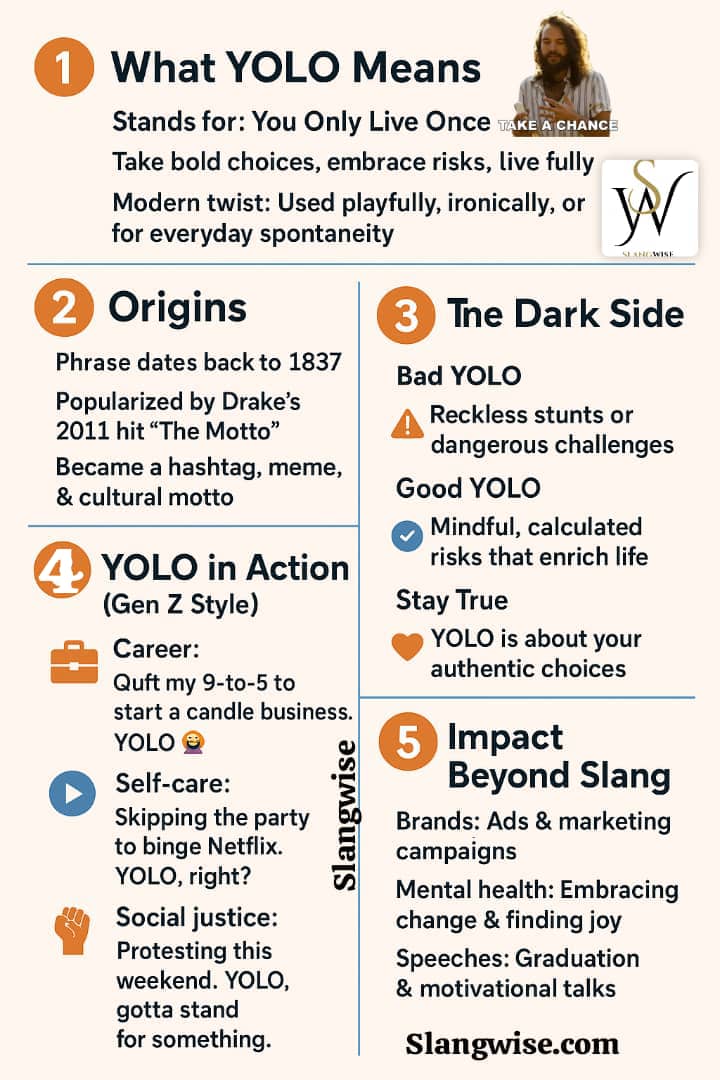
- YOLO means “You Only Live Once.”
It’s used to encourage someone to take a chance, try something new, or enjoy life. - The phrase became famous in 2011 after rapper Drake used it in his song The Motto.
- Gen Z still uses YOLO today, but often in a playful or ironic way.
- The core message hasn’t changed:
Life is short, so make meaningful choices and enjoy the moment.
Simple, right?
But the real story behind YOLO is actually more interesting than that.
YOLO Meaning in Slang?

Let’s start with the basics.
In slang, YOLO stands for “You Only Live Once.”
At its core, the phrase is meant to encourage living life fully and taking opportunities when they appear.
Think about it like the modern version of the old phrase “Carpe Diem”, which means seize the day.
The difference?
Instead of sounding poetic and philosophical, YOLO feels casual and internet-friendly.
Here’s how it usually appears in conversations.
Example Conversation
Friend:
“Should I dye my hair bright green?”
You:
“YOLO. If it looks bad, hair grows back.”
Or another one.
Friend:
“Thinking about booking a last-minute trip.”
You:
“Do it. YOLO.”
In both cases, YOLO acts like a green light for bold decisions.
It’s basically saying:
“Why not? Life is short.”
But here’s where things get interesting.
The meaning of YOLO has changed over time.
Ready to Live the YOLO Mindset?
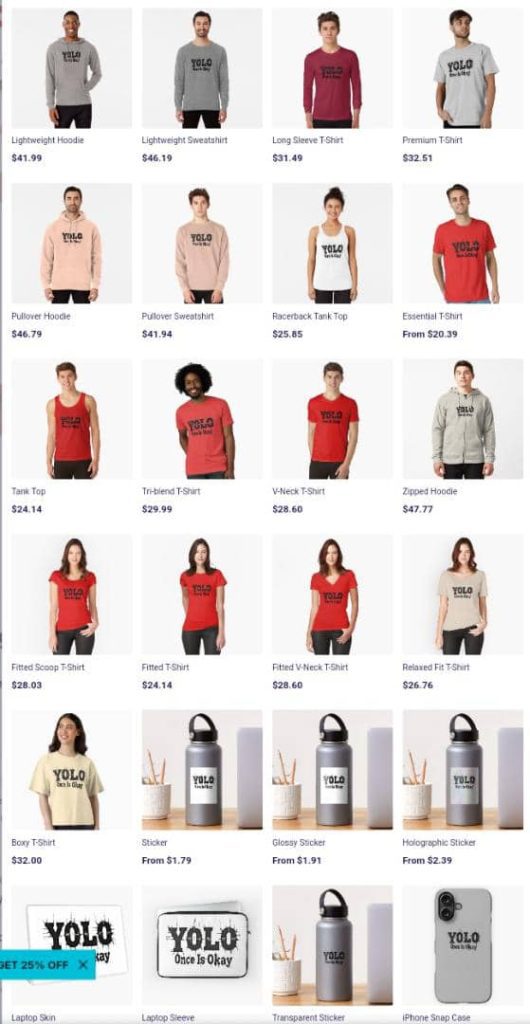
If the idea behind YOLO speaks to you, why not wear it proudly? Check out our YOLO merch collection and grab something that reminds you to live boldly, take chances, and make every moment count. From stylish T-shirts to statement pieces, there’s something for every vibe.
Because at the end of the day, you only live once. So wear the mindset, inspire others, and make your story unforgettable.
Decode 250 of the most popular internet slang words in one easy guide. Perfect for TikTok, chats, memes, and everyday texting. Boost your online fluency fast.
Where Did YOLO Come From?
Most people think Drake invented YOLO.
That’s actually not true.
The phrase “You Only Live Once” has existed for centuries. Versions of it appeared in books and quotes as early as the 1800s.
However, the phrase wasn’t popular slang until 2011.
That’s when Drake released the song “The Motto.”
In the song he says:
“You only live once — that’s the motto… YOLO.”
And just like that, the internet took over.
Within months:
- Twitter was full of #YOLO posts
- People added it to Instagram captions
- Meme pages started using it everywhere
- Brands even started using it in advertisements
It became one of the most recognizable internet slang terms of the decade.
At one point, people used YOLO to justify almost anything.
Sometimes that was fun.
Sometimes… not so much.
Discover what “keep it 100” means in slang. Learn how to be authentic & genuine with this popular phrase, meaning 100% real & honest.
How Gen Z Uses YOLO Today
Here’s something surprising.
Gen Z didn’t abandon YOLO. They upgraded it.
Back in the early 2010s, YOLO was often used to justify wild or reckless behavior.
For example:
“Jumping off the roof into the pool… YOLO!”
But today, the meaning has become more thoughtful and flexible.
Gen Z often uses YOLO to support intentional life choices, not just crazy stunts.
Let’s look at a few modern examples.
1. Career Changes
You might see something like this on social media:
“Quit my corporate job to start my own business. YOLO.”
Here, YOLO isn’t reckless.
It’s about choosing passion over comfort.
2. Self-Care
Another example:
“Skipped the party tonight and stayed home to watch Netflix. YOLO.”
That might sound funny, but it actually reflects something important.
Sometimes taking care of yourself is the bold decision.
3. Standing Up for Something
Gen Z also uses YOLO to justify fighting for causes they care about.
Example:
“Attending the climate protest this weekend. YOLO.”
In this context, YOLO means:
“If I only get one life, I want it to mean something.”
That’s a much deeper use of the phrase.
The Risky Side of YOLO
Of course, YOLO isn’t always used wisely.
Sometimes people take the idea of “living once” a little too far.
You’ve probably seen videos online where someone does something risky and says:
“YOLO!”
That’s when the phrase gets criticized.
Because there’s a difference between:
✔ Taking a bold step in life
❌ Doing something dangerous without thinking
Let’s compare two examples.
Bad YOLO:
“Ate an entire gallon of ice cream in one sitting. YOLO.”
Better YOLO:
“Finally asked my crush out. YOLO.”
One creates stomach pain.
The other creates a life memory.
Big difference.
Spill the tea means share gossip. Quick examples, proper tone and when it’s playful versus serious.
How to Use YOLO the Smart Way
If you want to use YOLO the right way, there are a few simple rules.
1. Think About the Outcome
Ask yourself:
“Will this decision improve my life or make a good memory?”
If yes, YOLO might apply.
If it could cause serious harm… maybe rethink it.
2. Don’t Confuse YOLO With Peer Pressure
YOLO should encourage personal choices, not force you into things.
If your idea of fun is staying home with a good book, guess what?
That can still be YOLO.
Living authentically matters more than impressing people.
3. Balance Risk and Responsibility
Trying new things is great.
But smart risks are better than reckless ones.
Skydiving with proper training? Cool.
Jumping off random cliffs? Probably not.
Why YOLO Became So Popular
Now let’s step back for a moment.
Why did YOLO spread so fast?
There are a few reasons.
1. It’s Short and Memorable
Internet slang thrives when it’s quick to type and easy to remember.
YOLO fits perfectly.
2. It Expresses a Universal Idea
Everyone understands the message:
Life is short.
That idea resonates across cultures and generations.
3. It Works Perfectly on Social Media
YOLO became popular during the rise of:
- Vine
Those platforms encouraged quick captions and catchy phrases.
YOLO was perfect for that environment.
YOLO as a Mindset
Here’s something many people don’t realize.
YOLO isn’t just slang anymore.
It’s become a life philosophy.
You’ll see it used in:
- motivational talks
- marketing campaigns
- self-improvement books
- graduation speeches
Why?
Because the idea behind it is powerful.
When people remember that life is limited, they often become more willing to:
- chase dreams
- repair relationships
- try new experiences
- overcome fear
In that way, YOLO acts like a reminder to live intentionally.
Quick YOLO Cheat Sheet
Here’s a simple guide to remember.
Use YOLO when:
- encouraging someone to take a chance
- celebrating a bold life decision
- hyping up a spontaneous moment
Avoid using YOLO when:
- explaining poor planning
- defending irresponsible choices
- ignoring real consequences
And here’s a fun fact.
YOLO has a slang cousin called FOMO.
FOMO means Fear Of Missing Out.
While YOLO pushes you to try things, FOMO pressures you to keep up with others.
Understanding the difference is important.
Think you know your slang? Test yourself and see if you can ace the Gen Z lingo! Take the slang quiz now and prove you’re not out of the loop.”
Final Thoughts: Why YOLO Still Matters
More than a decade later, YOLO is still around.
That’s rare for internet slang.
Most phrases disappear after a few years.
But YOLO stuck because the message behind it is timeless.
It reminds us that:
- opportunities don’t last forever
- experiences matter
- life should be lived intentionally
In 2025, people might use the word more playfully than before, but the core idea remains the same.
So the next time you’re thinking about:
- starting a new project
- trying something unfamiliar
- taking a meaningful risk
You might hear that little voice say:
“YOLO.”
And sometimes…
that’s exactly the reminder you need.
Here are 5 clear and reader-friendly FAQs you can add to your blog post:
Frequently Asked Questions (FAQs)
YOLO stands for “You Only Live Once.” It’s used to encourage people to take chances, try new experiences, or enjoy life without overthinking every decision.
Although the phrase existed long before, rapper Drake made YOLO go viral in 2011 through his song “The Motto.” After that, it quickly spread across social media, memes, and pop culture.
Yes, people still use YOLO, though not as frequently as in the early 2010s. Today, it’s often used playfully or ironically, especially by Gen Z on social media.
Not necessarily. While it was once used to justify wild decisions, many people now use YOLO to support meaningful experiences, personal growth, or trying something new.
People usually use YOLO when making spontaneous decisions. For example: “I booked a last-minute trip. YOLO!. Thinking of starting my own business. YOLO.”